Daily Catholic Lectio
Sun, 2 Nov ‘25
Commemoration of All the Faithful Departed
Ezekiel 37:1, 4–6, 12–14. 1 Peter 1:3–9. John 20:11–18
Death and Memory
Death is never easy to speak about. None of us truly likes it. Even those who long for heaven rarely long for death itself. Birth delights us; death disturbs us. It takes away those we love, shatters our dreams, and interrupts the story we are still writing. Yet, whether we invite it or not, death always finds its way into the living room of our lives — silent, certain, and unrelenting.
Still, death is not only an ending; it is part of the rhythm of life itself. Just as a word dies for a sentence to be complete, or a step ends for the next to begin, something within us must die for life to grow. Even the cells in our body die every day so that new ones may be born. Death, then, is not the destruction of life, but its transformation.
Today we remember our departed loved ones. Yesterday, we celebrated the saints who already share in God’s glory — the Church triumphant. Today, we pray for those still journeying toward that fullness of light — the Church suffering. We, the Church pilgrim, stand between them, holding their memory, bound together in hope.
In our Catholic faith, we believe that beyond this life lies heaven and hell — and between them, a space of purification, where souls are readied for God’s eternal presence. We call this purgatory not a punishment, but a place of mercy — where God’s love completes what our earthly life left unfinished. That is why we pray for the dead. Our prayer, united to Christ’s sacrifice, reaches even beyond time and space. It is not greater than Christ’s redemption but participates in it, as an act of love.
The Scriptures themselves affirm this hope. In 2 Maccabees 12, Judas Maccabeus collects offerings for the dead so that their sins may be forgiven. In 1 Corinthians 15, Paul alludes to those who receive baptism on behalf of the dead — an early sign of faith in life beyond death.
And so, this day is not about death, but about memory — about remembering those who remembered us. They once walked with us, loved us, built with us. Now they rest in the Lord, and yet their love continues to reach us. Saint Augustine, writing about the death of his mother Monica, records her final wish: “Lay my body anywhere; only remember me at the altar of the Lord. He will know where to find me when He comes to raise me.” In those words, Augustine discovered the heart of Christian memory — that what dies in the body lives on in prayer, and that love never ends.
Three Reflections for Today
(1) The fragility of life
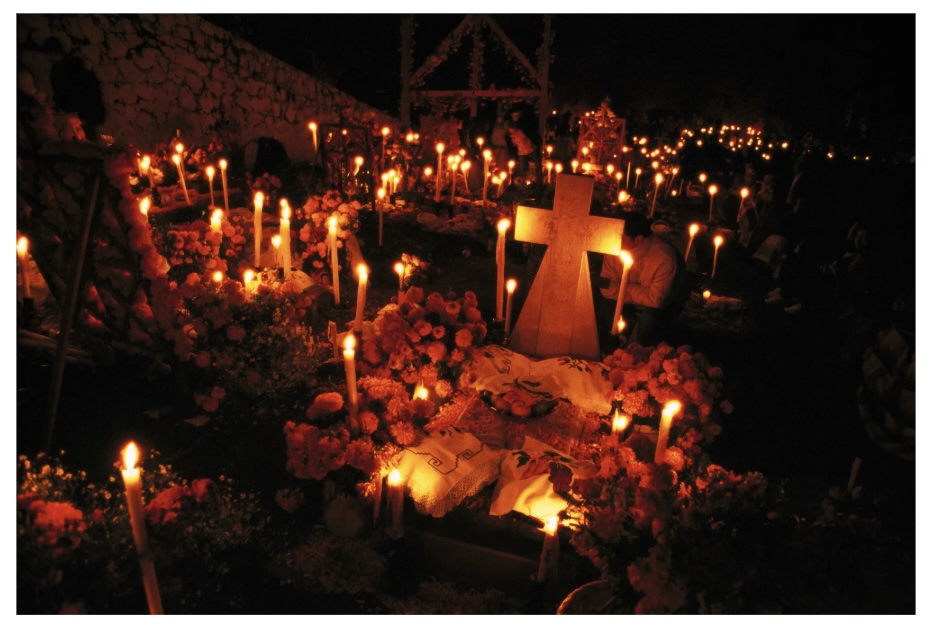
Everything we see fades, everything we touch passes. Like the candle we light on this day, life melts even as it shines. Like incense rising and vanishing in the air, our days drift away. Yet the candle’s light is not wasted — it burns to give light. The incense disappears to give fragrance. So too, our life gains meaning only when it is given away. “Nothing under the sun is lasting,” says the preacher (Eccl. 8:7–8). But in this short and fragile time, we are called to use every moment to prepare for the eternal. Death is not an interruption; it is a reminder — to live rightly, to love fully, and to loosen our hold on what fades.
(2) The life before death determines the life after death
We often worry about life after death but forget the life before it. The way we live now is the way we shall live forever. Management experts call this “living backward” — writing what we want others to say at our funeral and then living so that it becomes true. If I wish to be remembered as humble, let me live humbly. The Psalmist says, “Our life is seventy years, or eighty for the strong… they quickly pass, and we fly away” (Ps 90:10). Let us then live those fleeting years with grace, integrity, and love, for they shape eternity.
(3) In death, we are never alone
Death seems lonely, but in truth, it binds us deeper into communion. Just as we remember our departed ones today, someday others will remember us. Love never ends; it only changes its form. The Celts imagined the stars as windows through which the souls of the dead look upon the earth. Perhaps, as we light our candles today, our little flames join the starlight of those who have gone before us. Death cannot divide those whom love has joined.
“When someone dies, we say ‘Rest in peace.’ But do we ever say to the living, ‘Live in peace’?” How true that is. Peace is not only for the dead — it is a grace for the living. The dead can no longer seek it; only we can offer it to them through prayer, through Mass, through love.
“Blessed are the peacemakers,” said Jesus (Mt 5:9). And today, we may read it this way: Blessed are those who bring peace to the departed through their prayer, for they shall be called children of God.
“Souls in purgatory, pray for us. May our prayers reach you as yours bless us in return. Love binds us still — in time and beyond time.” “Lord, grant eternal rest to the faithful departed. Let perpetual light shine upon them. May they rest in peace. Amen.”
Fr. Yesu Karunanidhi
Archdiocese of Madurai
Missionary of Mercy


 Yesu Karunanidhi
Leave a comment