Daily Catholic Lectio
Sat, 1 Nov ‘25
Solemnity of All Saints
Revelation 7:2–4, 9–14. 1 John 3:1–3. Matthew 5:1–12a
A Foretaste of Holiness
On September 7 this year, Pope Leo XIV canonized two young men—Carlo Acutis and Pier Giorgio Frassati. The event filled the world with joy and renewed the conviction that holiness is within everyone’s reach. Yet, it also stirred a quiet unease: there are many in our own land—young and old—who have suffered more than Carlo, who have served more selflessly than Giorgio, but whose names will never be proclaimed from the altars.
The Church cannot formally recognize everyone who has lived a saintly life—and sometimes, sadly, it has failed to stand with them when they suffered. Saint Devasahayam, now declared the patron of lay people in India, was not defended by the Church when he was persecuted. Only after his death was he lifted up as a saint. Even today, efforts continue to recognize the martyrs of Kandhamal, who were killed for their faith. But we are reminded—what is the use of carrying someone on our shoulders in glory after we have failed to walk beside them in their suffering?
Holiness often hides in ordinary homes and simple hearts.
A woman in France lovingly cares for her blind husband and her mentally ill son for over twenty-three years.
A young working woman, after feeding her bedridden mother and her sister who suffers from memory loss, hurries to her office each morning without complaint.
A college student drops out of studies to earn a living for his family after his father’s sudden death.
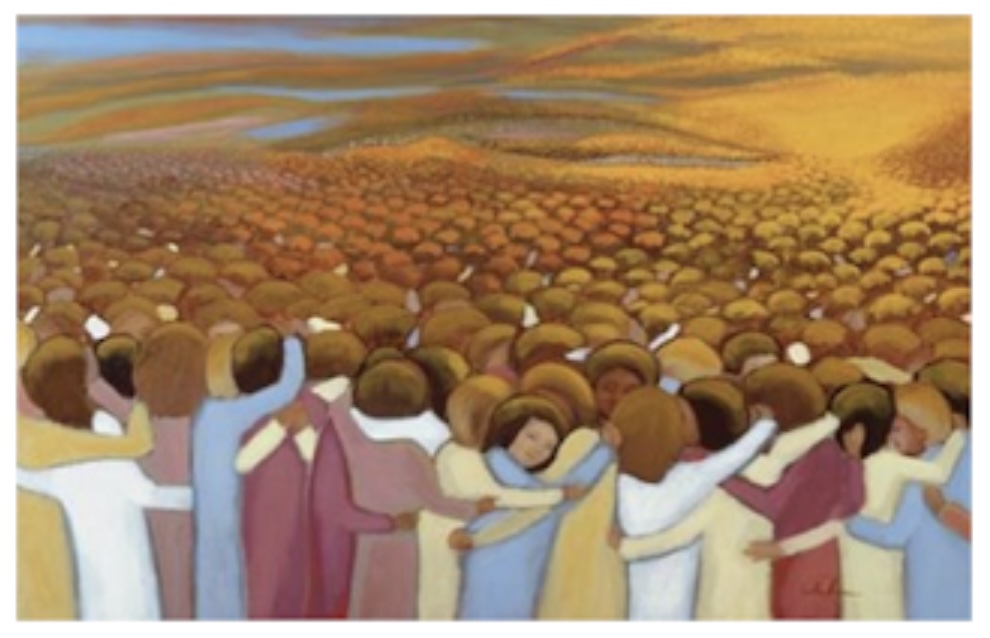
These are saints unknown to the Church’s calendar—but known to God. Today, we celebrate their feast. The first reading calls them “those marked with the seal of God.” The second reading tells us, “We are already God’s children.” And the Gospel of the Beatitudes shows the path to holiness—poverty of spirit, mercy, purity of heart, thirst for justice, peace, and perseverance in suffering.
An online newspaper this year quoted a reader’s question after the canonization of Carlo and Giorgio: “How can human beings make someone a saint?” It’s true—the Church proclaims saints in the name of God, but God alone knows the true depth of holiness. If Jesus were among us today, he would not celebrate All Saints’ Day but would celebrate All Sinners’ Day—for he came not to call the righteous, but sinners.” Perhaps that’s true: holiness is not the absence of sin, but the fullness of love.
Too often, we have turned saints into distant heroes or spiritual waiters—people we summon for blessings and miracles—while ignoring the hard road of love they once walked. We venerate them but rarely imitate them.
So, what does this feast teach us today?
(1) Holiness begins with a small “extra.”
If someone asked, “Do you wish to be a saint?”, we might hesitate. Yet saints were ordinary people who did something extraordinary—a little more love, a little more courage, a little more giving. When others feared, Sebastian dared a little more. When others were impatient, Anthony waited a little more. When others held on to possessions, Francis gave a little more. When others ignored the poor, Mother Teresa loved a little more. Even our parents, grandparents, and friends who have gone before us lived that little “extra.” Each time we walk that extra mile, we walk the road of holiness.
(2) Holiness is not in being, but in becoming.
Milk by itself is valuable. But when it becomes curd, butter, or ghee, its worth increases. Transformation takes heat, stirring, and patience. Likewise, our spiritual growth needs challenge, conversion, and endurance. Saints remind us that change is the path to holiness. As Michelle Obama titled her memoir, Becoming — the question “What do I want to become?” can turn our life upside down. “If he could, why can’t I?” was the question that made Ignatius of Loyola a saint. Holiness is a journey of transformation.
(3) Holiness is sustained by hope.
Saints are not escapists who believe “everything will pass.” They are people who endure until hope takes root. Saint Sebastian would not have stood firm if he thought, “This suffering will end soon.” He believed in what lay beyond suffering. Holiness keeps the candle of hope burning when all else fades.
A saint, therefore, is not one who escapes the world but one who lives it fully—with simplicity, freedom, and love. Saints laugh at themselves, weep with the world, forgive easily, and believe stubbornly in goodness. They may forget God, argue with Him, even wrestle with Him—but they never stop trusting Him. Holiness is not a halo above our head but a light within our heart.
We are all saints in the making. The feast of All Saints is not about them; it is about us—our call to live that little “extra,” to keep changing, to keep hoping.
Yes, holiness is not far away. It is already here, within us— growing quietly, steadily, joyfully—
a foretaste of heaven on earth.
Fr. Yesu Karunanidhi
Archdiocese of Madurai
Missionary of Mercy

 Yesu Karunanidhi
Leave a comment