Daily Catholic Lectio
Sunday, 28 Sep ‘25
Twenty-Sixth Sunday in Ordinary Time
Amos 6:1, 4–7; 1 Timothy 6:11–16; Luke 16:19–31
Indifference
Last Sunday’s Gospel warned us about the danger of wealth. Today the Word of God goes deeper: it warns us about the greater danger of indifference that wealth often produces.
(1) Amos: The cry against indifference
In the first reading, the prophet Amos thunders against the wealthy leaders of Israel. He begins with the word “Woe!”—a cry of lament and curse. He describes how the rich live in luxury—lying on ivory couches, feasting on lambs and calves, singing songs, drinking wine, and anointing themselves with the best oils.
What is their real sin? It is not their wealth in itself, but their indifference. They care nothing for the suffering of the poor or the ruin of their nation. They use for themselves what belongs to God and to the people. Amos warns: because they distanced themselves from others, they will be the first to be sent into exile. Their indifference brings not only their own downfall, but also the downfall of the whole community.
(2) Paul: Wealth can hinder ministry
In the second reading, Paul writes to Timothy, his “beloved child in faith.” He warns him about the dangers of greed and love of money, which had already corrupted some leaders in the Church. “The love of money is the root of all evils,” Paul declares.
Instead of chasing wealth, Paul urges Timothy to pursue six values: righteousness, godliness, faith, love, endurance, and gentleness. These are the true medicines against indifference. A pastor, or any Christian, cannot lead people to God if greed and self-interest dominate his heart. Only someone who chooses simplicity, care, and dedication can become a true shepherd.
(3) Jesus: The great reversal
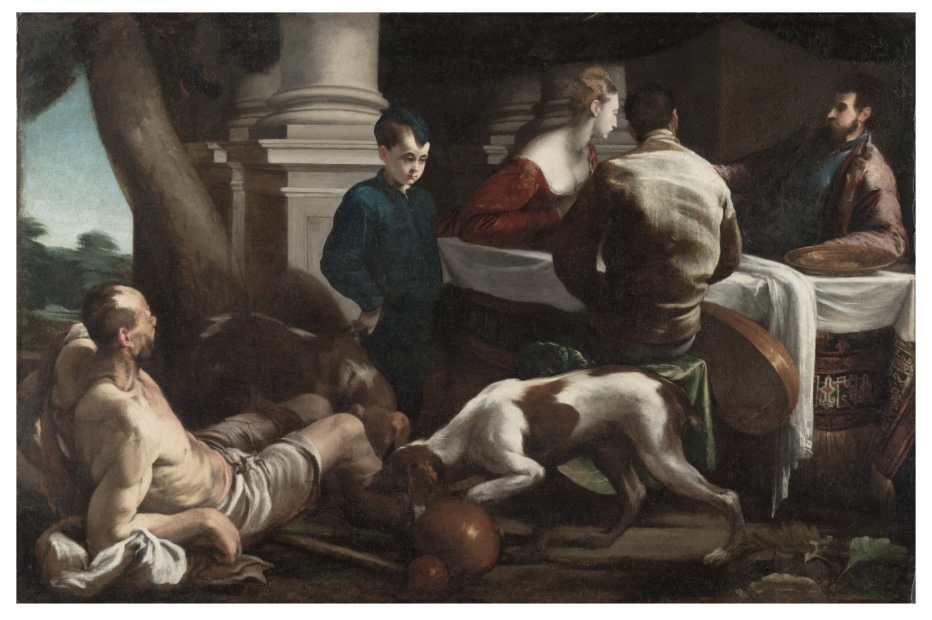
The parable of the rich man and Lazarus is familiar but striking. The rich man, dressed in purple and fine linen, feasts every day. Lazarus, covered with sores, lies at his gate, longing for scraps from the table. The sin of the rich man is not that he beat Lazarus, nor that he stole from him. His sin was indifference. He simply ignored him.
Death reverses their roles. Lazarus, whose name means “God helps”, is carried to Abraham’s bosom. The rich man finds himself in torment, crying out for relief. But even then, he does not change. He still sees Lazarus as a servant, asking Abraham to send him as a messenger or water-bearer. The great chasm fixed between them is nothing other than the chasm created by his own indifference in life.
Overcoming indifference today
These readings speak powerfully to our times. We too can fall into two temptations:
First, to think that everything is fate: “If I am rich, it is God’s blessing; if others are poor, that is their destiny.” This mindset kills compassion.
Second, to think that doing no harm is enough: “I don’t hurt anyone; I live my own life.” But the Gospel tells us: failing to do good is itself a sin.
Indifference today takes many forms: in families where we ignore one another’s needs; in society where we accept inequality as normal; in the Church when we say, “It is not my concern.” The danger of indifference is that it builds invisible walls—between the rich and the poor, between leaders and people, and finally between us and God.
How can we overcome it? By remembering our shared humanity. By looking not upward at those who have more, but downward at those who have less, and recognizing our responsibility. By practicing the virtues Paul mentions—righteousness, godliness, faith, love, endurance, gentleness. By living the psalm of today: “The Lord upholds the orphan and the widow, gives food to the hungry, and sets prisoners free.”
Indifference destroys. Concern gives life. If indifference creates chasms, concern builds bridges. If indifference isolates us, concern unites us with God and neighbour.
The question we must ask today is: Am I living with indifference, or with concern? The boat of my life will not sink if I show concern—it will only reach the safe shore of salvation.
Fr. Yesu Karunanidhi
Archdiocese of Madurai
Missionary of Mercy
 Yesu Karunanidhi
Leave a comment