Daily Catholic Lectio
Sun, 14 September ‘25
Exaltation of the Cross, Feast
Numbers 21:4-9. Philippians 2:6-11. John 3:13-17
From Sign of Death to Source of Life
A story is told of a soldier in World War II who carried a small wooden cross in his pocket. When captured by enemies and stripped of all possessions, he managed to keep the cross hidden in his hand. Later he said: “Everything else was taken from me, but holding onto the cross gave me strength to survive.”
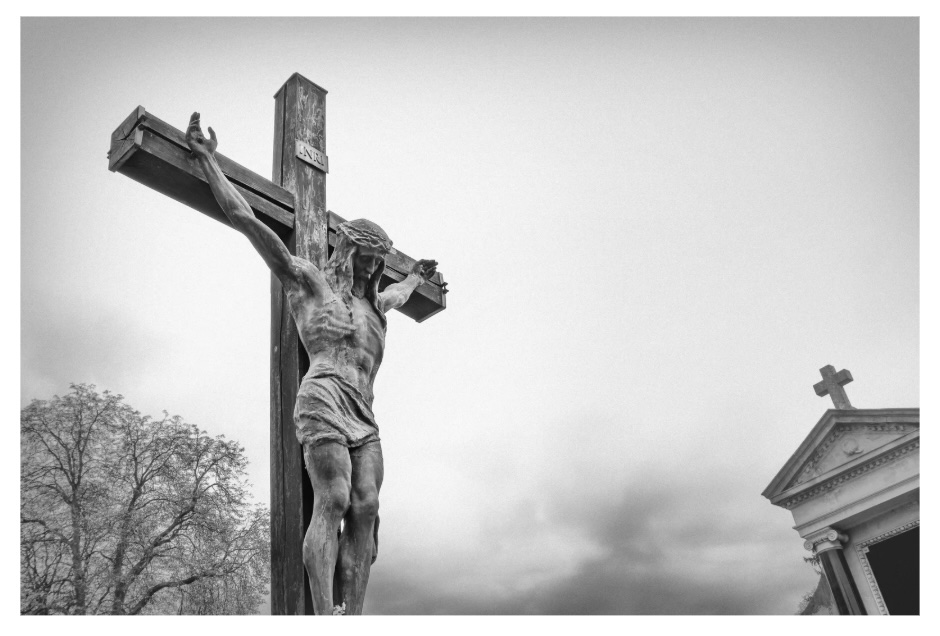
This is the mystery we celebrate today: what once was an instrument of shame and death became, through Christ, the very source of salvation and hope.
Historical Note on the Feast
The Feast of the Exaltation of the Holy Cross dates back to the 4th century, when St. Helena, mother of Emperor Constantine, discovered the True Cross in Jerusalem around 326 AD. On September 14, 335, the Church of the Holy Sepulchre was dedicated, and the relic of the Cross was venerated publicly for the first time. Since then, the Church has celebrated this day as a reminder that the Cross, once a symbol of shame, is now the throne of Christ’s glory.
1. The Cross Prefigured in the Desert
Scripture: In Numbers, when the Israelites were bitten by serpents, God commanded Moses to lift up a bronze serpent; all who looked at it lived (Num 21:8–9).
Church’s Teaching: The Fathers of the Church saw this as a foreshadowing of Christ lifted up on the Cross, bringing healing from the venom of sin.
Reflection: The people were saved not by their efforts but by looking in faith. Likewise, we are saved not by our strength but by looking to Christ crucified.
Pastoral Application: When life bites us with fear, sickness, or failure, do we fix our gaze on Christ’s Cross as our source of healing?
2. The Humility of Christ
Scripture: Paul writes that Christ “emptied Himself, taking the form of a slave…He humbled Himself and became obedient to death—even death on a cross” (Phil 2:7–8).
Church’s Teaching: The Catechism (CCC 461) teaches that the Incarnation and Cross reveal the depth of God’s humility and love.
Reflection: The way of the Cross is not triumphalism but humility. Exaltation comes only after surrender.
Pastoral Application: The Cross teaches us that true greatness is found not in power but in self-giving love. How ready am I to humble myself for the sake of others?
3. The Cross as God’s Ultimate Gift of Love
Scripture: Jesus says: “God so loved the world that He gave His only Son…not to condemn the world, but that the world might be saved through Him” (Jn 3:16–17).
Church’s Teaching: Vatican II (Gaudium et Spes 22) affirms that Christ’s sacrifice reveals man to himself and the depth of God’s love for humanity.
Reflection: The Cross is not merely wood and nails—it is God’s embrace of the world. Salvation is not condemnation but love poured out.
Pastoral Application: When we exalt the Cross, we proclaim God’s victory of love. Do I see the Cross in my life as a burden to resent, or as a place where God’s love is revealed?
Conclusion
From the bronze serpent in the desert to Christ’s humility on the Cross, today we see the great reversal: death turned into life, shame turned into glory, despair turned into love. Like the soldier holding the wooden cross, we too cling to this sign of hope. To exalt the Cross is to proclaim that in every suffering, God’s love is stronger, and His mercy always leads to life.
Fr. Yesu Karunanidhi
Archdiocese of Madurai
Missionary of Mercy

 Yesu Karunanidhi
Leave a comment