Daily Catholic Lectio
Fri, 15 August ‘25
Assumption of Blessed Virgin Mary
Rev 11:9, 12:1-6, 10. 1 Cor 15:20-26. Lk 1:39-56
Into the palace of the King!
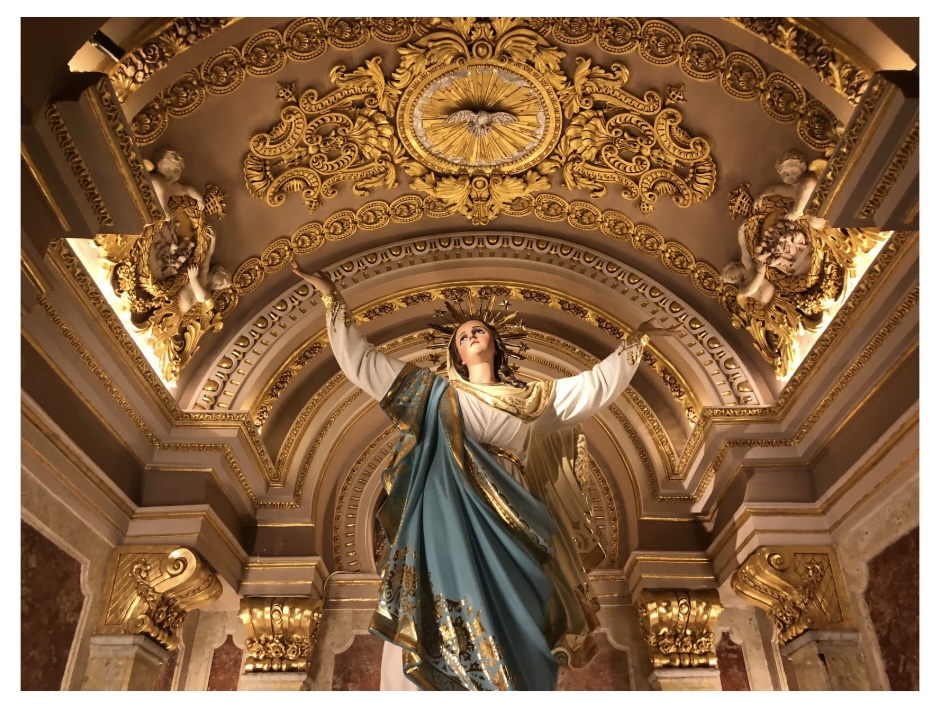
Today we solemnise the assumption of the Blessed Virgin Mary. Today’s responsorial psalm exclaims, “The queen enters the palace of the king” (cf. Ps 45).
The dogma of the assumption was formally defined by Pope Pius XII on November 1, 1950, in the Apostolic Constitution ‘Munificentissimus Deus.’
The dogma of the assumption is based on several factors, including:
Early Christian Tradition: While the dogma itself was formally defined in 1950, the belief in Mary’s Assumption has ancient roots in Christian tradition. Early writings and liturgical practices indicate the veneration of Mary’s body and her special role in salvation history.
Theological Considerations: The dogma of the Assumption is closely linked to the belief in Mary’s Immaculate Conception, which affirms that Mary was conceived without original sin. If Mary was sinless, it follows that her body, which carried Jesus in her womb, should not undergo corruption after death.
Patristic Writings: Many early Church fathers, such as St. John Damascene and St. Augustine, wrote about their belief in Mary’s Assumption. Their writings contributed to the development of this doctrine.
Sensus Fidei: The ‘sense of the faithful’ within the Catholic Church, expressed through the devotion and beliefs of the faithful over centuries, also played a role in recognising the Assumption as a dogma.
The Assumption is a witness to God’s ultimate plan of love, grace, and redemption.
Pope Pius XII expressed the hope that the belief in the bodily assumption of the virgin Mary into heaven “will make our belief in our own resurrection stronger and render it more effective,” while the Catechism of the Catholic Church adds: “The Assumption of the Blessed Virgin is a singular participation in her Son’s Resurrection and an anticipation of the resurrection of the members of His body” (cf. 974).
Mary entered the palace of the King with her body and soul because she allowed the King to enter her heart. The gospel reading brings before us the narrative of Mary visitating Zechariah-Elizabeth. The three expressions in Elizabeth’s greetings point to Mary’s assumption.
(a) ‘Blessed are you among women’
Mary is blessed among women (and men) because she was saved from the corruption of sin. Mary stands as the anti-image of Eve in Genesis. The first woman disobeyed and ate the forbidden fruit, but the second woman (Mary), through her obedience, bore the fruit of redemption in her womb.
(b) ‘The mother of my Lord’
Elizabeth calls Mary ‘Mother of God (Lord)’. Elizabeth was able to see in Mary a great mother. This shows her faith vision. Her faith vision was large because of the Holy Spirit, that moved her.
(c) ‘Blessed because you believed’
Elizabeth continues, “Blessed are you who believed that what was spoken to you by the Lord would be fulfilled.” These words show Mary’s faith, trust, and surrender. Mary was able to hold on to the finger of God.
Mary did not respond to Elizabeth’s words. Her response takes another direction. She raises her heart to God. Since her heart was towards heaven, her body also went towards it.
Mary’s Magnificat portrays God’s nature, existence, and actions. Through the hymn, Mary announces the wonders of the Lord as if they had already taken place.
In the first reading, John has a vision of the woman and the dragon. The woman in the immediate context refers to the people of Israel and the Church. The Fathers of the Church see in this woman Mary of Nazareth. Mary won over the serpent of sin.
The second reading gives assurance of the resurrection of the dead. Paul underlines that death is the last enemy. Sin could not embrace Mary, as she was protected from the original sin.
What are the lessons for us?
(a) Life beyond the earth. We must strive towards heaven. This requires a lot of faith vision.
(b) Mary’s faith and surrender. Mary, though she was chosen by God, qualified herself to be so.
(c) Inner freedom. Mary’s Magnificat gives a foretaste of the liberative wonders of God. Today we celebrate (in India) the 79th Independence Day. Internal freedom is the pre-requisite to external freedom. Only those who have internal freedom can enjoy external freedom. Those who are not internally free are slaves. But it is enough that we are servants of God – as Mary was! With total freedom and surrender!
May Our Lady of Assumption intercede for us before the King. Blessed Assumption!
Fr. Yesu Karunanidhi
Archdiocese of Madurai
Missionary of Mercy

 Yesu Karunanidhi
Leave a comment