Daily Catholic Lectio
Wed, 6 Aug ‘25
Transfiguration of Our Lord, Feast
Daniel 7:9-10, 13-14. 2 Peter 1:16-19. Luke 9:28-36
New Beginnings
Today, on the Feast of the Transfiguration of the Lord, we are invited to ascend the mountain with Jesus — not merely to admire His radiant glory, but to be transformed ourselves. The Transfiguration is not just a moment of revelation in the life of Jesus; it is a turning point in our Christian journey. It offers us a glimpse of the glory that awaits, a vision that strengthens us to walk through the valleys of suffering and commitment.
Let us reflect on this mystery through three lenses: the biblical context, the theological meaning, and the pastoral significance.
1. Biblical Context of the Readings
The first reading from the Book of Daniel (Daniel 7:9-10, 13-14) gives us a heavenly vision — a prophecy written during a time of persecution. The “Ancient of Days” sits on the throne in majestic purity, while “one like a Son of Man” is presented before Him. This Son of Man is given dominion, glory, and kingship that will never pass away. For the Jews of that time, this was a message of hope: that one day God would establish His righteous kingdom through His anointed one. Jesus often referred to Himself as the “Son of Man,” echoing this vision. At the Transfiguration, this prophecy comes alive — the glorified Jesus is the One to whom all power and authority will be given.
In the second reading Peter recalls his experience on the holy mountain. He does not offer cleverly devised myths but speaks as an eyewitness. He saw the glory of the Lord and heard the voice from heaven. This event confirms the prophetic word — not as a tale from the past, but as a lamp shining in a dark place until the day dawns in our hearts.
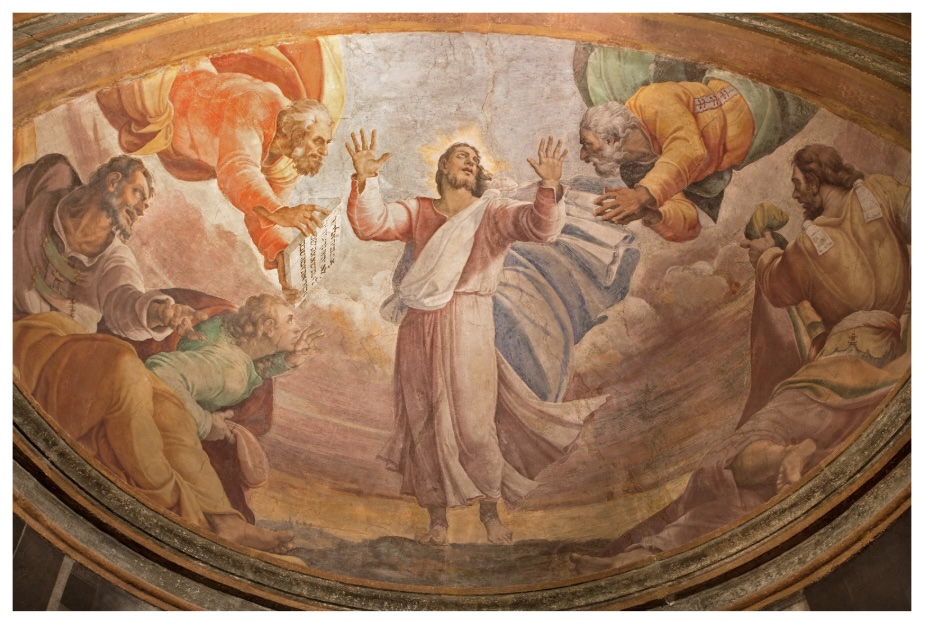
The Gospel reading presents Jesus taking Peter, James, and John up the mountain to pray. There, His face changes, His clothes become dazzling, and Moses and Elijah appear in glory. A cloud overshadows them, and the Father’s voice confirms, “This is my Son, the Chosen One; listen to Him!” This dramatic moment happens shortly after Jesus foretells His Passion. The disciples are being prepared to face the scandal of the Cross by glimpsing the glory beyond.
2. Theological Meaning of the Feast
The Transfiguration reveals the true identity of Jesus — fully divine and fully human. It is a foretaste of His resurrection and of the glorification awaiting all who follow Him.
Christ’s Divinity is Manifested: The dazzling brightness is not a reflected light but His own divine light breaking through His human nature.
Law and Prophets are Fulfilled: Moses (the Law) and Elijah (the Prophets) converse with Jesus — showing that He is the fulfilment of all Scripture.
The Trinity is Present: The Father speaks, the Son is transfigured, and the Holy Spirit appears in the cloud — a rare moment of Trinitarian revelation.
Discipleship is Challenged: “Listen to Him,” says the voice from the cloud. Not just admire His glory, but heed His path — even when it leads to the Cross.
Thus, the Transfiguration teaches us that glory comes through suffering, and light shines through obedience.
3. Pastoral Significance for India Today
Encouragement amid suffering: In a nation marked by pluralism, poverty, injustice, and sometimes persecution, the Transfiguration is a message of hope. For those who suffer silently this feast tells us: glory will follow suffering. We are not forgotten; our lowliness will be lifted.
A call to deep prayer: Jesus was praying when He was transfigured. In our noisy world, prayer becomes the mountain where we see Jesus differently and where we ourselves are changed.
Listening to Jesus in the Church and the poor. “Listen to Him” — this is a command for today. Christ speaks through His Word, His Church, and the cries of the poor. Are we listening? Are we helping others listen? In the noise of political ideologies, media spin, and religious confusion, we are called to hear and follow the voice of Jesus — especially through the teachings of the Church and the witness of the saints.
Forming transfigured lives. We must not remain in ‘tents of comfort,’ like Peter wanted to do. We need to come down
The mountain of Transfiguration is a moment of encounter — a glimpse of the eternal that gives strength for the temporal. As we behold Jesus glorified, may we not be content with momentary awe but be moved to lifelong transformation. Let us climb the mountain of prayer, descend into the valley of mission, and walk the path of the Cross — knowing that at the end, there is a light that never fades, a glory that never ends.
“Lord, it is good for us to be here” — and even better to carry Your light to where it is most needed.
Fr. Yesu Karunanidhi
Archdiocese of Madurai
Missionary of Mercy
 Yesu Karunanidhi
Leave a comment