Daily Catholic Lectio
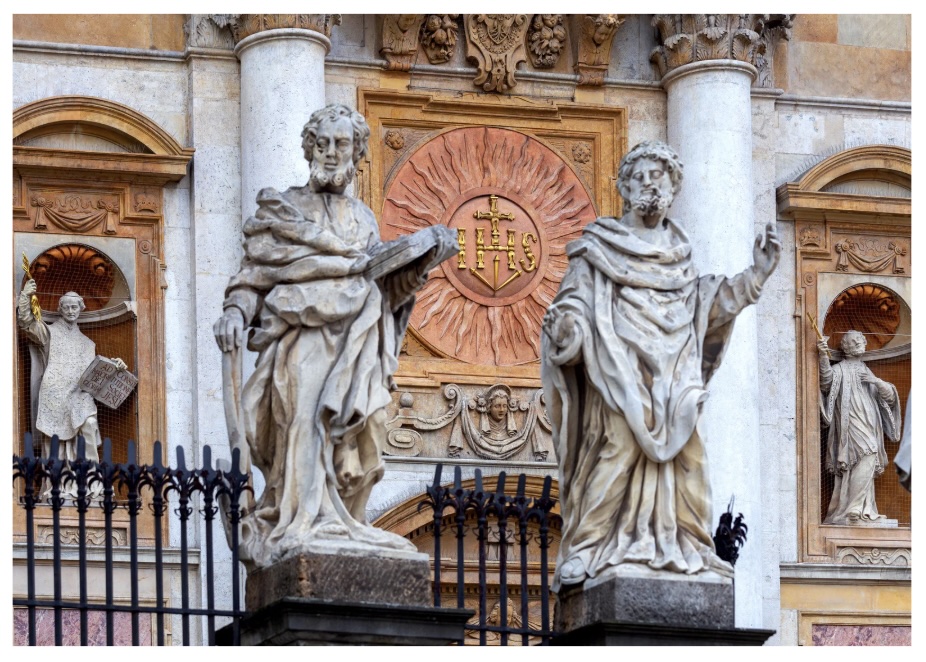
Saints Peter and Paul, Apostle – Solemnity
Acts 12:1-11. 2 Timothy 4:6-8, 17-18. Matthew 16:13-19
Apostles of Faith
Today, the Church joyfully celebrates the solemn feast of Saints Peter and Paul, the two great pillars of the Roman Catholic Church.
“You are Peter, and on this rock, I will build my Church; the gates of the underworld will not prevail against it” (cf. Mt 16:18).
“He is a chosen instrument of mine to bring my name before Gentiles, kings, and the children of Israel” (cf. Acts 9:15).
These two apostles—so different in origin, temperament, and journey—were both personally chosen by the Lord Jesus for a unique mission. What are the essential qualities they shared?
(A) Encounter with the Risen Christ
Peter denied Jesus. Paul persecuted the Church. Yet both were transformed completely after encountering the Risen Lord. Their lives never returned to what they were before. As Paul himself writes:
“I want to know Christ and the power of his resurrection” (Phil 3:10).
Such resurrection encounters can happen in our sufferings, in prayer, in relationships, or through a sudden surge of inner strength. It is this encounter that turned failure into mission.
(B) Capacity for Communion
Peter and Paul were strikingly different—background, profession, education, and character. Their differences even led to public disagreement, as Paul recounts in Galatians 2:11–14, when he confronted Peter (Cephas) for inconsistent behaviour regarding Gentile believers.
Yet, despite these differences, both apostles stood united in the mission of proclaiming the Gospel. Unity does not mean uniformity; it means walking together for the sake of the Good News.
(C) Witness through Writings
A German proverb says: “Speakers may disappear; writers live forever.” Saints Peter and Paul still speak to us through their writings. Their letters, written in specific contexts, still resonate with our own communities and challenges today. Despite threats from fire, flood, and opposition, their words endure and inspire.
Final Reflections from Their Lives
“The end matters more than the beginning” (Ecclesiastes 7:8).
Peter started as a humble fisherman, rash and impulsive, even denying Jesus. Yet he surrendered fully: “Lord, you know everything; you know that I love you.”
Paul, once a fierce persecutor of Christians, became the tireless apostle of Christ: “It is no longer I who live, but Christ who lives in me.”
These two saints share three key lessons for us:
(a) They Accepted Their Past
We can approach our past in two ways:
Negatively: With guilt, shame, and regret, constantly replaying our failures.
Honestly: Acknowledging our past, but moving forward in grace. “Yes, that was me. But I have changed.”
Peter and Paul never let guilt chain them to their past. They passed through their history with the strength of divine grace.
(b) They Changed Their Path
After their encounter with Christ, both apostles changed direction—and never looked back.
Peter returned to fishing, but after surrendering to Christ, he led the Church with unwavering commitment.
Paul, who once wielded the sword against Christians, accepted the sword of martyrdom for Christ.
(c) They Bore Witness to Their Faith
Despite great suffering, both offered their lives as martyrs, proclaiming one truth: “Jesus Christ is the Son of God.”
The Gospel has reached our ears today because of their bold witness.
Today’s Readings
Peter, imprisoned and chained, is miraculously set free by an angel. “The Lord has rescued me from the hand of Herod,” he says (First Reading). God never abandons those He calls and sends.
Paul, nearing the end of his mission, surrenders: “I am already being poured out as a libation.” He completes the race he began in Christ.
Peter, in the Gospel, boldly proclaims: “You are the Christ, the Son of the Living God”—and becomes the rock of the Church. We too must encourage and strengthen one another in faith.
In Conclusion
Saints Peter and Paul—fragile thorns at the beginning—became unshakable pillars through God’s hand.
What matters most is not how we are, but how we are willing to change.
Our beginnings may be weak, but our end can be strong if we allow His hand to shape us.
Because His hand is always with us.
Fr. Yesu Karunanidhi
Missionary of Mercy
Archdiocese of Madurai
 Yesu Karunanidhi
Leave a comment