Daily Catholic Lectio
Most Holy Body and Blood of Christ – Solemnity
Genesis 14:18–20. 1 Corinthians 11:23–26. Luke 9:11–17
Eucharist and World’s Hunger
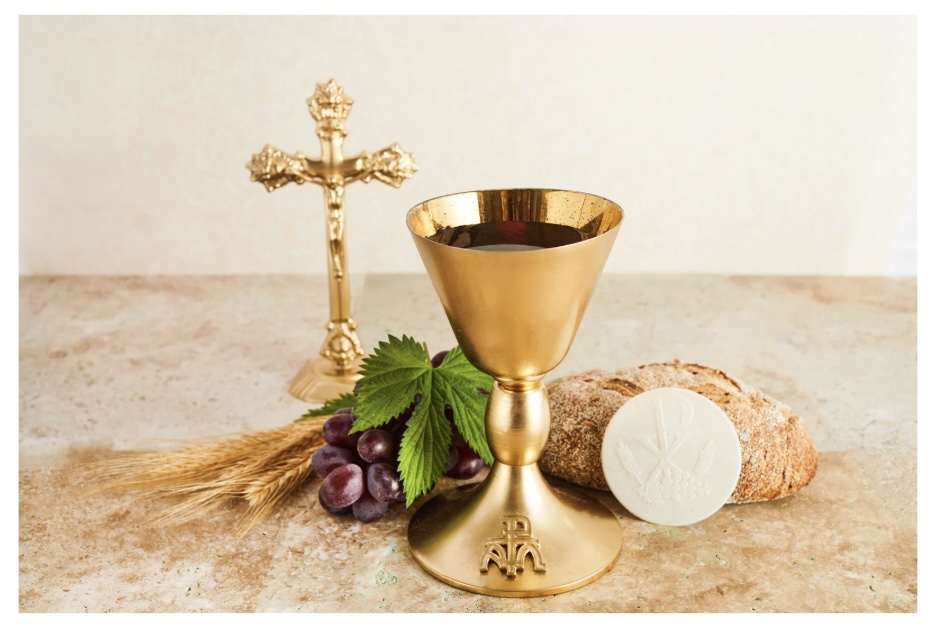
Today, we celebrate the Solemnity of the Body and Blood of Christ. At the heart of this feast lies the mystery of Jesus being truly present—Body and Blood—in the bread and wine. Yet, this solemn day also touches a very basic human feeling: hunger. God meets not just the spiritual hunger of the soul, but also the physical hunger of the body. That’s the deeper meaning of this celebration.
In the first reading (Genesis 14:18–20), we meet Abram after a hard-fought victory rescuing his nephew Lot. Though he fought against powerful kings, Abram wins by courage and clever strategy. On returning, the local people welcome him with joy. Among them is Melchizedek, King of Salem, a mysterious figure known as the king of righteousness and peace. He blesses Abram and gives him bread and wine. His blessing reminds Abram that it is God Most High who gave him victory. His offering of bread and wine shows care not just for Abram’s soul, but also his tired body. Through Melchizedek, we see a God who feeds both body and soul with total care.
In the second reading (1 Corinthians 11:23–26), Paul teaches the Corinthian church how to celebrate the Lord’s Supper. Originally, the Eucharistic meal had both spiritual and communal meaning. It was a time of prayer and a reminder of Jesus’ Passion and Resurrection. It was also a time to share food and drink with the poor and the needy. But over time, the rich began to feast and drink, ignoring the poor who came late and hungry. What began as a sacred meal became a place of division and selfishness (cf. 1 Cor 11:17–22). Paul corrects them: the Eucharist is about remembering Jesus’ sacrifice and sharing in His love. It is a meal that nourishes both soul and body. We cannot keep one and ignore the other.
In today’s Gospel (Luke 9:11–17), Jesus performs the miracle of feeding the multitude. All four Gospels speak of this miracle with one voice. He does not only teach the crowds; He also feeds them. His teaching satisfies their souls. His feeding satisfies their bodies. This miracle shows Jesus’ total compassion. Before multiplying the loaves, He gives thanks and prays—because food is a gift from God. And the food is distributed by the hands of His disciples. God’s gift reaches the people through human hands. The disciples are being trained for future mission: feed the people in body and in spirit. We see the same care in Acts 4, when the Apostles appoint deacons to serve the needs of widows and the hungry.
Thus, the Word of God teaches us today that true compassion is never partial. It embraces both soul and body. Like Melchizedek who blesses Abram and nourishes him; like Paul who calls the Church to feed the hungry and remember Christ; like Jesus who teaches the Kingdom and feeds the crowd—we are called to show this complete compassion.
What does today’s feast teach us?
(a) To recognize needs and respond with care
Hunger calls for food. Loneliness calls for love. Vulnerability calls for safety. Low self-worth calls for dignity. We cannot separate the needs of the body from the needs of the soul. A starving belly cannot first listen to spiritual advice—it needs bread. Often, in caring for our souls, we end up punishing our bodies. But the body is not the enemy of the soul—it is its partner. Without the body, the soul cannot live; without the soul, the body is dead. The Eucharist is spiritual food, but it comes first as physical bread and wine. Saints have lived on the Eucharist alone. Today, let us ask: how do I care for my body? And how do I see the bodies of others—do I see them as sacred, or as things to possess, or even ignore due to caste or status?
True care is found in giving. Melchizedek gives bread and wine and does not take it back. Abram gives a tenth of all he has and asks nothing in return. Jesus gives Himself in the bread and wine, and it does not turn back into ordinary matter. The Good Samaritan gives and does not expect repayment. Giving, when complete, is a one-way journey. The Eucharist shows us this giving love.
(b) The action words of the Eucharist
The Eucharist is not magic. It is not about standing at a particular altar, wearing the right vestment, saying exact words at a precise angle, and thinking the bread magically becomes Jesus’ Body. That thinking can distance both priest and people from the heart of Christ. If I think I can be unworthy in soul or body, but simply recite the formula and stretch out my hands to change bread into the Body of Christ, am I not treating the Eucharist as a ritual spell?
Similarly, when people attend Mass just to get what they want, or do a novena hoping something will happen, are we not treating the Eucharist like a lucky charm?
The Eucharist is the banquet of freedom. Not a ritual to be enslaved to. Both celebrant and community must live out the five verbs of today’s Gospel: He took, He looked up, He gave thanks, He broke, He gave. These five words—take, look, bless, break, give—are the whole of Jesus’ life. He took flesh. He looked to the Father. He always blessed the Lord. He broke Himself for others. He gave His very self to us.
Among these, perhaps what we need most today is to look up. Why?
Because we live in a “screen culture” that keeps us always looking down. Our phones teach us we don’t need people or God. “Just look at me,” the screen says. But in those minutes of staring down, we slowly disconnect from God, from others, and even from ourselves. We don’t have to throw away the screen—but we must learn to look up again.
(c) Who do I speak like?
“Send them away!” “It’s late!” “This is a deserted place!” “There’s nothing here!”—the disciples speak like people who remind Jesus of all the problems.
Jesus replies, “You give them something to eat!”
Even today, after receiving Jesus in the Eucharist, many of our prayers sound like reminders: “I lack this. I don’t have that. That person is wrong. The food is not right. The sugar is high. The pressure is rising. I have no money…”
Jesus still answers: “You take care of it!”
When we begin to take care of life with what little we have, God starts His miracle. The disciples said, “Lord, we have five loaves and two fish.” Jesus said, “Make the people sit down.” And a miracle happened.
So, after receiving the Eucharist, our response should be: “Lord, I have this small medicine.” “Lord, I have a little rice.” “Lord, I have a little money in my purse.” And from that little, the miracle begins.
Finally:
Food is a symbol of the most basic human need. Hunger and thirst remind us that we depend on others. These needs form the foundation of all others. Jesus chose food as the sign of His everlasting covenant. In food, soul and body meet.
As long as we hunger, we will need this food. And if I stretch out my hand not only to receive this food, but also to become food for someone else—then I, too, become His Body and Blood.
Fr. Yesu Karunanidhi
Archdiocese of Madurai
Missionary of Mercy
 Yesu Karunanidhi
Leave a comment