Daily Catholic Lectio
Sat, 24 May ‘25
Fifth Week of Easter – Saturday
Acts 16:1-10. John 15:18-21
A Vision in the Night
Whenever we read the Acts of the Apostles, we can tangibly feel the spiritual vitality and dynamic nature of the early Church.
Today’s first reading recounts two key events. First, Timothy, a young man later honoured as the first Bishop of Ephesus, joins Paul in ministry. His mother was a Jewish believer, while his father was Greek. Surprisingly, Paul arranges for Timothy to be circumcised—even after he had just strongly argued in Jerusalem that circumcision was not required for Gentile converts.
Why this apparent contradiction?
Paul’s decision is simple and pastoral: to avoid unnecessary arguments. Though convinced of his theological stance, he chose to make a heart-based decision for the sake of mission harmony. Paul was not rigid. He was willing to compromise where necessary—not on faith, but to prevent hindrances in ministry. This is what we might call pastoral wisdom: adapting one’s approach for the good of both the mission and the people.
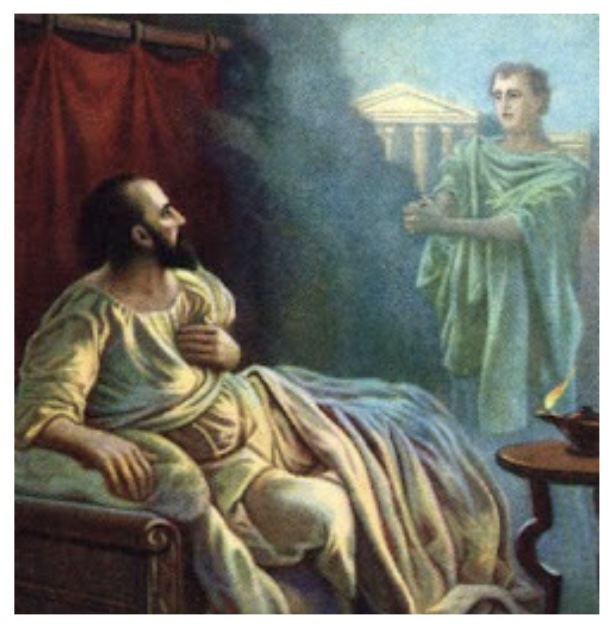
The second event is the vision at night:
“During the night Paul had a vision: a man of Macedonia stood and pleaded with him, saying, ‘Come over to Macedonia and help us.’” (Acts 16:9)
What’s remarkable is not just that Paul had a vision, but how he and his companions interpreted it: “We concluded that God had called us to preach the gospel to them.” (v.10)
Before this, Luke had noted that “the Holy Spirit had forbidden them to preach the word in Asia.” Clearly, the early Church was deeply attuned to the Spirit’s movements. Whether through visions, dreams, inner promptings, symbolic signs, or others’ words—God was speaking. And the community was listening.
This spiritual attentiveness is something we are fast losing today. Noise, anxiety, guilt, fear, and low self-worth create inner disturbances that drown out our spiritual intuition. Yet God continues to speak—especially in silence. We must reclaim the space to hear Him.
Paul was a man who had gone beyond personal likes and dislikes. His only goal was God and God’s mission. That is why he could interpret the vision not through emotion but through discernment.
In the Gospel reading (John 15:18–21), Jesus reminds His disciples:
“No servant is greater than his master.”
Paul always saw himself as a servant, with God as his Master. When that definition is clear, inner agitation subsides, and spiritual clarity deepens.
May we, like Paul, sharpen our spiritual awareness, be led by the Spirit, and serve with humility—even when the call comes in the middle of the night.
Fr. Yesu Karunanidhi
Archdiocese of Madurai
Missionary of Mercy
 Yesu Karunanidhi
Leave a comment