Daily Catholic Lectio
Thu, 1 May ‘25
Saint Joseph the Worker, Opt. Memoria
Genesis 1:26–2:3 (or) Colossians 3:14–15, 17, 23–24. Matthew 13:54–58
The Holiness of Work
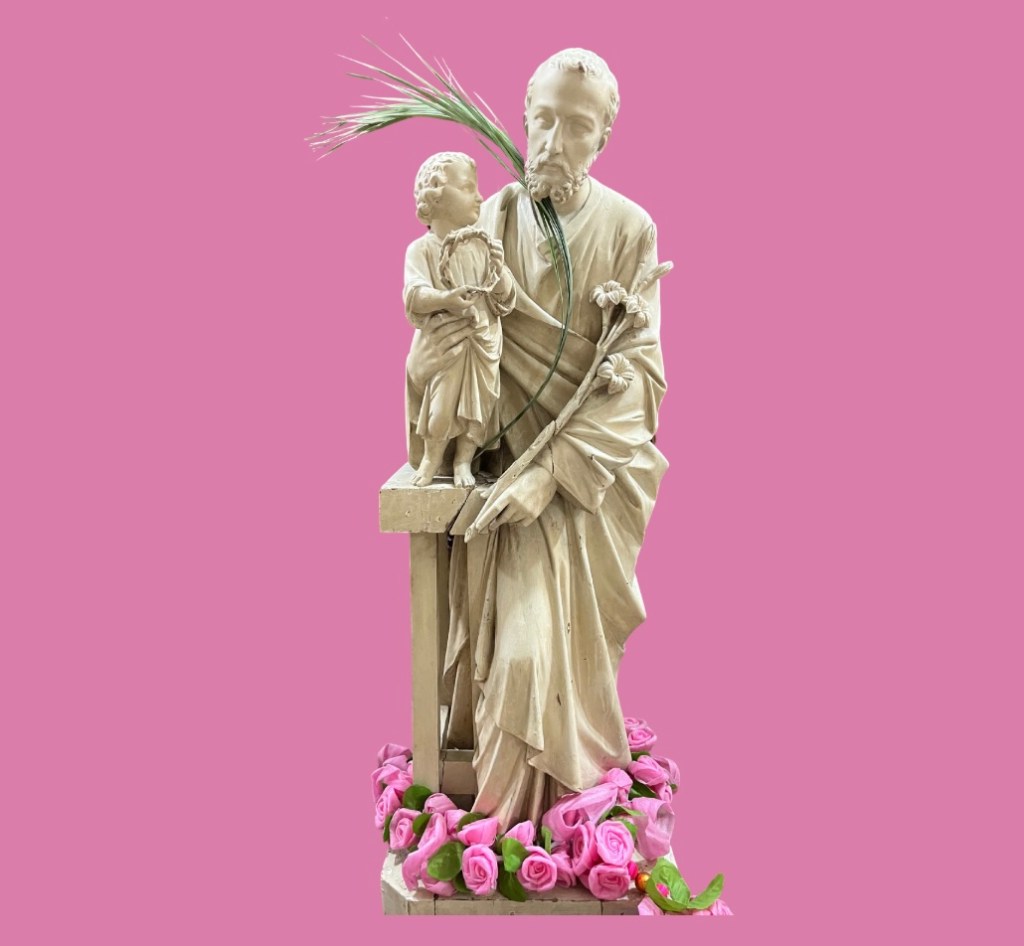
One of the entry gates to the Old City of Jerusalem is called the Lions Gate. It is also known as the Sheep Gate or St. Stephen’s Gate. Just inside this gate lies the Pool of Bethesda. Near this pool is the Church of St. Anne, and within it is a unique statue of Saint Joseph (pictured above). In this image, the child Jesus is shown standing atop a carpenter’s bench. In His hand, He holds a crown of thorns, pointing it toward His father Joseph. Joseph, however, gazes straight ahead, looking directly at the one before him.
This statue beautifully captures the identity of Jesus as the son of a carpenter. The gaze of Jesus seems to suggest that the crown of thorns, which God allowed to rest upon humankind, is nothing but the burden of labour. Although labour may appear to us as a crown of thorns, it is in fact through labour that we earn our crown of glory.
Today, we joyfully celebrate Saint Joseph the Worker, the patron of labourers. In many countries, this day is also commemorated as May Day or International Workers’ Day.
In the first reading, God is presented to us as a worker or labourer — quite a remarkable first impression made by the Bible. It does not introduce God as a father, mother, friend, object of worship, or warrior, but as a Creator or a creation-worker.
The Lord brings order to chaos, beautifies what He creates, and assigns every created thing its function. Thus, ordering, beautifying, and perfecting are the works of the Lord. All the work we do today — whether in producing goods or offering services — falls into these three categories: bringing order, creating beauty, or enabling growth. These, in essence, are the goals of work.
God worked for six days and rested on the seventh. Therefore, labour and rest go hand in hand.
Scripture teaches that the very purpose of the human being is to work. At the same time, the Bible upholds rest as essential for those who labour. Rest renews our strength to work again. Through our labour, we express our creativity. Through our work, we become participants in God’s ongoing act of creation. Labour ennobles our dignity and identity. There is no gender distinction in work. Labour is not only what happens in factories — even domestic work is equally laborious. At the same time, branding children, the elderly, or people with disabilities as “unemployed” simply because they are unable to work is deeply unjust. Their dignity must never be diminished.
In today’s Gospel, Jesus’ contemporaries are amazed by His wisdom and ask, “Is this not the carpenter’s son? From where did He get all this wisdom?” From then until now, we have often viewed people with such prejudiced assumptions. These assumptions cause us to judge others and build walls between ourselves and them. But Jesus never tries to prove Himself to anyone. He simply walks His path.
The very one whom they refer to as a “carpenter” is now honoured as the Patron of Workers. Just as they misunderstood Jesus, they misunderstand Joseph too. People considered carpentry a “lowly” profession. But Joseph, even if he overheard this, would not have taken offense.
There is no superiority or inferiority in labour. Everyone works in some way: some through manual labour, some through intellectual effort, and others through specialized skill. In whatever form it may be, we all do some kind of work.
Work is what feeds the hunger of the world!
What are the lessons our Saint offers us today?
(a) Joseph’s first labour was raising Jesus.
(b) Secondly, through carpentry, he provided food for the Holy Family.
(c) And thirdly, he still labours for us today as a saint — interceding for us before God – in fact, saints do not rest!
Fr. Yesu Karunanidhi
Archdiocese of Madurai
Missionary of Mercy
 Yesu Karunanidhi
Leave a comment