Daily Catholic Lectio
Wed, 23 April ‘25
Easter Octave – Wednesday
Acts 3:1–10. Luke 24:13–35
What Happened?
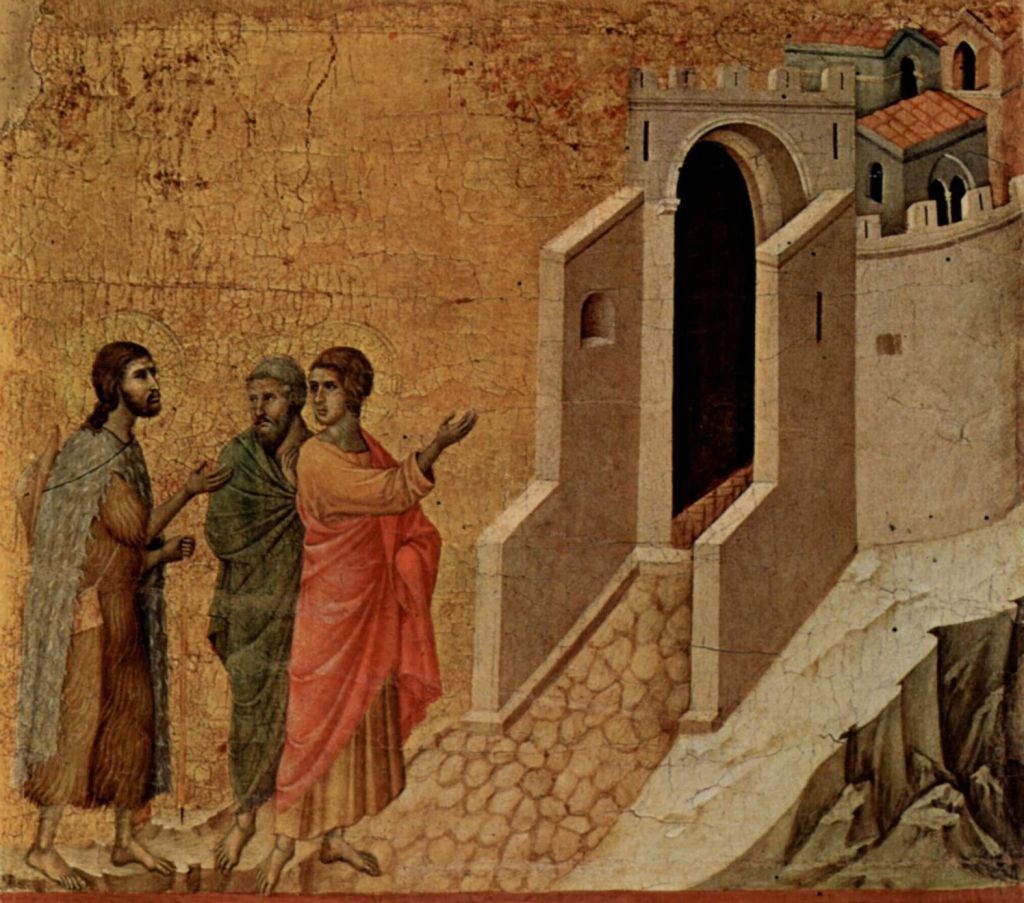
In today’s Gospel, the Risen Jesus appears to two disciples walking to Emmaus and reveals Himself to them. The story moves from the phrase “their eyes were prevented from recognizing Him” to “their eyes were opened.”
This passage has prompted many questions. Let us consider just two:
What is Emmaus?
The Gospels mention Emmaus, but its precise location is unknown. Archaeologists have identified two possible sites, both around 11 km from Jerusalem. Still, Emmaus remains more of a symbolic reference than a geographical certainty.
How did they recognize Jesus in the breaking of the bread?
Jesus instituted the Eucharist only three days prior—on Holy Thursday—and only the Twelve Apostles were present. Given that these three days were filled with fear and hiding, how could the Emmaus disciples identify Jesus through the breaking of the bread?
Scholars of Luke–Acts suggest that Luke, writing later, may have retroactively placed the familiar act of Eucharistic breaking of the bread into this episode, drawing on early Christian liturgical practices.
In Today’s Gospel, Three Conversations Take Place:
The disciples talk with one another.
Jerusalem is busy with talk about Jesus. Jesus engages in dialogue with the disciples.
(a) What are the Disciples Saying?
They speak of “Jesus of Nazareth.”
“He was a prophet, mighty in word and deed before God and the people. We hoped He was the one to redeem Israel. But He was crucified. It’s now the third day… and some say He’s alive.”
Even though they are speaking about Jesus, their words are filled with confusion, grief, and disappointment.
(b) What is Jerusalem Saying?
Though not directly stated, it is implied that Jerusalem is full of talk about what has happened to Jesus—His trial, crucifixion, and burial. The city is stirred.
(c) What does Jesus Say?
Jesus asks a simple yet profound question: “What happened?”
He gently rebukes them as “slow of heart to believe,” encourages them to invite Him in (“Stay with us”), and finally acts—in the breaking of the bread.
It is in that act that they recognize Him. And the moment they do, He vanishes.
This teaches us something: Divinity can disappear in an instant.
As in the Book of Wisdom: “Wisdom appears and disappears, depending on one’s readiness” (Wisdom 6:13).
Immediately, the disciples return to Jerusalem—the very place they were trying to escape. Their lives can no longer remain the same.
Jesus’ Question: “What Happened?”
When Jesus asks this, He isn’t seeking information. He is offering reassurance.
“Can anything truly go wrong when I am with you?” Nothing has happened to us. Nothing will happen to us. He walks with us.
We are the ones who often fail to recognize Him.
When Cleopas answers Jesus, he says,
“Are you the only one in Jerusalem who doesn’t know what has happened these days?”
It’s ironic. The disciples are distressed and overwhelmed. Yet Jesus, calm and composed, simply asks,
“What happened?”
There is wisdom in that question.
Three Reflections on “What Happened?”:
(a) We don’t need to know everything. As the saying goes, “Ignorance is bliss.” Knowing too much can lead to anxiety or disillusionment.
(b) A calm reaction reduces the weight of any problem. If we respond to life’s troubles with, “What happened, really?” we create room for peace. We shift from anxiety to gratitude.
The question becomes a prompt for self-reflection.
(c) By asking ourselves: “What happened yesterday? Last week? Last year?” we are encouraged to review and reframe our life journey.
In summary:
Today, like the Emmaus disciples, we may find ourselves halfway down life’s road, burdened by grief, confusion, and unfulfilled hopes. Then Jesus asks us—not harshly, but gently-“What happened?” It is a question not for answers, but for awakening.
Fr. Yesu Karunanidhi
Archdiocese of Madurai
Missionary of Mercy
 Yesu Karunanidhi
Leave a comment