Daily Catholic Lectio
Tue, 8 April ‘25
Fifth Week of Lent – Tuesday
Numbers 21:4–9. John 8:21–30
Being lifted up
As we approach Holy Week, this week’s readings begin to draw our attention to expressions and images connected to the Passion of Jesus. One key image is the Cross.
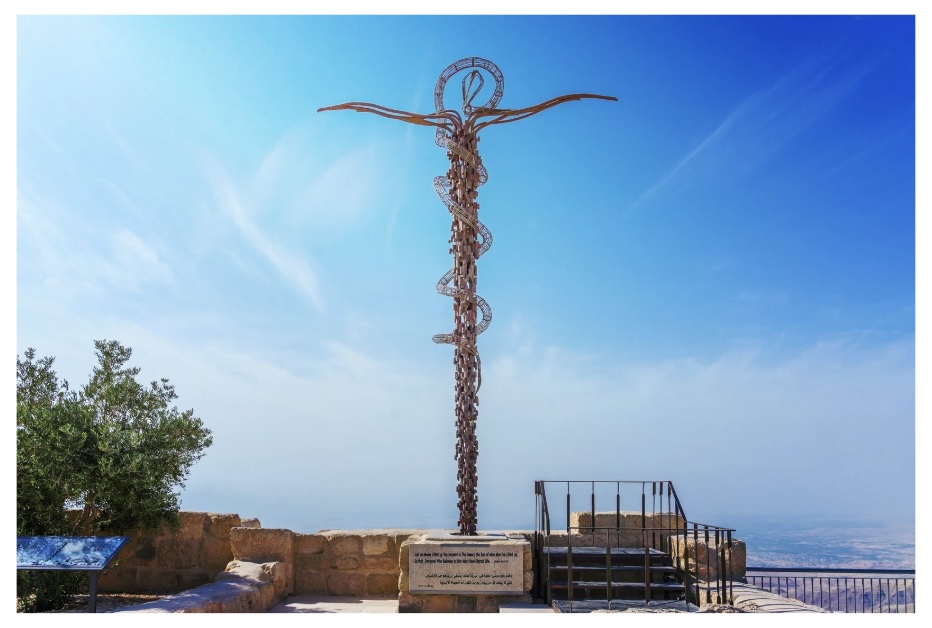
In the Old Testament (First Reading), the bronze serpent that Moses lifted up in the wilderness prefigures the Cross of Jesus. In the Gospel, Jesus speaks of His crucifixion through the phrase “being lifted up.”
He tells the Pharisees plainly, “You will die in your sins.” In the Gospel of John, “sin” primarily means “not accepting Jesus, the only Son of the Father.” Jesus then says, “I AM He.” This phrase, “I AM,” is the divine name God revealed to Moses—“I AM WHO I AM.” For the Pharisees, this would have been deeply offensive, as even pronouncing the divine name was considered blasphemous. For someone to identify with that name was unacceptable to them.
Jesus then speaks of His relationship with the Father—a concept that would have been new and challenging to His listeners. Since they had never referred to God as “Father” in a personal or intimate way, hearing Jesus speak of the Father as His would have been troubling. Here, Jesus points to the presence of the Father with Him as His strength.
One Expression Connects Both Readings: “Lifted Up”
In the First Reading, Moses lifts up the bronze serpent in the desert. All who looked upon it were healed.
In the Gospel, Jesus says that being “lifted up” is the beginning of understanding who He is.
In the Gospel of John, the phrase “lifted up” carries three key meanings: (a) Healing (cf. John 3); (b) Knowing God (cf. John 8); and (c) Union with the Father (cf. John 12)
“Lifted up” thus has a dual meaning: (a) Jesus being lifted on the Cross (crucifixion). (b) Jesus being lifted to the Father (resurrection and ascension).
In the First Reading: “Those who looked at the serpent did not die.” In the Gospel: “Those who look upon the lifted-up Son will not die.” In the Gospel of John, “seeing” also means believing (cf. John 20:22).
Two Levels of Understanding
Jesus speaks from one level, but His listeners interpret Him from another. When He says, “In a little while you will not see me,” He is referring to His death and exaltation. They misinterpret and ask, “Is He going to kill Himself?” Those who are “from below” think in lowly terms. Jesus, who is “from above,” is trying to elevate their minds and hearts.
If we strive to think and act from the higher perspective of Christ, we too will be uplifted.
Jesus and the Father: A Deep Relationship
Jesus says further: “I do nothing on my own… The one who sent me is with me; He has not left me alone, For I always do what pleases Him.”
These words reveal His identity as the Son of God, and the depth of His relationship with the Father. Jesus never acted against the Father, but always fulfilled the Father’s will.
Our Response
As we gaze upon the crucified Christ lifted up before us today, what is our response? Do we look upon Him and find healing? Are we moved to do what pleases Him, just as He pleased the Father? Let every glance at the Cross become for us not just a reminder of suffering—but a call to believe, to be healed, and to live in communion with the Father.
Fr. Yesu Karunanidhi
Archdiocese of Madurai
Missionary of Mercy
 Yesu Karunanidhi
Leave a comment