Daily Catholic Lectio
Tue, 1 April ‘25
Fourth Week of Lent – Tuesday
Ezekiel 47:1–9, 12. John 5:1–3a, 5–16
That Man was Healed
Today we read the third sign (miraculous act) performed by Jesus in the Gospel of John. After the first and second signs, both the disciples and the people come to believe in Him. However, from the third sign onwards (until the seventh), two notable shifts occur:
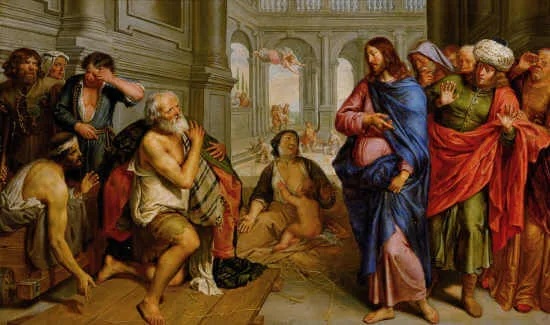
After each of the remaining signs, Jesus delivers a long discourse. Instead of growing belief, those around Him begin to rise up against Him. The third sign takes place in Jerusalem. Near the pool of Bethesda, Jesus sees a man who had been ill for thirty-eight years. Jesus heals him. Because this miracle happens on the Sabbath, the Jews begin to persecute Him.
First Reading: A Vision of Life-Giving Water
In the first reading, the prophet Ezekiel shares a vision near the end of his book. God’s glory, which had departed from Jerusalem, now returns after the Babylonian exile. Through the image of water flowing from the temple, Ezekiel sees how God’s presence brings healing, abundance, and life to the city.
The water flowing from Jerusalem gives life and fertility.
The stirred waters of the Bethesda pool, touched by an angel, also bring healing.
But before the angel descends, the Son of God Himself arrives.
The same Jesus who offered the Samaritan woman ‘living water’ now becomes healing water for the sick man at Bethesda. With His presence, grace flows into all five porticoes of the pool.
A man who lay helpless for 38 years rises and walks.
But those who lie stuck in the laws of the Sabbath—symbolically represented by the Jews—do not find healing.
Here, the word “Jews” doesn’t refer to the ethnic group but to those who reject Jesus. Likewise, the term “sin” refers to the refusal to believe in Him. Jesus invites the healed man to believe in Him.
Lessons from Today’s Readings
(a) A ruined city becomes alive. The desolate city of Jerusalem is transformed into a city full of life-giving water. Likewise, our lifeless situations can be revived one day through God’s grace.
(b) Accommodated to brokenness. The man had lived in his condition for 38 years—it had become normal to him. What areas in my life have I become too comfortable with, despite their brokenness?
(c) Reacting to others’ healing. When someone in front of me finds healing, prosperity, or joy—do I celebrate with them? Or do I stumble and grumble, like the Jews in today’s Gospel?
Fr. Yesu Karunanidhi
Archdiocese of Madurai
Missionary of Mercy
 Yesu Karunanidhi
Leave a comment