Daily Catholic Lectio
Sun, 30 March ‘25
Fourth Sunday of Lent – Laetare Sunday
Joshua 5:9a, 10–12. Psalm 34. 2 Corinthians 5:17–21. Luke 15:1–3, 11–32
Joy of Coming Home
Laetare Sunday—“Rejoice Sunday”—offers us a pause in our Lenten journey to taste the joy of Easter ahead. The Entrance Antiphon from Isaiah (66:10–11) sets the tone:
“Rejoice, O Jerusalem… Be joyful with her, all you who mourn for her… You will drink deeply with delight…”
If Jerusalem symbolizes Jesus’ Passion, Death, and Resurrection, then our sorrow with Him will lead to joy in His Resurrection. The goal of Lent is not sorrow or guilt, but joy, victory, and new life.
Gospel: The Merciful Father (Luke 15:1–3, 11–32)
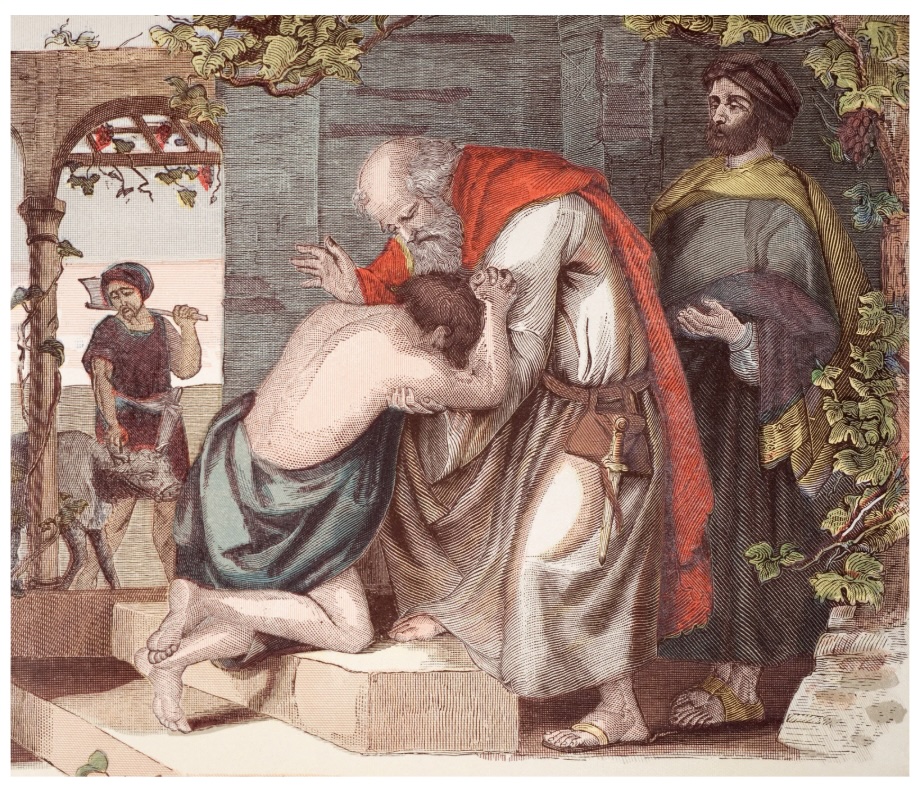
Jesus responds to the grumbling of the Pharisees and scribes with the parable of the merciful father. The focus is not on the younger or older son, but on the father—who remains loving and merciful throughout.
In Jesus’ time, He encountered two groups: (a) Tax collectors and sinners, marginalized by society; (b) Pharisees and scribes, faithful to Jewish law and tradition
This parable speaks to both groups. The two sons represent them. The father symbolizes God Himself.
The Central Image: The Home
The story centres around the home.
The younger son physically leaves the house, chasing happiness. He squanders his inheritance, ends up poor, and hires himself out to feed pigs. Hunger brings him to his senses, and he decides to return—not as a son, but as a servant.
The older son, though at home, lives like a slave and refuses to enter when his brother returns. He resents the celebration and keeps score of his obedience.
Both sons are distant from the father—one physically, the other emotionally.
It is the father, rich in compassion, who reaches out to both:
He waits for the younger son.
He goes out to the elder son.
He is not concerned with what is lost, but with who has returned.
“We had to celebrate and rejoice,” the father says. Not later. Now.
First Reading: A New Beginning (Joshua 5:9a, 10–12)
The Israelites enter the Promised Land. Two key events mark this moment:
(a) Circumcision – The men born in the wilderness are now consecrated to God. God says: “Today I have removed the reproach of Egypt from you.” Egypt once mocked them: “These people follow a God they don’t know.” But now, God has fulfilled His promise.
(b) First Passover in the Promised Land – The Israelites begin to eat from the land. The manna stops. They are no longer dependent as children, but now stand as adults, free and blessed in their own land.
They have returned to the place Jacob once left. It is now their home—a place of joy and fulfilment.
Second Reading: Ministry of Reconciliation (2 Corinthians 5:17–21)
Paul speaks of the reconciliation entrusted to him. Sin separates us from God and one another. Christ becomes the bridge, tearing down the wall.
“If anyone is in Christ, there is a new creation. The old has passed away. The new has come.”
This reconciliation is God’s initiative:
“God made Him who knew no sin to be sin, so that in Him we might become the righteousness of God.”
Christ took on sin—and even death—so that we might have new life.
Returning home has two dimensions: (a) Christ reconciles the world to God. (b) The message of this reconciliation is entrusted to us, to share with others.
Reflections: The Joy of Homecoming
Like the younger son, we often go far from home, seeking pleasure in empty places.
Like the older son, we can live close but with resentment and distance.
Like the Israelites, we may wander in the desert, forgetting God’s promise.
But God is always waiting. His mercy welcomes us—not as slaves, but as children.
Once lost, never lost again.
Once reconciled, never separated again.
Once in the Promised Land, always at home.
Responsorial Psalm: “Taste and See” (Psalm 34:8)
David composed this psalm after escaping from Abimelek, praising God’s mercy.
From the moment we taste God’s mercy, we too begin to live mercifully. The only way to truly rejoice in coming home is to become like the merciful Father.
Fr. Yesu Karunanidhi
Archdiocese of Madurai
Missionary of Mercy
 Yesu Karunanidhi
Leave a comment