Daily Catholic Lectio
Sat, 25 January ‘25
Conversion of Saint Paul, Feast
Acts 22:3-6. Psalm 117. Mark 16:15-18
Foundational Experience & Change
Today we celebrate the feast of the conversion of St. Paul. The event of Paul’s calling or conversion is presented in three ways:
(a) In his letter to the Galatians, Paul affirms that God called him from his mother’s womb (cf. Gal 1:15).
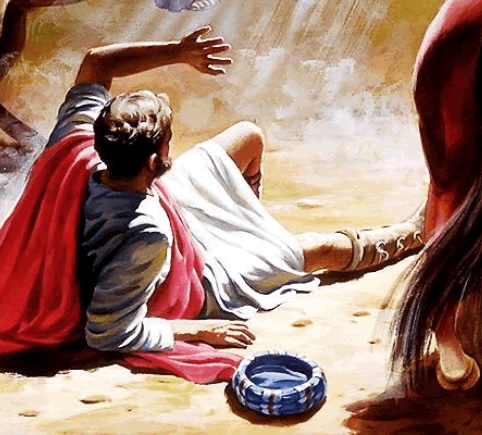
(b) Luke narrates Paul’s encounter with God on the road to Damascus (cf. Acts 9, 22, 26).
(c) Through Barnabas, Paul embraced Christianity, as Barnabas introduced Paul to the apostles and supported his transformation (cf. Acts 9:27)
Paul’s conversion can be understood as a threefold change: a change of name, a change of path, and a change of mission.
(a) Change of Name
The name Saul (meaning “one who is asked for”) becomes Paul (meaning “small or humble”). Once a man of great learning, a Pharisee of distinction, and a person of influence, Saul was known as “great” among the religious elite. But through his conversion, the “one who was asked for” becomes “one who listens.” He humbles himself, calling us to recognize that God alone is great.
(b) Change of Path
On his way to Damascus to persecute Christians, Paul is instead led into Damascus as a changed man. Though he continues the same road, his journey takes a new purpose. The persecutor of Christ becomes bound by Christ. He abandons his self-driven mission and learns to rely on companions like Ananias, who guide and walk with him.
(c) Change of Mission
Paul, who once sought to silence Christ’s name, now proclaims, “Christ is preached in every way, and for this I rejoice” (Phil 1:18). His mission centres on Christ, and he works not only through his own efforts but also by empowering others in their ministries. The title apostle becomes both his identity and his mission.
In the Damascus event (Acts 22), Paul poses two significant questions that challenge us:
1. “Who are you, Lord?”
The Greek term Kyrios (Lord) is translated as “Master” or “Lord.” When Paul hears the voice saying, “Saul, Saul, why are you persecuting me?” he is astonished. Recognizing the voice knows him by name, Paul asks, “Who are you, Lord?” The dialogue shifts Saul, the “one asked for,” into a posture of listening.
The Lord reveals Himself: “I am Jesus, whom you are persecuting.” Like Paul, we may have heard about God from our parents, teachers, catechism classes, and sermons. However, conversion begins when we personally ask, “Who are you, Lord?” In prayer, scripture, silence, or solitude, this question can help us encounter God anew, knocking us off the “horses” of pride and self-sufficiency.
Embedded in the question, “Who are you, Lord?” is another: “Who am I?” When we begin to define the Lord, we begin to redefine ourselves. And the question “Who am I?” has the implication of “What am I here for?”
2. “What shall I do, Lord?”
This question appears only in Acts 22. Paul’s readiness is remarkable. The profound impact of his encounter prompts him to immediately surrender and ask, “What shall I do, Lord?” The answer comes through Ananias: “He is a chosen instrument of mine to carry my name before Gentiles, kings, and the children of Israel” (Acts 9:15). Paul sets aside his plans to embrace God’s mission, changing the goal of his life’s journey.
Like the first disciples who left their nets, or Matthew who left his tax booth, Paul immediately becomes a disciple of Christ. He teaches us to forsake our plans and embrace God’s will. The one who once served earthly rulers now serves Christ, the eternal King.
Paul exemplifies the truth: “No soldier gets entangled in civilian pursuits but aims to please the one who enlisted him” (2 Tim 2:4). His life becomes a model of complete devotion to Christ.
A Foundational Experience
Paul’s conversion was a foundational experience that turned his life upside down—much like Moses at the burning bush, Mary at the Annunciation, Jesus at the Jordan, Mother Teresa in the slums, Gandhi at the railway station, or Ambedkar in the classroom. Such encounters shake us to our core and redefine our purpose, and we never return to our old lives.
When we begin to fall from the “horses” of our self-sufficiency, we rise anew in Christ.
Fr. Yesu Karunanidhi
Archdiocese of Madurai
Missionary of Mercy
 Yesu Karunanidhi
Leave a comment