Daily Catholic Lectio
Sun, 19 January ‘25
Second Sunday in Ordinary Time
Isaiah 62:1-5. Psalm 96. 1 Corinthians 12:4-11. John 2:1-11
Best wine till the end!
We are 19 days into the New Year. On New Year’s Day, many of us might have made or renewed resolutions such as rising early, reading more, reducing anger, building relationships, maintaining health, increasing resources, or dedicating more attention to our children. These are promises we made to ourselves, but often, we fall short in fulfilling them. The Gospel today reminds us to “keep the best wine until the end” and reorient our journey. For this to happen, God must be present in our lives!
The synoptic Gospel writers (Mark, Matthew, and Luke) introduce Jesus’ ministry through acts such as preaching in synagogues, exorcising demons, and healing lepers. In contrast, John begins with Jesus’ first sign at a wedding feast, turning water into wine.
In today’s Gospel, the event at the Wedding at Cana reveals profound theological and literary insights, offering key life lessons for us.
(1) The unexpected
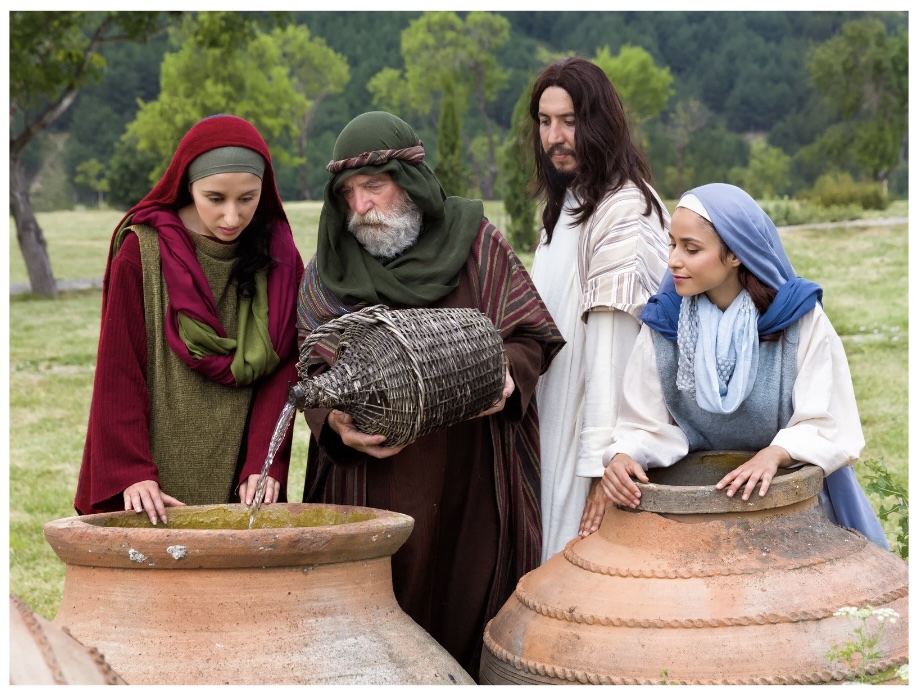
God intervenes at unexpected moments. At the wedding feast, despite careful preparation, the wine runs out. Jesus’ mother initiates the first sign by bringing the issue to Jesus. The steward, unexpectedly, receives the best wine toward the end. The disciples, who saw Jesus as just one among them, now experience a new revelation: the divine glory manifest in Him. Abundance of wine, revelation of God’s glory, and the faith of disciples – all happen in unexpected ways.
(2) Cooperation of all
The miracle at Cana highlights the beauty of collaboration. Mary initiates the action. Jesus reveals His glory. The servants fill the jars with water and serve the wine. The steward praises the bridegroom. Each role is interconnected, and everyone’s effort contributes to the miracle. Jesus doesn’t magically create wine but transforms the water the servants provided. If we desire God’s intervention in our lives, we too must fill the jars with water—our efforts.
(3) Jesus, the Bridegroom
In John’s Gospel, deeper meanings emerge. Superficially, it is a wedding feast, but where is the bridegroom? In the Old Testament, wells and water jars often mark the beginning of marriages (e.g., Isaac and Rebekah, Jacob and Rachel, Moses and Zipporah, Saul and Kingship). Here, Jesus, standing by the six jars of water, reveals Himself as the ultimate Bridegroom who unites the New Israel and keeps the best wine flowing until the end.
(4) Jesus, the New Covenant wine
When Mary says, “They have no wine,” it signals the end of the Old Covenant. Like Eve who introduced the fruit in the Old Testament, Mary introduces the wine of the New Covenant. The old system of law, fear, and prophecy is replaced with one of grace and mercy in Jesus.
(5) The Glory of Jesus
John notes that through this sign, Jesus revealed His glory. While everyone witnessed the miracle, only the servants knew its source. This interplay of revelation and mystery marks Jesus’ identity. Even as He reveals God, He remains hidden to some.
(6) Faith of the disciples
At the end of the event, the disciples put their faith in Jesus. Those who came as wedding guests became believers in the Bridegroom. This transformation underlines why John calls Jesus’ works ‘signs’: they point to who He truly is.
Lessons for us:
(a) Bridge the gap between problem and action
When the wine ran out, Mary acted immediately. She not only presented the problem to Jesus but also directed the servants to obey Him. Likewise, success lies in bridging the gap between identifying issues and acting on them. Prompt action leads to improvement and transformation.
(b) Fulfil your role
As St. Paul writes, “There are different kinds of spiritual gifts, but the same Spirit distributes them” (1 Cor. 12:4) (Second Reading). To see the miracle of wine in our lives, everyone must fulfil their role. Above all, Jesus must be invited into our homes and hearts. Without His presence, the jars will hold only water.
(c) The measure of joy
The tension of the event transforms into joy. In today’s first reading, God rejoices in His people, giving them names like “My Delight” (Hephzibah) and “Married” (Beulah). Ancient Egyptian wisdom teaches that, after death, two questions determine one’s eternal fate: “Did you experience joy in your life?” and “Did you bring joy to others?” The presence of Jesus brings joy. He stands as the seventh jar, completing and fulfilling our lives with abundant grace.
As we celebrate the Christian Unity Octave (January 18-25), let us strive for unity in Christ. Divisions among us contradict the prayer of Jesus for oneness. Centring our lives on Christ is the path to unity and peace.
Fr. Yesu Karunanidhi
Madurai Archdiocese
Missionary of Mercy
 Yesu Karunanidhi
Leave a comment