Daily Catholic Lectio
Tue, 17 December ‘24
Advent Weekdays
Genesis 49:1-2, 8-10. Psalm 72. Matthew 1:1-17
That is fullness this is fullness!
“That is fullness this is fullness!
From fullness flow fullness
Even if fullness is removed fully from fullness
Fullness remains full.
Peace, peace, peace!”
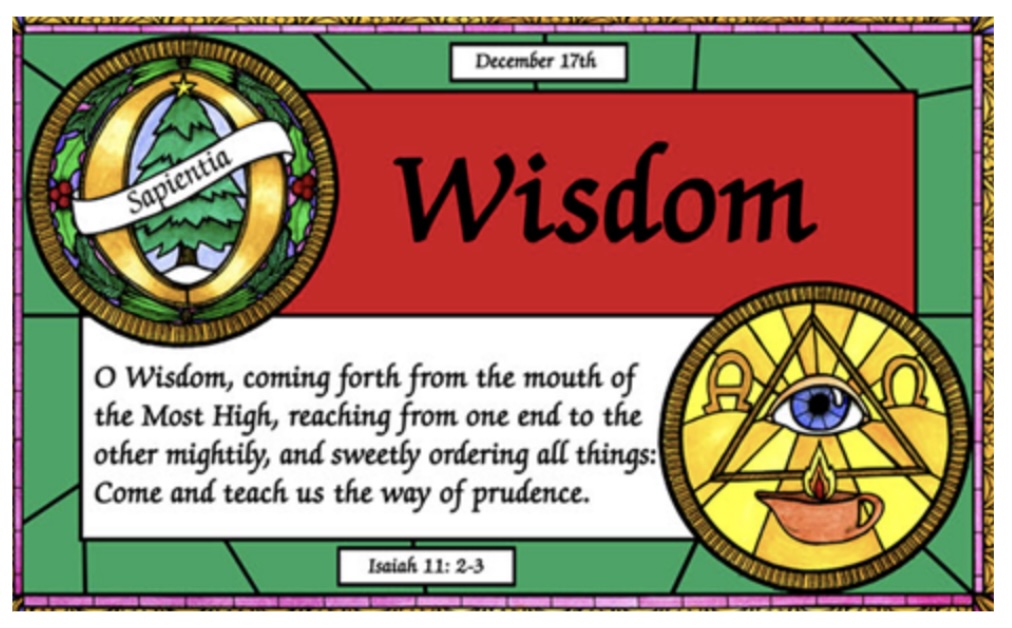
This is a song from the Brihadaranyaka Upanishad, that sings about the fullness of God. In the days of Advent, the days from December 17 to 24 are celebrated as preparation days for the birth of Christ (eight or nine). During these days, the “O” antiphons are sung in the evening prayers.
We human are with imperfections, shortcomings, and deficiencies. We desire that the God we have created or the God who has created us should be perfect and full. In the presence of God, there is no imperfection.
In today’s Gospel reading, we read the genealogy of Jesus Christ. Using numbers that signify fullness like 3, 7, 14, and 42, Matthew presents Jesus’ genealogy. Although the genealogy is seen as a measure to know one’s roots in both Jesus’ time and earlier, genealogies were also written for respected individuals and kings in society.
Both Matthew and Luke record the genealogy of Jesus. There are some differences in their writings. Matthew concludes the genealogy with Abraham. Luke extends it to Adam.
‘The son of David, the son of Abraham, Jesus Christ’ – with these three titles, Matthew begins the genealogy.
The title ‘son of David’ indicates Jesus’ messianic status. The title ‘son of Abraham’ confirms that Jesus came from among the people of Israel. ‘Jesus’ is a personal name. ‘Christ’ (the anointed one) is a title.
Matthew divides the time of the genealogy into three periods: (a) the time between Abraham and David. (b) the time between David and the Babylonian exile. (c) the time between the Babylonian exile and Jesus. There are fourteen generations in each period – that is, two times seven. The fullness of seven is complemented by another fullness of seven. Fourteen is three times in succession, forty-two – standing full for all fullness.
What does Jesus’ genealogy teach us? (a) God transcends time, sanctifying time by subjecting Himself to it. (b) God, who participates in human history, identifies Himself as one of the weak humans. (c) God is not a stranger to us, rather, He is someone close to us. (d) In the genealogy, we see five women (Tamar, Rahab, Ruth, Bathsheba, Mary) or some names of the Gentiles as well. It seems to welcome everyone in the coming of the Messiah.
In today’s first reading, Jacob, who blesses Judah as part of blessings to all children, says, ‘The sceptre shall not depart from Judah, nor the ruler’s staff from between his feet.’ Judah’s reign continues forever. ‘The lion crouching down’ signifies peace, fullness, and victory.
Pause.
Today we pray ‘O Wisdom, come!’
The verse before the gospel goes thus: “O Wisdom of our God Most High, guiding creation with power and love: come to teach us the path of knowledge!”
The author of the book of Proverbs, extolling the greatness of wisdom, states, ‘Wisdom was there before the foundation of the world, before anything was created’ (Proverbs 8:22). Furthermore, when God laid the foundations of the earth, Wisdom was beside Him as a master craftsman (his beloved) (8:30).
The Evangelist John also writes, ‘All things were made through Him, and without Him nothing was made that was made’ (John 1:3).
Jesus is the wisdom of God. This wisdom leads us towards fullness and truth!
While we are only concerned with knowledge, understanding, and artificial intelligence, let us ask God for the wisdom that supports knowledge.
#
The ‘pilgrims of hope’ see God as the fullness of their lives (Jubilee 2025, bite 274).
Fr. Yesu Karunanidhi
Archdiocese of Madurai
Missionary of Mercy

 Yesu Karunanidhi
Leave a comment