Daily Catholic Lectio
Mon, 9 December 2024
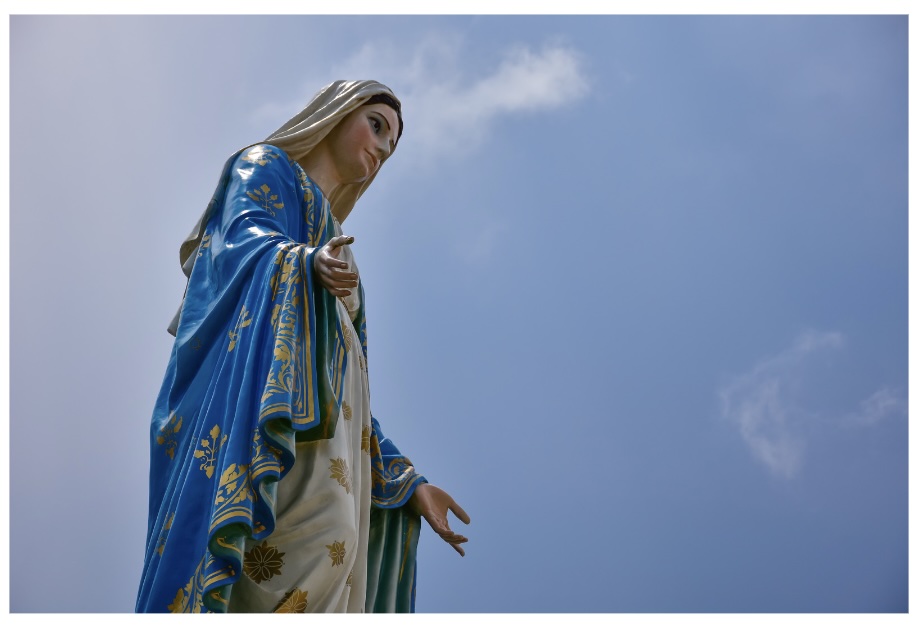
Solemnity of the Immaculate Conception
Genesis 3:9-15, 20. Ephesians 1:3-6, 11-12. Luke 1:26-38
Motherhood, Justification, and Surrender
Today, our Holy Mother Church solemnises the Immaculate Conception of Mary. Pope Pius IX, in 1854, through his document ‘Ineffabilis Deus’ (‘the ineffable God’), pronounces the Immaculate Conception of Mary as the infallible truth:
“We declare, pronounce, and define that the doctrine which holds that the most Blessed Virgin Mary, in the first instance of her conception, by a singular grace and privilege granted by Almighty God, in view of the merits of Jesus Christ, the Saviour of the human race, was preserved free from all stain of original sin, is a doctrine revealed by God and therefore to be believed firmly and constantly by all the faithful.”
Blessed Virgin Mary, in 1858, in her apparition to Bernadette (16th apparition, May) at Lourdes in Francis, reveals herself as “I am the Immaculate Conception.”
The Biblical texts such as Genesis 3:15 (‘the seed of the woman’) and Luke 1:28 (‘full of grace’), and the interpretation of Saint Irenaeus stand as background to today’s solemnity.
The characteristics of the dogma are the following: (a) The stain of original sin is on every human person born in this world. Mary is saved from the stain of original sin through God’s grace. (b) This happens in preparation for the incarnation that will happen in the womb of the Blessed Virgin Mary. (c) This is a singular privilege given to Mary by God.
In the first reading, towards the end, we hear how Adam names the woman as ‘Mother of all living beings’ (‘Havvah’). The first woman receives two names in the Bible: ‘woman’ (‘Issha’ in Hebrew) and’mother’ (‘Havvah’). God curses the first parents after they eat the forbidden fruit.
When God pronounces judgement on the serpent, he says that he will create enmity between the serpent and the seed of the woman. In the Ancient Near East tradition, the word ‘seed’ is used in reference to man. Here, the expression is ‘seed of the woman.’ The Fathers of the Church consider this expression as ‘proto-evangelium’ (‘first good news’) and interpret that this refers to the virginal conception of Jesus. Moreover, Jesus, who is born of Mary, through his cross, death, and resurrection, will win over evil. Thus, the woman (‘Mary) initiates the redemption. The Immaculate Conception prepares Mary to assume motherhood. The Immaculate Conception is purported to be Mary’s conception of Jesus in her womb.
In the second reading, Paul calls the people of God in Galatia ‘the holy ones’ (‘the saints’). He tells them that holiness comes on account of their election by God. The process of rendering people holy is called justification, which happens at three levels: (a) He chooses the people before the beginning of the world; (b) He predestines them in love; and (c) He gives them adoption. God himself is the agent of these actions. Justification happens because of God’s grace, not because of human merits.
The gospel reading brings before us the annunciation narrative in Luke. As soon as the archangel said, ‘nothing is impossible with God’, Mary surrenders, ‘Behold the handmaid of the Lord; be it done to me according to your word.’ Later in the Magnificat at Elizabeth’s house, Mary praises God because God looked upon her lowliness. Mary here realised her ‘clay’-ness (‘humility’). She makes a self-gift to God.
The readings of the day point to the Immaculate Conception through these themes: motherhood, justification, and surrender.
What are the lessons for us today?
(a) God’s providence and grace
God did not let the world and human persons perish. He wanted them to be redeemed. Mary’s Immaculate Conception serves as a preparation for redemption. God providentially and abundantly pours grace on Mary. God’s providence and grace come to us as well. We need to realise them in our lives.
(b) Mary’s obedience
Mary obeys the plan of God by surrendering herself as the handmaid of the Lord. God’s preparation finds its fulfilment in Mary’s obedience. Our life’s purpose is realised when we align our purpose with that of God. Mary invites us to let go of our plans and to embrace God’s plans.
(c) Call to holiness
Mary’s holiness was a gift from God. For us, it is the fruit of our action. Holiness, or purity, is preparedness. Mary found her vocation through the revelation of the Archangel Gabriel. For us, it is not that easy. Often, we find our vocation after a lot of trial and error and through different initiatives. Let us take a moment to understand the vocation of our lives.
(d) Dignity of human life and body
Human life and body become dignified because of God’s incarnation. God required Mary’s life and body. God needs our lives and bodies as well. We are not mere historical accidents on this earth. We have a purpose to achieve. And God calls us to respect human life and body.
#
The Catechism of the Catholic Church presents the following as the characteristic features of the Immaculate Conception of Mary: ‘Mary was adorned by God’s special gifts.’ ‘Mary’s unique gift of holiness… Mary was predestined… she was formed into a new creature’ (cf. nn. 490-493).
Fr. Yesu Karunanidhi
Archdiocese of Madurai
Missionary of Mercy


 Yesu Karunanidhi
Leave a comment