Daily Catholic Lectio
Fri, 22 November ‘24
XXXIII Week in Ordinary Time, Friday
Saint Ceciliya, Memorial
Revelation 10:8-11. Psalm 119. Luke 19:45-48
Temple Cleansed
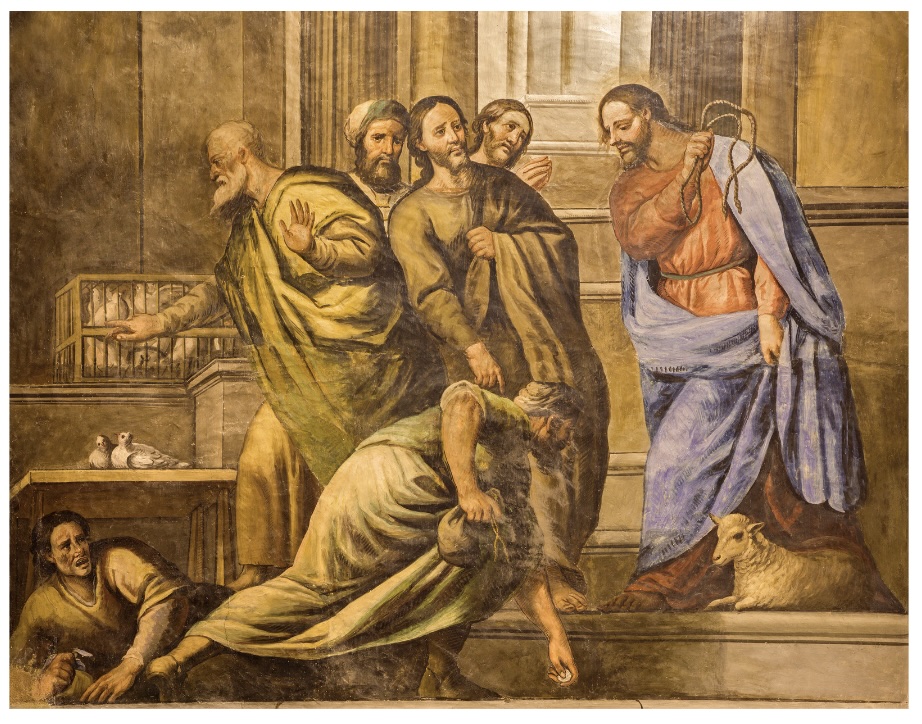
In yesterday’s Gospel, Jesus wept over Jerusalem, lamenting its failure to recognize God’s visitation. Today, He enters the Temple and cleanses it, revealing His zealous love for the sanctity of God’s house. The Temple was the heart of Jerusalem—its centre of worship and identity. The Synoptic Gospels place this dramatic act at the end of Jesus’ ministry, while John places it at the beginning, emphasizing its theological significance.
The Temple, during Jesus’ time, had become a symbol of power, corruption, and greed. Its custodians—the High Priest and chief priests—used it as a means of political control and financial exploitation, burdening the faithful with heavy taxes. Yet, for the common people, the Temple remained sacred, believed to be the dwelling place of God’s name. Jesus’ cleansing of the Temple was a prophetic act, fulfilling the hope that the Messiah would purify God’s house. This bold act incited His enemies, ultimately leading to their resolve to eliminate Him.
The Gospel passage invites us to reflect:
(a) Restoring purpose: The Temple was meant to be a house of prayer but had become a den of thieves. Similarly, Saint Paul reminds us that our bodies are temples of the Holy Spirit (1 Cor 6:19). Have we allowed distractions, sins, or worldly concerns to divert us from our purpose of glorifying God? Let us examine and cleanse our hearts to rediscover their true purpose.
(b) Authenticity in witness: Jesus’ teaching in the Temple captivated the people because He lived what He preached. His words and actions were one. Do we live out what we teach? Let us strive to align our words with our actions, becoming true witnesses of Christ.
(c) Righteous zeal for justice: Jesus’ anger in the Temple was not self-serving but born out of love for God and a desire for justice. His zeal challenges us to stand firm for what is right, without compromise, even when it is uncomfortable. Are we bold in upholding the values of the Gospel?
The first reading complements this reflection. John eats the scroll, tasting its sweetness but feeling its bitterness—symbolizing the dual nature of God’s Word: sweet to those who embrace it, yet convicting to the wicked. Like John, let us embody God’s Word, sharing its sweetness while courageously proclaiming its truth.
Reflection on Saint Cecilia
On this feast of Saint Cecilia, patroness of music, we draw inspiration from her:
(a) Faithful witness: Cecilia remained steadfast in her faith, even unto martyrdom. She teaches us to trust in God’s strength, especially in trials.
(b) Harmony of worship and life: Known for singing praises to God, she reminds us to unite prayer with daily action, living a life of worship.
(c) Sacrificial love: Cecilia’s life exemplifies total surrender to God and selfless love for others. Let us follow her example in offering our lives as a living sacrifice to the Lord.
#
The ‘pilgrims of hope’ are the hearers of the word (Jubilee 2025 AD, bite 255).
Fr. Yesu Karunanidhi
Archdiocese of Madurai
Missionary of Mercy
 Yesu Karunanidhi
Leave a comment