Yesu Karunanidhi
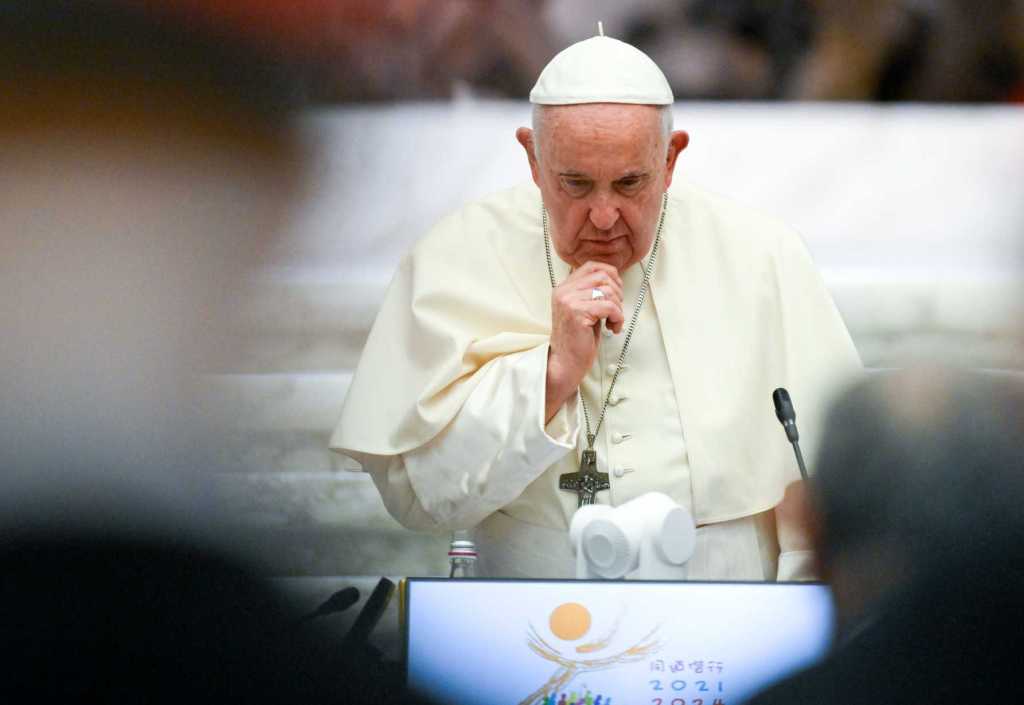
The three-year-long global journey of synodality concluded on October 26, 2024, as Pope Francis endorsed the Final Document—a 52-page text comprising 155 paragraphs, each carefully voted on by the 355 participants of the Second Session of the XVI General Assembly of the Synod.
Two month-long sessions of the Universal Phase across two years, hundreds of pages of reports from continents, episcopal conferences, dioceses, religious institutes, ecclesial movements, groups, and individuals—all distilled into a 52-page document. This text has now been ‘adopted’ by the Supreme Pontiff with magisterial authority, taking the place of his traditional post-synodal apostolic exhortation.
Was Pope Francis saying, “Yes, this is exactly what I envisioned!” or was he simply saying, “Enough—no more time on this”? Synodality—everyone speaks of it, yet no one fully grasps it!
Let us evaluate the limitations of the document.
I. Generalizations, Simplifications, and Contradictions in the Document
The document’s ambitious vision for a synodal Church is marked by several generalizations, simplifications, and contradictions. While it promotes inclusivity, transparency, and unity, certain assumptions and inconsistencies reveal challenges in fully aligning ideals with practical realities. These insights call for deeper nuance to ensure the vision of synodality is both achievable and adaptive across diverse contexts.
i. Generalization on Synodality and Consensus. The document presents synodality as a path to consensus, implying that greater participation always leads to unity. This generalization overlooks contexts where diverse views may not align, even with extensive dialogue.
ii. Simplification of Ecumenical Relationships. The document promotes a unified approach to ecumenism, suggesting seamless collaboration across traditions. However, it simplifies the complexity of theological and cultural differences that may challenge this unity.
iii. Contradiction in Lay Participation. There is a push for increased lay participation in decision-making, but the document simultaneously reinforces the traditional hierarchy, limiting the full impact of lay contributions.
iv. Generalization about the Digital Mission. The document assumes digital platforms will naturally lead to more vibrant, engaged communities, which overlooks digital challenges like polarization and misinformation that can complicate online ministry.
v. Simplification of Transparency and Accountability. The document endorses transparency as a remedy for trust issues, yet it simplifies the difficulty of implementing transparency consistently, especially in sensitive matters requiring confidentiality.
vi. Contradiction in Authority and Consultation. While promoting a synodal decision-making process, the document asserts the final authority of bishops, creating a contradiction between consultation and hierarchical authority.
vii. Generalization of the Church’s Openness to Cultural Diversity. There is an assumption that all local churches readily adapt to cultural diversity, overlooking areas where integration may encounter resistance due to entrenched practices or beliefs.
viii. Simplification in Addressing Marginalized Communities. The document generalizes that the Church’s outreach to marginalized communities will readily bridge trust gaps, without addressing the deeper systemic challenges these communities may face.
ix. Contradiction in Formation of Synodal Culture. The document encourages the formation of a synodal culture yet presents synodality primarily in terms of structure, potentially limiting its internalization as a genuinely lived experience.
x. Generalization on Synodality as the Ideal Church Model. It assumes that synodality is universally ideal for all Church structures, neglecting contexts where alternative or hybrid models might better suit local needs.
xi. Simplification of Ownership of Synodality. The document presumes that everyone owns synodality; and in its presumption it romanticizes ‘synodality’ as an ideal to be followed. If one sits and asks, no one really owns synodality. Everyone thinks ‘synodality’ is for the other.
xii. Contradiction in Emphasizing Parish as a Synodal Hub. While the document promotes the parish as a central place for synodal community, it simultaneously acknowledges that many parishes face structural and attendance challenges, which can undermine their capacity to function as vibrant synodal centres.
II. Deterred Ambiguities and Disturbing Anxieties
i. Magisterial yet non-normative! For the first time, Pope Francis has chosen to designate the final document from the Synod on Synodality as authoritative Church teaching. Under the reforms he introduced in 2018, this document is now part of his ordinary magisterium. However, he has described the document as non-normative. This raises important questions: Who is ultimately responsible for the content? Is the document ‘a guiding principle’? Is it to be ‘implemented’ or ‘interpreted locally’?’ Who should be cited when referencing it—Pope Francis himself, the Drafting Committee, the Synod participants, or those who voted in favour?
ii. Women’s Diaconal ministry – an open possibility, yet a closed discussion! The Final Document notes that women ‘continue to encounter obstacles’ (n. 60) in realizing their ‘charisms, vocations, and ministries’ (n. 21) within the Church. On the issue of women’s access to diaconal ministry, it states that the question ‘remains open’ and ‘discernment needs to continue’ (cf. n. 60). Does this imply that access is open, but discussion closed? The Church’s reluctance to provide a clear ‘yes’ or ‘no’ on certain issues raises questions, especially when it swiftly affirms canonical actions against those who express views differing from the Holy Father’s. It is essential to recall that sentire cum ecclesia (“to feel with the Church”) is not synonymous with sentire cum papa (“to feel with the Pope”).
iii. Communion–Participation–Mission or Primacy–Collegiality–Synodality? Initially, the synod’s tagline was set as ‘Communion–Participation–Mission,’ but this was reordered to ‘Communion–Mission–Participation’ for the First Session of the XVI General Assembly in October 2023. Now, however, the original sequence is restored now, and a new phrase – ‘Primacy–Collegiality–Synodality’ – has been introduced indirectly in three places (cf. nn. 130, 136, 142). This new framework suggests what is reserved to ‘one,’ extended to ‘some,’ and opened to ‘all.’ It remains unclear how each aspect is intended to function: what exactly pertains to primacy, where collegiality applies, and when openness to all (synodality) should be practiced. The boundaries between these roles are left undefined.
iv. Not political correctness, but Pontifical correctness. The Final Document avoids the term ‘LGBTQAIK+,’ opting instead for the phrasing ‘marital situation, identity or sexuality’ (n. 50) when addressing the call to avoid exclusion. Was this choice made to ensure ‘Pontifical correctness’—that is, to avoid offending the Holy Father? The document frequently references the Supreme Pontiff, using terms like ‘Pope’ (15 times), ‘Francis’ (18 times), ‘Bishop of Rome’ (14 times), ‘Petrine’ (4 times), ‘Successor of Peter,’ and ‘See of Peter.’ In contrast, Pope Benedict XVI is referenced only once, and indirectly, while Pope Francis’ writings are cited liberally, even when not directly relevant, as in citing Dilexit Nos 17 n. 51 (‘heart’ does not fit in here!) and Desiderio Desideravi 41 in n. 142 (where the focus is on ‘synodal formation,’ though Desiderio Desideravi primarily concerns ‘liturgical formation’). It appears the synod participants are subtly expressing gratitude for their selection by ensuring the document reflects what would ‘please’ Pope Francis (cf. nn. 49, 131, 134).
v. Comprehensive yet compartmentalized. While the Final Document provides a thorough exploration of synodality, its structure feels compartmentalized. The chapters are unevenly developed, with varying lengths and proportions (Introduction [nn. 1–12]; Part I [nn. 13–78]; Part II [nn. 79–108]; Part III [nn. 109–139]; Part IV [nn. 140–151]; Conclusion [nn. 152–155]). Citations are also incomplete and inconsistent; for example, n. 137 uses the abbreviation ‘UUS’ before fully introducing ‘Ut Unum Sint.’ Additionally, references to Mary appear twice, as a way of closing the document—once in n. 29 and again in the concluding n. 155. In n. 29, Mary is described as embodying ‘the features of a synodal, missionary, and merciful Church shining in full light’. However, references to Mary’s ‘mercy’ are not biblically substantiated. Actions such as her visit to Elizabeth or her words at Cana cannot strictly be interpreted as ‘acts of mercy.’ Furthermore, in n. 155, the Greek title for Mary should correctly read ‘Hodegetria’ (“the wayshower”) rather than ‘Odigitria,’ which refers to an ancient Minoan religious site. These inconsistencies suggest that different groups may have worked on separate sections, and the time constraints limited a cohesive final review.
vi. Corrective, but not sufficiently creative. The Final Document sheds a lot of light on the areas that need our attention, such as ‘inclusion,’ ‘participation,’ ‘co-responsibility,’ and ‘decentralization.’ Earlier documents carried different images: cf. ‘tent’ in Document for Continental Stage; ‘banquet’ in Instrumentum Laboris – II. The images that are used in the present document – ‘heart’, ‘boat,’ ‘net,’ ‘catch,’ ‘send’ – are taken from Dilexit Nos, and from the Third and the Fourth Meditations of the Fr. Timothy Radcliffe OP, Cardinal-Designate (during the Synod) Dominican priest at the Synod, and they don’t build on the previous images. Though the ‘banquet’ image is brought again in n. 152, ‘mountain’ and ‘seashore’, ‘banquet’ and ‘breakfast’ don’t match!
vii. Conclusive, but not all-encompassing. Previous synods were typically ‘local’ in scope—focusing on specific groups or issues such as the family or young people—and consultations were often limited. However, the present synod on synodality adopts a more ‘global’ perspective, extending reflection across both geographical and thematic boundaries. The theme of synodality now touches every facet and member of the Church. Yet, while no document can address every issue, this document one seems to lack continuity with previous synodal documents. Critical concerns specific to India and other regions—such as religious fundamentalism, far-right politics, religious conflict, interfaith dialogue, economic inequality, human rights abuses, mental health crises, caste discrimination, and moral and ethical challenges—remain unaddressed. Although the synod’s focus is ‘missionary’ in spirit, the approach leans more toward ‘navel-gazing’ or even ‘solipsism.’ The document appears preoccupied with ‘internal’ matters (our Catholic Church) rather than ‘external’ concerns (the broader world, the mission’s real context). Statements like ‘the name Christian gives us honour’ (cf. n. 21) risk sounding exclusionary, sectarian, triumphalist, or even militant. Further, while promoting ‘episcopal decentralization,’ the document also reflects concerns about procedural authority, such as who should consecrate bishops (cf. n. 70).
viii. Ecclesial disconnect. The Final Document references the upcoming Ordinary Jubilee of 2025 in the context of ecumenical relationships (cf. n. 139). The Jubilee theme, “Pilgrims of Hope,” could have been more closely integrated with the synodal theme of “journeying together,” enhancing the ecclesial connection. Jubilee 2025 preparations and celebrations are being coordinated by the Dicastery for Evangelization, with the Holy Father himself as Prefect. When Pope Francis introduced these preparations, he designated 2023 as a Year of the Council, encouraging study of the four Constitutions of the Second Vatican Council. The Final Document reflects this focus by quoting eight conciliar documents, underscoring a thematic harmony between the Synod and Jubilee through this Year of Learning. In India, the Conference of Catholic Bishops of India (CCBI) envisions Jubilee 2025 as a continuation of the Synod for a Synodal Church, integrating it into our Pastoral Plan 2033 under the theme, “Journeying Together as Pilgrims of Hope towards Mission 2033.” By connecting these major events, we reduce the sense of programmatic overload, fostering a unified journey of faith.
ix. Latin Church vs. Eastern Churches. In the Eastern Churches, ‘synod’ functions as an institution, while in the Latin Church, ‘synodality’ has evolved as a concept. Ironically, the ‘synod’ of the Eastern Churches is not always practiced in a fully synodal manner. Since the Diocesan Phase, the documents have tended to glamorize the ‘synod’ of the Eastern Churches as an ideal model for synodality. However, in India, the relationship between the Latin Church and the Eastern Churches remains sensitive and complex. Alongside perceived ‘ritual’ dominance, there exists a ‘linguistic-cultural’ hegemony. Furthermore, the Eastern Churches at times present themselves almost as ‘reformed’ or ‘Protestant’ in relation to the Latin Church. The Final Document suggests that ‘instruments and norms need to be developed to strengthen collaboration between the Latin Church and the Eastern Catholic Churches to address this situation’ (n. 133). Yet the question remains: who will take on this task of development? The Latin Church, the Eastern Churches, or both together—or will it fall to an external authority?
x. Circularity that begs the question! The principle of circularity between the Universal Church and the Local Churches brings forth a dynamic yet potentially infinite loop, where each feeds into the other without clear resolution. In our synodal journey, this circularity can appear as a productive exchange, but it also raises the question: will this iterative process ever reach a definitive endpoint? Each local insight informs the universal perspective, and in turn, universal principles are meant to guide local action. Yet, if we perpetually mirror back on one another, does this not create a self-referential system where the objective becomes the exercise itself? The synod calls for communion, participation, and mission, but are we at risk of circling indefinitely without concrete conclusions? The very process of ‘journeying together’ is open-ended, and while this is a strength, it also begs the question of where, if anywhere, it truly leads. Does the exercise conclude when we achieve consensus, or is consensus merely the next cycle’s starting point? In this circular framework, our journey may seem boundless, but we must wonder if we are also bound—caught in a never-ending loop of reflection without destination.
[*The author is a priest of the Archdiocese of Madurai and a Missionary of Mercy. Currently he serves at the Conference of Catholic Bishops of India as the Executive Secretary to the Commission for Bible, and National Coordinator for Synod and Jubilee 2025. He can be contacted at http://www.yesukarunanidhi.in]
Image courtesy: CNS photo/Vatican Media
 Yesu Karunanidhi
Leave a comment