Yesu Karunanidhi
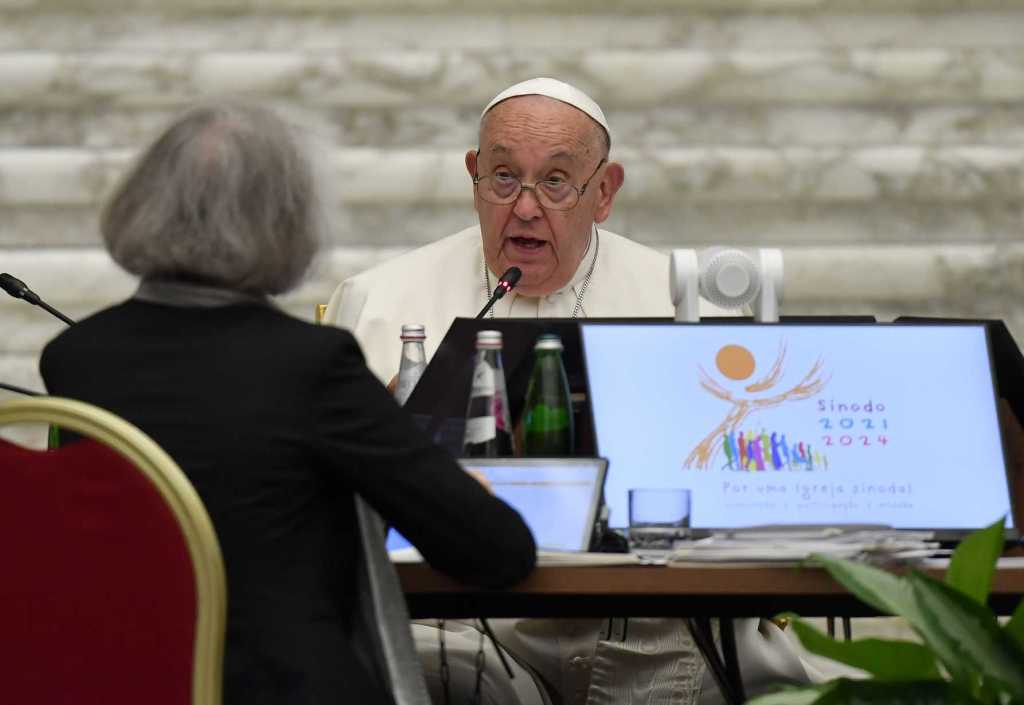
The three-year-long global journey of synodality concluded on October 26, 2024, as Pope Francis endorsed the Final Document—a 52-page text comprising 155 paragraphs, each carefully voted on by the 355 participants of the Second Session of the XVI General Assembly of the Synod. This article seeks to unpack inspirations from the Final Document and to make a faith reflection, weighing its strengths and limitations.
I. Inspirations
At the outset, we shall explore the core themes and takeaways from the Synod’s Final Document, revealing its vision for a synodal Church.
1. Synodality: Meaning and Dimensions. For the first time in four years, ‘synodality’ is defined as “the walking together of Christians with Christ towards God’s Kingdom” (n. 28). It represents a path of spiritual renewal and reform to make the Church more participatory and missionary. The document outlines three aspects of synodality: as a ‘style,’ a ‘point of view,’ and a ‘program’ (n. 30). It reassures that “synodality is not an end in itself,” correcting previous misconceptions of treating it solely as a goal.
2. Baptismal Identity and Dignity. The synodal call is based upon a shared baptismal identity (cf. nn. 4, 21, 57). The synodal journey calls us to rediscover our shared baptismal identity, rooted in the equal dignity given to all in Christ
3. From Spiritual Conversation to Synodal Conversion. The title of Part I spells out the transition required from spiritual conversation (method) to synodal conversion (practise). The Parts II, III, and IV are respectively named as ‘Conversion of relationships,’ ‘Conversion of processes,’ and ‘Conversion of bonds.’ The transition from spiritual conversation to synodal conversion invites us to deepen our listening and dialogue, fostering authentic relationships within the Church.
4. Synodal Missionary Discipleship. Every baptised individual is called to be a missionary disciple (cf. n. 4). Missionary disciples are born with the breath of the Spirit (cf. n. 140). Becoming missionary disciples of the Lord is not, however, something achieved once and for all. ‘Missionary discipleship’ (cf. Evangelii Gaudium, n. 120), a Francis vocabulary, now carries a new dimension of synodality.
5. Synodal Spirituality. The ‘Holy Spirit’, central to synodality, calls everyone to conversion (n. 40). A spirituality of synodality emphasizes asceticism, humility, patience, and forgiveness, embracing diverse gifts for service. It promotes an attitude free from ambition and envy, mirroring Christ’s self-emptying love. The fruits of this spirituality manifest in the Church’s unity and harmony amid diversity, understood as a ‘disposition’ or ‘attitude.’
6. Prophetic Synodality. The occurrence of the word ‘prophet’ sixteen times in the document validates how ‘synodality’ offers a counter-cultural response to the world today. Prophetic synodality invites us to listen deeply to the Spirit’s voice and courageously speak truth in love, fostering a culture of discernment and accountability within the Church and in the world (cf. nn. 5, 47).
7. Togetherness for Mission. Key expressions like ‘walking together’ (n. 21), ‘journeying together’ (n. 30), and ‘discern and decide together’ (n. 35) highlight the communal aspect of Church life. The section ‘Together for Mission’ (nn. 75-78) discusses both ordinary and extraordinary ministries available to lay faithful. It identifies four areas—decision-making processes, ecclesiastical institutions, positions of responsibility, and canonical processes—for ‘being and working together’ (n. 77).
8. Ecclesial Discernment and Unity. The document mentions ‘ecclesial discernment’ thirteen times and ‘unity’ sixty-two times, emphasizing discernment as crucial for decision-making, transparency, and accountability (n. 11). It outlines six steps of discernment aimed at mission (n. 83). The Church is presented as a sacrament of unity, highlighting aspects such as ‘unity among persons’ (nn. 31, 56), ‘Trinitarian unity’ (n. 34), and the ‘bishop’s role’ as a visible principle of unity (n. 69). It underscores the importance of unity in faith and the Church’s catholicity, with the Bishop of Rome as the guarantor of unity (n. 131).
9. Inclusive Lay Participation, and Decentralization. The document emphasizes the equal role of laypeople as co-partners in the Church’s mission while acknowledging various inequalities, including those based on gender, race, and disability (n. 54). Although the term “inclusive” is not used, it affirms the need for participation: women should have leadership roles (n. 60), and lay involvement in discernment and decision-making must increase (n. 77). It also advocates for mandatory participatory bodies in the Church (n. 104) and encourages diverse lay ministries (n. 66) alongside listening and accompaniment (n. 78).
10. Transparency, Accountability, and Evaluation. The section titled ‘Transparency, accountability, and evaluation’ treats with a foundation that in the Early Church Apostle Peter himself was called for accountability (n. 95). ‘Transparency and accountability should not only be invoked when it comes to sexual, financial and other forms of abuse. These practices also concern the lifestyle of pastors, pastoral planning, methods of evangelisation, and the way in which the Church respects human dignity, for example, regarding the working conditions within its institutions’ (n. 98).
II. Reflections
This section provides a thoughtful look at the Synod’s Final Document, exploring its vision of a synodal Church from a personal and faith-filled perspective.
1. Every Going is a Returning. The document’s opening statement, “Every new step in the life of the Church is a return to the source” (n. 1), emphasizes the need for continual renewal by revisiting three Catholic anchors: (a) the apostles’ Easter experience (cf. nn. 1, 12, 14, 49); (b) the early Christian community (nn. 81, 95, 152); and (c) the Second Vatican Council, which accounts for over sixty percent of the citations in the document. Synodality, it suggests, lies in continually drawing from these roots.
2. A Call to Unity in Diversity. The document envisions a synodal Church where each voice matters. This inclusivity reflects the Trinity’s unity, calling us to embrace one another despite our differences, in pursuit of a common mission. Differences, it emphasizes, are opportunities for growth: ‘Differences in every Christian community—age, vocation, gender, profession, and social belonging—provide opportunities for encountering otherness, indispensable for personal growth and maturity’ (n. 34).
3. Ecumenical Spirit as Essential to Synodality. Synodality intrinsically calls for ecumenism, evident in terms like ‘ecumenical journey’ (n. 8, Study Question 10; n. 40), ‘ecumenical path to synodality’ (n. 23), ‘ecumenical relations’ (n. 40), ‘ecumenical momentum’ (n. 56), ‘ecumenical dialogue’ (n. 122), and ‘ecumenical zeal’ (n. 137). This unity among Christian traditions is not just beneficial but essential, affirming that walking together toward unity is central to our faith and witness.
4. Synodality Begins at Home. Unlike past synods, this one begins and returns home, starting with each of us through ‘Christian initiation.’ This gradual, Spirit-led formation builds mature disciples (nn. 24-25), reinforcing that faith deepens through intentional, communal engagement and calls for ongoing catechesis.
5. Synodality as Subalternity. Listening to the marginalized is pivotal to the Church’s conversion, as authentic faith calls us to include and uplift those often overlooked. The document calls the Church to a ministry of healing and reconciliation for those on the periphery—the poor, migrants, women, children, and youth—and to recognize the apostolic capacity of persons with disabilities, suggesting the creation of a Church-based research centre on disability (n. 63).
6. Integral Ecology and Synodality. Synodality is linked to caring for creation, viewing both as relational and interdependent (nn. 48, 151). This connection urges us to integrate care for our common home as a vital expression of the Gospel.
7. Synodality as a Spiritual Disposition. Described as a deep, prayerful disposition rather than merely organizational, synodality invites the Church to a contemplative life rooted in the Spirit, especially through Baptism and Eucharist. The Eucharist, as the ultimate expression of unity in diversity, calls us to celebrate and cultivate diversity as a testament to our shared faith.
8. Synodal Relationships with Other Religions. Engaging with other religions through synodality exemplifies a commitment to peaceful coexistence, broadening our approach to evangelization as relational and respectful, fostering shared values and mutual support.
9. Formation For and By Synodality. Synodality requires not just technical but theological, biblical, and spiritual formation for all the baptized, emphasizing co-responsibility (n. 80). The Assembly calls on theological institutions to research and deepen understanding of synodality and provide formation within local Churches. It also suggests that bishops be offered ongoing formation, contextualized within local communities (n. 71).
10. Every Act as Ministry. Recognizing both instituted and non-instituted ministries—lector, acolyte, catechist, as well as community leaders, prayer coordinators, and charitable organizers—the document celebrates their variety based on community needs. Rather than “ministries,” perhaps these roles could better be described as “skills” essential to the Church’s shared mission.
III. Key Proposals
Having explored the document’s inspirations and offered a faith-centred reflection, let us now focus on its key proposals.
i. Finance Councils and Annual Reporting. Local churches should ensure the establishment of effective finance councils to enhance financial transparency and accountability (cf. n. 102).
ii. Inter-Religious Dialogue. The synodal Church is called to actively foster dialogue with other religions, promoting respect, collaboration, and solidarity (cf. nn. 146, 151).
iii. Formation for Lay Ministries and Participation in Deliberative Decision-Making. Local churches are encouraged to offer formation pathways for lay ministries, especially for unique pastoral needs (n. 66), and allowing men and women a voice in Church leadership and decisions (cf. nn. 92-93).
iv. Promoting Synodal Ecumenism. Synodality should foster unity among Christian traditions, encouraging ecumenism as a vital expression of shared faith (cf. n. 40).
v. Strengthening Episcopal Conferences. Episcopal Conferences are urged to increase their regional influence, especially in areas of cultural adaptation and shared pastoral concerns (cf. n. 125).
vi. Ministry of Listening and Accompaniment. A dedicated ministry focused on listening and accompaniment is recommended to address today’s pastoral needs with compassion. (cf. n. 78)
vii. Support for Continental Assemblies. Churches should support continental assemblies as forums for adapting the faith to regional cultural contexts. (cf. n. 119)
viii. Expanded Lay Pastoral Roles. The document proposes developing lay ministries in areas like catechesis, finance, and pastoral planning, without requiring ordination (cf. n. 77).
ix. Council for Eastern Catholic Leaders. Establishing a Council of Patriarchs and Archbishops can foster collaboration between Eastern and Latin Catholic Churches (cf. n. 133).
x. Ecological Responsibility. Churches are encouraged to make ecological care a core mission, reflecting a commitment to integral ecology (cf. n. 151).
xi. Evaluating Synodal Bodies. Regular evaluations of parish councils and synods are recommended to ensure they embody and enact synodality (cf. nn. 108, 129, 135).
xii. Decentralizing Episcopal Authority. The document suggests clarifying issues that can be handled locally by bishops, leaving key matters to the Pope, supporting subsidiarity. (cf. n. 171). Besides, the people of God will have a greater voice in choosing bishops (cf. n. 70).
xiii. Digital Mission. Local Churches should encourage, sustain and accompany those who are engaged in mission in the digital environment (cf. n. 113).
xiv. Canonical and Theological Study. Ongoing canonical and theological studies (cf. n. 67) are encouraged to refine Episcopal Conference roles for localized adaptations within unity (cf. n. 134). Canonical norms are proposed for review with a synodal perspective to better address pastoral and cultural realities (cf. nn. 110, 125).
xv. Guidelines for Implementing Synodality. Local churches are advised to adopt synodal practices into daily pastoral actions and community formation (cf. n. 103).
xvi. Strengthening Family and Marital Support. Create networks that support families in pastoral roles, allowing them to actively participate in evangelization and service within their communities (cf. nn. 64, 142).
xvii. Formation for Synodal Leadership. Bishops and clergy are encouraged to pursue ongoing synodal formation, promoting shared leadership and responsibility in diocesan life (cf. nn. 67, 70 80, 83, 86).
xvii. Creating Safeguarding Standards. Establish safeguarding protocols in every diocese to protect the vulnerable and uphold the Church’s credibility (cf. n. 150).
These proposals reflect the document’s commitment to building a more participatory, transparent, and mission-oriented Church through the practical implementation of synodal values.
Final Thoughts
When Pope Francis initiated the groundbreaking exercise of ‘synodality,’ he emphasized three points: (a) this synod is not a mere event but an experience; (b) it prioritizes the process over the product; and (c) it begins at home and will ultimately return there. His goals were equally clear: (a) to foster the Church’s growth and the faithful’s happiness; (b) to make the Church more relevant and dynamic, especially in a post-pandemic world where local churches need to rediscover their vitality; and (c) to honour the Church’s tradition while embracing changes. Pope Francis has made significant strides toward these goals.
The Final Document has been widely appreciated for one key reason: it openly records the vote count for each section, exemplifying true transparency.
Yet, in the end, is ‘synodality’ still elusive? As soon as we begin to grasp it, it slips away. When we honestly ask, ‘Who are we as Christians?’ we realize we’re far from the unity Christ envisioned. We are baptized – yes! – yet divided by nations, races, societies, rites, languages, dioceses, congregations, castes, communities, and countless affiliations. Many factors divide us, while baptism alone unites us. We must admit blood often feels thicker than water.
Frances Burnett, in The Secret Garden, reflects on change: “At first, people refuse to believe that a strange new thing can be done. Then they hope it can be done, then they see it can be done – then it is done, and all the world wonders why it was not done centuries ago.” When the synod began in October 2021, people doubted that ‘synodality’ could even happen; by the end of the first phase, they began to hope it could; at the continental phase, they saw it could; and now, at the universal phase, it has been achieved. And so, the world wonders why it was not done centuries ago! Let this ‘strange new thing’ begin with me.
The Synod’s Final Document is both an end and a beginning. In arriving, we are also departing, ‘journeying together as pilgrims of hope.’
[*The author is a priest of the Archdiocese of Madurai and a Missionary of Mercy. Currently he serves at the Conference of Catholic Bishops of India as the Executive Secretary to the Commission for Bible, and National Coordinator for Synod and Jubilee 2025. He can be contacted at http://www.yesukarunanidhi.in]
Image courtesy: CNS photo/Vatican Media
 Yesu Karunanidhi
Leave a comment