Yesu Karunanidhi
I. Profile of the encyclical
Pope Francis released his fourth encyclical on 24 October 2024, titled Dilexit Nos (“He loved us”) reflecting on ‘the human and divine love of the heart of Jesus Christ.’ The encyclical with its 5 chapters runs into 220 paragraphs, and has 227 citations. The encyclical follows Lumen Fidei (2013), Laudato Si’ (2015), and Fratelli Tutti (2020).
II. The why?
To make meaning of the symbol of heart that we are able (a) to understand the love of Jesus Christ (cf. DN 2); (b) to follow the imperative of returning to the ‘core’ of ourselves in today’s peripheral world (cf. DN 81); and (c) “to seek a deeper understanding of the communitarian, social and missionary dimension of all authentic devotion to the heart of Christ” (DN 163).
III. Heart: symbol and significance
Heart is the ‘inmost part; the centre of the body, soul and spirit; locus of desire; place where decisions are made; it unites the rational and the instinctive aspects of a person’ (DN 3). The heart ‘lies hidden beneath all outward appearances’ (DN4) and is ‘concealed’ (DN 6); it is ‘the locus of sincerity’ (DN 5), ‘the ultimate of judge of who we are’ (DN 6).
The existential questions ‘lead us back to the heart’ (DN 8). Heart ‘creates a synthesis, where we encounter the radical source of our strengths, convictions, passions and decisions’ (DN 9).
Heart is ‘the dwelling place of love’ (DN 16, 21). The ‘heart’ coexists with other hearts and makes respectable relationships possible (DN 12).
‘Heart’ refers to ‘an integrated corporeo-spiritual person’ (DN 15). In the heart of each person there is a mysterious connection between self-knowledge and openness to others (DN 18). The heart unites the fragments as in the life of Mary who ‘put things together in heart’ (Lk 2:19), and ‘kept’ (Lk 2:51) (DN 19). Reconciliation and peace are also born of the heart. (DN 28). Our hearts are not self-sufficient, but frail and wounded (DN 30). Hatred, indifference and selfishness can also reign in our hearts. (DN 59). The image of heart ‘has become a symbol of personal intimacy, affection, emotional attachment and capacity for love’ (DN 53).
IV. Our crisis today
In our ‘liquid’ world today, people are frenetic, distracted, dominated by technology, and impatient; they lose their centre (DN 9). The heart has been ignored in anthropology (DN 10).
We have devalued both heart and what one speaks from the heart (DN 11). The heartlessness creates alienation from self, others, and God (DN 12). A society dominated by narcissism and self-centredness will increasingly become ‘heartless’ (DN 17).
The algorithmic world tends to make every thought and will predictable and uniform (DN 14). However, the algorithms of the artificial intelligence can never capture the (extra)ordinary things of our lives (DN 20). The wars, violence, indifference we face today make us ask a simple question, ‘Do I have a heart?’ (DN 23). What we need is a ‘change of heart’ (DN 29).
V. The Heart of Jesus in the Gospels
The heart of Christ is “ecstasy”, openness, gift and encounter (DN 28), the unifying principle of all reality (DN 31). Christ showed the depth of his love for us not by lengthy explanations but by concrete actions (DN 33). Christ shows that God is closeness, compassion and tender love (DN 35).
Jesus gazed upon the crowds and those who sought Him with deep compassion (DN 39-41). Jesus spoke to those who encounter Him, and His words carried a profound emotional weight (DN 43-44). The cross is Jesus’ most eloquent word of love (DN 46). Our devotion must ascend to the infinite love of the Person of the Son of God, yet we need to keep in mind that his divine love is inseparable from his human love (DN 60).
VI. Devotion to the Sacred Heart of Jesus
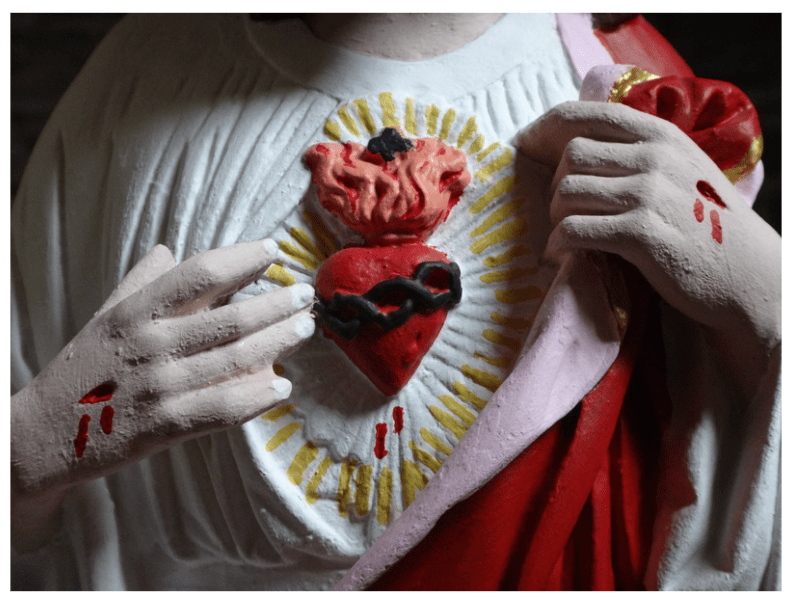
The devotion to the heart of Christ is not the veneration of a single organ apart from the person of Jesus, but to the whole person (DN 48). Church has chosen the image of the heart to represent the human and divine love of Jesus Christ and the inmost core of his Person. (DN 54). The sensus fidelium provides a theological foundation for devotion (DN 154). The living heart of Jesus is the object of our worship; Worship isn’t for the Heart’s own sake; it is about loving Him and allowing ourselves to be loved by Him (DN 50).
This devotion doesn’t distract or separate us from Jesus and His love, but points towards Him and it (DN 51). The image of the heart should lead us to contemplate Christ in all the beauty and richness of his humanity and divinity (DN 55); the image is a pointing tool (DN 57). Theology has frequently relegated feelings to the realm of the potentially inhuman, while spirituality has practically addressed what theology has left unresolved in theory (DN 63). The image of the Lord’s heart speaks to us in fact of a threefold love: divine love, spiritual love, sensible love (DN 65).
Devotion to the heart of Jesus is Christological in nature, but contains the Trinitarian perspectives: Jesus’ heart is oriented towards Abba, an affectionate term for ‘Father,’ as He loves the Father and, in turn, receives His love (DN 72-74); The worship of Christ’s person is undivided, inseparably embracing both His divine and human natures (DN 68); and Jesus’s heart is the “the Holy Spirit’s masterpiece”, as the Spirit fills His Heart and draws Him to the Father (DN 75).
Two essential aspects that contemporary devotion to the Sacred Heart needs to combine, so that it can continue to nourish us and bring us closer to the Gospel: personal spiritual experience and communal missionary commitment. (DN 91).
VII. Devotion through Popes and Saints
“We can and ought to console that Most Sacred Heart, which is continually wounded by the sins of thankless men” [Pope Pius XI]. “In the Sacred Heart lies the symbol and the express image of the infinite love of Jesus Christ” [Pope Leo XIII]. “Let us drink from the streams of salvation flowing from the Sacred Heart to transform our lives in charity and mercy” [Pope Pius XII].
“The devotion to the heart of Christ invites us to experience His love and to make our hearts more like His” [Pope Paul VI]. “The Sacred Heart of Jesus is the living heart of a world that cries out for compassion and solidarity” [Pope John Paul II]. “In contemplating the pierced heart of Jesus, we are reminded of our call to reconciliation and peace-making” [Pope Benedict XVI]. “The Sacred Heart unites us, urging us to go beyond ourselves and bring His love to the whole world” [Pope Francis].
“John, the beloved disciple, reclining on Jesus’ bosom at the Last Supper, drew near to the secret place of wisdom” [Saint Augustine] (DN 103). “The wounds inflicted on His body have disclosed to us the secrets of His heart; they enable us to contemplate the great mystery of His compassion” [Saint Bernard of Clairvaux] (DN 104). “This most adorable and lovable heart of our Master, burning with the love which he professes to us, [is] a heart on which all our names are written” [Saint Francis de Sales] (DN 115). “I am resolved in the future to live free from every care and to turn all my anxieties over to you… My God, all my confidence is confidence itself. This confidence has never deceived anyone” [Saint Claude de la Colombière] (DN 126).
“We shall enter the heart of Christ. Thus, we have a way to enlarge our own hearts” [Saint Ignatius of Loyola] (DN 144).
“Opening His robe, He revealed His most loving and lovable heart, which was the living source of those flames” [Saint Margaret Mary Alacoque] (DN 124). “I think that the Heart of my Spouse is mine alone, just as mine is His alone” [Saint Therese of the Child Jesus] (DN 134). “I wished to reveal to you the secret of my heart…so that you can understand that I have loved you so much more than I could have proved to you by the suffering that I once endured” [Saint Catherine of Siena] (DN 111). “The heart of Christ is the source of the sacraments and of grace, and our contemplation of that heart becomes a relationship between friends” [Saint Bonaventure] (DN 106). “With all my strength I try to show and prove…that our religion is all charity, all fraternity, and that its emblem is a heart” [Saint Charles de Foucauld] (DN 179).
VIII. Invitations of the Devotion to the Sacred Heart of Jesus
Pope Francis mentions that the Devotion to the Sacred Heart of Jesus offers four invitations:
(a) Love: Jesus spoke of his thirst for love and revealed that his heart is not indifferent to the way we respond to that thirst. Jesus asks for love. (DN 166). He wants us to extend his love to our brothers and sisters.
(b) Compunction: Compunction is not a feeling of guilt or self-pity, but a purifying experience in which we open our hearts to the workings of the Holy Spirit (DN 158). It is not a source of anxiety, but a healing for the soul (DN 161).
(c) Reparation: Reparation is not merely outward; it obliges us to mend our own wounded hearts and invites us to get reconciled with others (DN 185). The conversion of our heart and the response to the love of Jesus imposes an obligation to try to repair those structures of sin (DN 183).
(d) Mission: Our devotion to the Heart of Jesus must have a missionary dimension (DN 205). This devotion isn’t to be a refuge of pious thoughts, so that one basks in private religious experience while ignoring its implications for society (DN205). The Sacred Heart’s love spreads through the Church’s missionary outreach (DN 207). We should not think of mission as something only between Jesus and ourselves. Mission must be experienced in community (DN 212). Mission means to share our love (DN 209).
IX. Snares to escape
(a) Jansenism: Jansenists disregard God’s infinite mercy (DN 80). They look at the devotion to the Sacred Heart as something that distances us from the pure worship of the Most High God (DN 86). The Jansenist dualism leads to Gnosticism (DN 87). Here one may recall how our Holy Father comes heavily on Neo-Gnosticism and Neo-Pelagianism elsewhere (cf. Evangelii Gaudium).
(b) Proselytism: Our sharing of love of Jesus does not imply conversion; with respect for the freedom and dignity of others, lovingly wait for them to inquire about the love that has filled their lives with such joy, leading others to marvel at such love (DN 210).
(c) Secularization: We find ourselves before a powerful wave of secularization that seeks to build a world free of God (DN 87). On the flip side, there is superficial religiosity, which we need to escape.
X. DN in the light of Pope Francis’ writings
Let us situate this encyclical within the broader framework of Pope Francis’ writings:
(a) The sub-title, On the Human and Divine Love of the Heart of Jesus Christ, emphasizes the ‘human’ aspect of Jesus’ heart, manifesting in his words and deeds as mercy, compassion, and forgiveness. Thus, the Pontiff has made ‘human’ world as the starting point to understand God.
(b) Laudato Si’ awakened us to our shared responsibility for our common home, while Fratelli Tutti called us to live out friendship and social fraternity with those along our path. Now, Dilexit Nos invites us to engage with humanity and nature through the compassionate heart of Jesus. Thus, the present encyclical becomes the key to unlock the papacy of Francis.
(c) While devotions or pious practices often reflect personal miracles, devotion to the Sacred Heart calls us toward a ‘social miracle’ of reconciliation and peace (cf. DN 28). Our Holy Father invites us to be challenged by the Most Sacred Heart of Jesus so that we become change-makers in the society.
The encyclical closes with a blessing for each of us. As we stand before the image of the Most Sacred Heart of Jesus and pray, “Jesus, I trust in you” (DN 90), may we be inspired to love, to forgive, and to serve even more deeply.
This encyclical is biblically rich, Christ-centered, and God-glorifying.
May God be blessed, now and forever!
[*The author is a priest of the Archdiocese of Madurai and a Missionary of Mercy. Currently he serves at the Conference of Catholic Bishops of India as the Executive Secretary to the Commission for Bible, and National Coordinator for Synod and Jubilee 2025. He can be contacted at yesukarunanidhi.in]


 Yesu Karunanidhi
Leave a comment