Daily Catholic Lectio
Sun, 15 Sep 2024
XXIV Sunday in Ordinary Time
Isaiah 50:5-9. James 2:14-18. Mark 8:27-35
You are the Messiah!
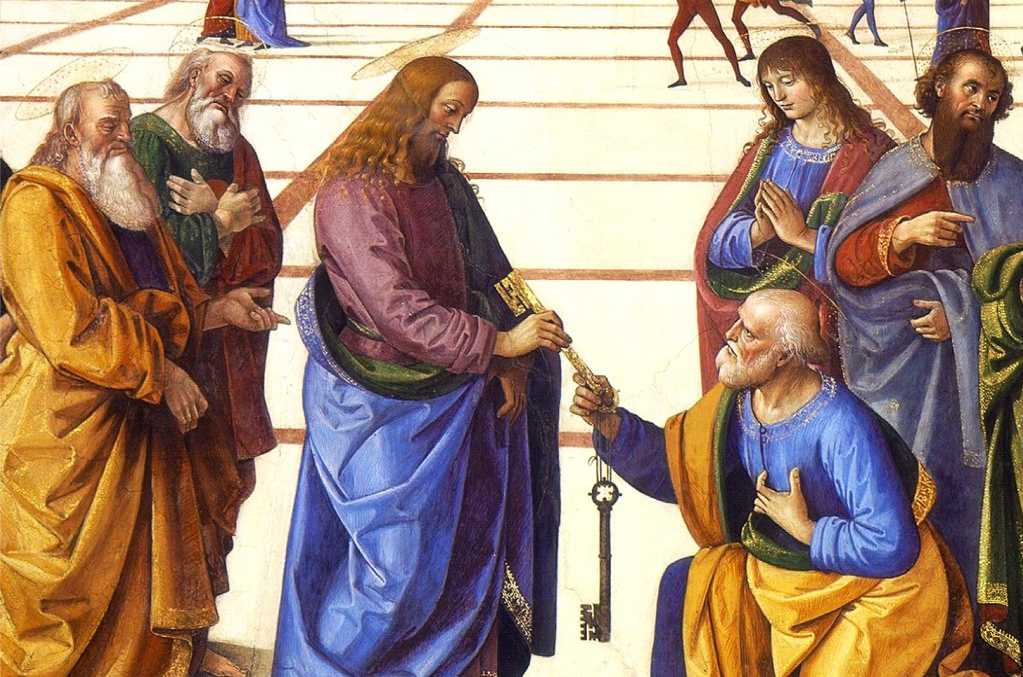
The gospel reading of the day contains a faith statement of Peter, representing the apostles, who says to Jesus, “You are the Messiah.” The challenge before us is to proclaim Jesus as the Messiah, to understand him, and to follow Him on the path.
1. Proclaiming Christ: A journey of faith
In the first part of today’s gospel reading, Jesus asks His disciples, “Who do you say that I am?” Peter proclaims, “You are the Messiah.” This proclamation marks a pivotal moment in the Gospel, where the identity of Jesus as the Christ is openly declared. The section of the Gospel of Mark that precedes this proclamation kept the audience thinking who could Jesus be.
The title ‘Messiah’ (‘anointed one’) comes from the Hebrew word ‘Mashiach,’ meaning ‘anointed one.’ In the Old Testament, this term is used for priests (Exodus 30:30), kings (1 Samuel 16:13), and prophets (1 Kings 19:16), who were anointed with oil as a sign of being set apart for God’s service. The concept evolves through the prophetic literature, particularly in texts like Isaiah, Jeremiah, and Daniel, to signify a future, ideal king from David’s lineage (Isaiah 11:1-5) who would bring justice, peace, and restoration to Israel. This coming Messiah is portrayed as a servant who would suffer (Isaiah 53) and establish an eternal kingdom (Daniel 7:13-14). The Old Testament thus lays the groundwork for the New Testament understanding of Jesus as the Messiah, the anointed Saviour of the world.
Peter’s confession is a bold statement of faith, acknowledging Jesus as the awaited Saviour. However, even this proclamation stems from an incomplete understanding of what being the Messiah entails. Jesus uses this moment to begin teaching about His mission that includes suffering and sacrifice. The first reading stands in the background to understand Jesus as the ‘suffering Messiah.’ The reading reflections the servant’s obedience and willingness to suffer for God’s mission, a foreshadowing of the Messiah’s journey.
Our proclamation of Christ must be more than words; it is a declaration that sets us on a journey. It requires the willingness to explore and deepen our understanding of who Christ is in our lives. Proclaiming Jesus as the Messiah is the starting point of a lifelong commitment to follow Him.
2. Understanding the Messiah: embracing the cross
Jesus, in the second part of the gospel reading (Mk 8:31-33), reveals the true nature of His mission. He explains that the Messiah must suffer, be rejected, and killed, and then rise again. Peter rebukes Jesus because this understanding of the Messiah does not fit his expectations. Isaiah’s Suffering Servant imagery complements this, highlighting the Messiah’s path of obedience, even unto suffering. Maybe Peter was not able to recall this image.
The disciples, like many others, anticipated a triumphant, conquering Messiah. Jesus challenges this notion by presenting a Messiah who embraces suffering and the cross. His rebuke of Peter, “Get behind me, Satan!” emphasizes that any attempt to avoid the cross is contrary to God’s salvific plan.
Understanding Jesus as the Messiah requires a paradigm shift. It involves embracing the paradox of strength in weakness, glory in suffering, and life through death. As Christians, we are called to comprehend and accept the cost of discipleship, recognizing that the path to glory is through the cross.
3. Following the Messiah: a call to active faith
In the third and the final part (Mk 8:34-35), Jesus lays out the conditions for discipleship: denying oneself, taking up the cross, and following Him. This call to follow Christ aligns with the message in the second reading (James 2:14-18), where faith is shown to be active and alive through works.
Jesus challenges His followers to move beyond mere verbal confession to active participation in His mission. Following Him means a radical reorientation of life, a willingness to lose oneself for the sake of the Gospel. James complements this teaching by emphasizing that genuine faith must manifest in concrete actions.
To follow the Messiah is to engage in a transformative journey where faith and action are inseparable. It involves a daily choice to live out the values of the Gospel, even when it leads to sacrifice. Our faith is authenticated in our willingness to serve, to love, and to lay down our lives for others.
The liturgy of the word poses three challenges to us today:
(a) Personal proclamation: We shall reflect on our personal understanding of Jesus. Like Peter, we are called to proclaim, “You are the Messiah.” This can be expressed in daily prayer, affirming Jesus as Lord of our lives. By doing this, we grow in our faith and strengthen our commitment to Him.
(b) Embracing the cross: Let us view life’s challenges as opportunities to participate in Christ’s suffering. When faced with difficulties, instead of asking, “Why me?” we shall ask, “How can I unite this with Christ’s cross?” This shift in perspective helps cultivate a spirit of trust and surrender, recognizing that suffering can have redemptive value.
(c) Active faith: Let us live out our faith through concrete actions of love and service. Let us take up cross daily in little ways, such as volunteering in church ministries, helping those in need, or being a source of support to someone going through a tough time. This embodies the call to follow Christ, showing that true discipleship involves putting faith into action.
On 15 September, we commemorate Blessed Virgin Mary as Our Lady of Sorrows. May intercede for her in our sorrows and may her disposition of calmness and surrender inspire us.
Fr. Yesu Karunanidhi
Archdiocese of Madurai
Missionary of Mercy
 Yesu Karunanidhi
Leave a comment