Daily Catholic Lectio
Sun, 14 July 2024
Fifteenth Sunday in Ordinary Time – Year B
Amos 7:12-15. Ephesians 1:3-14. Mark 6:7-13
Surprising changes
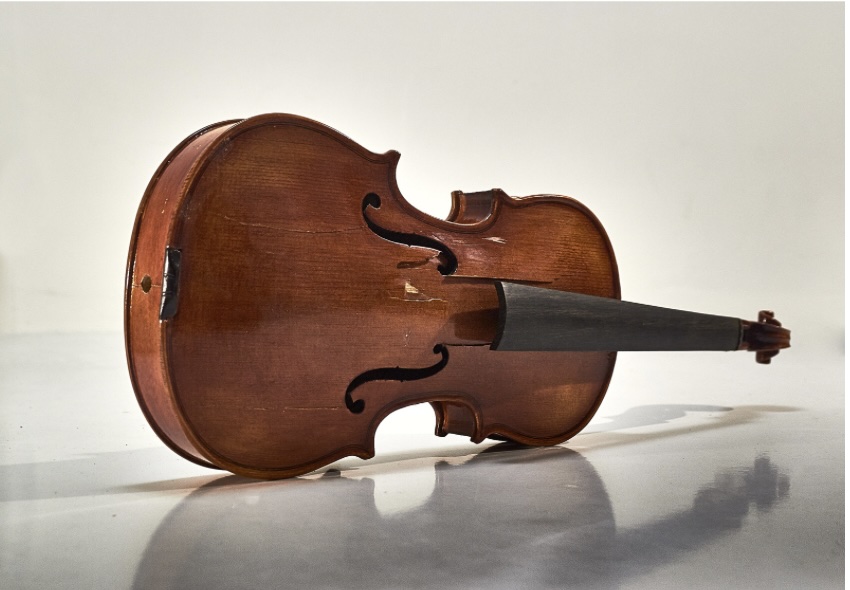
There was a violin lying for a long time in a second-hand shop. The shopkeeper kept reducing the price so that he could sell it somehow. No one seemed to care. At one point, he even thought of giving it away to someone for free. Many people avoided buying it, saying, “You cannot even use it as firewood.” One day, a violinist happened to pass by. The violin lying by the side of the shop caught his attention. “May I see this?” he asked the shopkeeper; Taking it in his hands, he dusted it with his handkerchief. He tied the broken strings and began to play. The passersby were mesmerised by the music that came from the violin. After a while, he put it back there and went off his way. Now, everyone wanted to buy that violin. But the owner kept it for himself.
#
How was this change possible? How did the broken violin come to life? The master’s touch changed it all. The master’s touch made the difference.
The liturgy of the word teaches us that God’s touch transforms people and events.
Let us begin with the first reading. After Solomon, the United Kingdom of Israel split into two – Israel in the north and Judah in the south. Bethel was one of many prominent places of worship in the north. Bethel had been a place of worship since the time of the patriarch Jacob.
The Lord God sent the prophet Amos to rebuke the covenantal perversions of the people in the North, and to warn the kings and leaders. Amos was from Judah in the south. Like his contemporary, Hosea, Amos condemned social injustice and the perversion of that time. The leaders in the north were wondering if a man from the south would advise them.
Today’s first reading presents the conflict between Amaziah, the high priest of Bethel, and Amos, the prophet of the Lord God. As high priest of Bethel, Amaziah was powerful and an adviser to the kings of the north. He also exercised authority as a royal officer. His function was to carry out the wishes of the king and to administer the place of worship in the name of the king.
But compared to Amaziah, Amos was a shepherd and gardener. He had no authority over the work of a prophet or a prophet’s family background. But the fountainhead of his prophetic authority was the call of God. In the name of the king’s authority, Amaziah orders Amos to leave his city. But Amos argues that his authority is his own or God’s. It also explains the authenticity of the work of the prophet Amos. God’s intervention turns a shepherd into a prophet, challenging the king.
Thus, God’s touch brings about a surprising change in Amos’ life.
The second reading is from Paul’s letter to the Ephesians. Unlike other letters, the letter does not begin with a greeting or a preface. The author begins the letter with a tribute to God. He knows and accepts all “the heavenly and spiritual blessings that God has bestowed upon believers.”
Paul writes, “God chose us through Christ before the world began, to be pure and undefiled before him.” So, God did not choose believers because they were pure and undefiled. Rather, He chooses them so that they should be made pure and undefiled, no matter what state they are in. This purpose is fulfilled through Christ. Christ redeems and cleanses them with His blood. Reconciled to God through Christ, they receive a better future.
Secondly, it is the will of God that all things should be gathered together through Christ. Thus, the will of God is fulfilled through the believers. Believers play a primary role in God’s plan of redemption.
Finally, the author underlines this calling, or superior position. People who used to worship other gods and were in a low state of life are now sealed with the Holy Spirit. “To be sealed” primarily refers to being chosen. That is, they are not like everyone else or faceless. On the contrary, they had a superior identity of their own. This greatness comes at the call of God.
Thus, God, who reconciles the Gentiles to Himself through the act of Christ’s reconciliation, gives the believers the dignity of being sealed.
Today’s gospel reading brings before our eyes the surprising change that took place in the lives of the apostles. Until this part of Mark’s Gospel, Jesus himself had been preaching the gospel, healing sicknesses, and expelling demons. But from now on, his disciples will do those things. He encourages those who were fishermen, tax collectors, or terrorists in the Galilean region to do all the work he did. They are to drive out demons as a sign that God’s power is at work in this world. They must put aside all that is their livelihood and travel, relying solely on the care of God. Like him, even if they are rejected, they must accept it.
The apostles, who were ordinary men, were miraculously empowered by Jesus’ authority.
Thus, today’s worship of God’s Word brings before our eyes the dramatic changes that God’s touch or authority brings to our eyes in the lives of ordinary people. The shepherd of the city of Tekoa becomes a prophet of Israel. The people of Ephesus become pure and immaculate from idolatry and immorality. The fishermen of Galilee and the sinners are doing the work of healing and removing evil that only God can do.
We read in many places in the Bible that God’s touch brings forth dramatic changes. Moses, who takes care of his father-in-law’s flock, becomes a great leader. Zacchaeus offers to lose everything. The Samaritan woman becomes the primary evangelist.
How does God bring about surprising changes in our lives?
(a) By changing the course of our lives.
God changed the course of Amos’ life while he was a shepherd and sent him to the northern kingdom of Israel as a prophet. He changes the path of Mother Teresa, who came to teach work. St. Francis Xavier’s path as a professor changed. Fired in battle, Ignatius’ focus changes. Thus, we find the hand of God not in deviation, but in the change of path.
(b) By setting a new vision or goal
God changes the outlook or goal of the people of Ephesus. They must now turn their eyes from their idols to the cross of Jesus. God sometimes turns or sharpens our life’s purposes and goals.
(c) By emptying ourselves
The apostles had filled their hands with food, bags, copper coins, and clothing. Jesus instructed them to empty their full hands, so that only their bare hands could receive the grace of God. If we yearn for something and feel emptiness, ‘Why did this leave us today?’ it means that God is going to put something better in our hands. Jesus taught that it is not possible to receive a copper coin and God’s grace in one hand.
In conclusion,
Today, we are making surprising changes in the lives of many. Parents make a difference in their children’s lives. The presence of the teacher enhances the knowledge of the student. The presence of a priest helps in the spiritual transformation of the people of God. The presence of the doctor eliminates diseases and discomforts. Above all, God’s presence and touch can completely transform us and bring about a surprising change.
We can feel His touch when we are ready to change course, sharpen our aim and scope, and empty our hands.
Let our prayer be the same as the prayer of the Psalmist (cf. Ps 85), “Lord, show us your streadfast love!” (responsorial psalm).
Fr. Yesu Karunanidhi
Archdiocese of Madurai
Missionary of Mercy
 Yesu Karunanidhi
Leave a comment