Daily Catholic Lectio
Mon, 3 June 2024
Ninth Week in Ordinary Time – Monday
2 Peter 1:2-7. Mark 12:1-12
Power and responsibility
It is said, “With great power comes great responsibility.” But the Holy Bible subscribes to a contrary view: “With great responsibility comes great power.” Let us reflect on this in light of the gospel reading of today.
The gospel reading contains the parable of the wicked tenants, who don’t pay back what is due to their owner.
The tenants in the parable were powerful. They had the vineyard and all that helped its sustenance: fencing, a watchtower, and a winepress. They had sufficient manpower not only to cultivate the vineyard but also to fight against the owner. They had the muscle power to kill the son. They had economic power, as the produce of the land was enormous. They had all these powers but did not have responsibility: responsibility to return the due share to the owner, to respect the owner, his son, and his servants, to have remorse and a prick of conscience that they were doing injustice to their own fellow human beings. Hence, power does not bring responsibility.
Now, the owner comes heavily on the tenants, removes the vineyard from them by force, and places it in the hands of ‘others’, who in fact are faithful to the owner. With their faithfulness and responsibility, they now possess the land; they have become powerful.
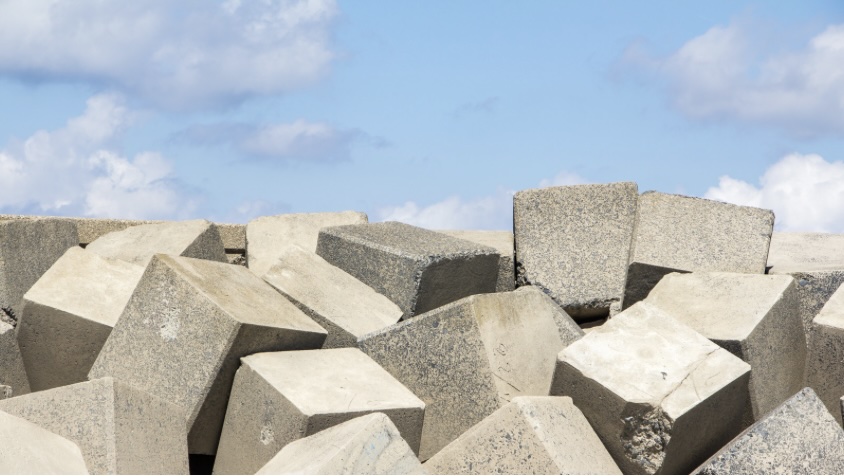
Jesus further uses an idiom to make his point clear: “The stone that the builders rejected has become the cornerstone” (citation from Ps 118:22). The corner stone has greater responsibility for holding the sides together and bearing the weight that comes from above, while the force comes from outside. The stone was rejected, maybe for the reason that it was weak, but once it is set as the cornerstone, it begins to do its work faithfully.
The cornerstone did not earn this power. It was a grace from the builder.
Some quick lessons:
(a) With great responsibility comes great power. Hence, we shall grow in stewardship and responsibility. Mary and Joseph, for example, had a key role in salvation, not because they were powerful but because they were faithful and responsible. That brought them great power.
(b) God has given each of us a life, family, work, vocation, mission, and profession as a vineyard. He is the owner; we are his tenants (hence, not permanent) and his stewards (hence, accountability is demanded). Let us grow in stewardship, i.e., being accountable for our time, money, resources, and human relationships.
(c) Each of us may feel that we are ‘rejected stones’ in life; we may not be able to understand the purpose of our lives; we may be ignored, trampled upon, and even smashed. But let us not lose hope. The builder (God) will have his eyes on us. He will embrace us to his chest and place us as the cornerstone, with greater responsibility and a higher purpose. Let us allow him to take us and use us as he wishes.
#
“Make every effort to supplement your faith with virtue, and virtue with knowledge, and knowledge with self-control, and self-control with steadfastness, and steadfastness with godliness, and godliness with brotherly affection, and brotherly affection with love” (2 Pet 1:5-7) (First reading). Faith leads us to love through hope (Jubilee A. D. 2025, bite 114).
Fr. Yesu Karunanidhi
Archdiocese of Madurai
Missionary of Mercy
# Be M.er.cy.Fool

 Yesu Karunanidhi
Leave a comment