Daily Catholic Lectio
Sun, 28 April 2024
Fifth Sunday of Easter
Acts 9:26-31. 1 John 3:18-24. John 15:1-8
Glorifying the Father
In our primary catechism classes in preparation for the First Holy Communion, the teacher or the reverend sister asked us, “Why did God create us?” And we all answered, “To know him, to love him, and to glorify him.” Glorifying God was suggested to us as the goal of our lives. Saint Irenaeus says, “The glory of God is human person fully alive.” Jesus, who calls his disciples ‘salt’ and ‘light’, says to them, “Seeing your good works, the people will glorify your Father who is in heaven.” (cf. Mt 5:16).
At the end of the gospel reading of the day, Jesus says, “By this, my Father is glorified, that you bear much fruit and so become my disciples.” Three expressions are noteworthy here: ‘bearing much fruit,’ ‘becoming Jesus’ disciples,’ and ‘glorifying the Father.’ All these actions are possible through ‘abiding in Jesus.’
(a) Bearing much fruit
When God created our first parents (according to the First Creation Narrative), he commanded them to ‘go and multiply – go and be fruitful’ (cf. Gen 1:28). It is God’s will that human persons work, not sit idle.
In the Old Testament, there are three ways one could be fruitful: (i) Through one’s hard labour. According to the Second Creation narrative, the Lord God places in the garden to till the garden. Through his hard work, he has to make the garden bear fruit (cf. Gen 2:15). (ii) Through the observance of the Law. “One who delights in the Law is like a tree planted beside the running water, bearing fruit in due season” (cf. Ps 1:2-3). (iii) Through the fear of the Lord. “Blessed is the man who fears the Lord … his wife will be like a fruitful vine” (cf. Ps 128:1-3). Fearing the Lord means good conduct.
Thus, according to the Old Testament, through hard work, observance of the Law, and good conduct, we bear fruit.
But, in today’s gospel reading, Jesus proposes a new way: ‘abiding in him’ or ‘being united to him.’ “Whoever abides in me and I in him, he it is that bears much fruit, for apart from me you can do nothing” (cf. Jn 15:5). It is imperative that we bear fruit.
(b) Becoming disciples
In the gospel of John, ‘becoming a disciple’ is a life-time process like ‘becoming a human person.’ Every day and every moment of life, one must decide to be a disciple of Jesus.
(c) Glorifying the Father
At the end of the farewell discourse, as he initiates his prayer, Jesus says, “Father, the hour has come. Glorify your son that your Son may glorify you” (cf. Jn 17:1). Further, he says, “I glorified you on earth, having accomplished the work that you gave me to do” (cf. Jn 17:4).
We may take these three actions as a kind of roadmap for our lives. Or, as we may say, ‘glorifying the Father’ is the goal, and the other two are means.
Abiding – Metaphor and Call
Jesus reveals himself as “I am the vine.” He invites his disciples, “Abide in me, and I in you.” In the gospel of John, ‘abiding’ (Gk, ‘menein’) or ‘staying’ is one of the key motifs. The first disciples stayed with Jesus.
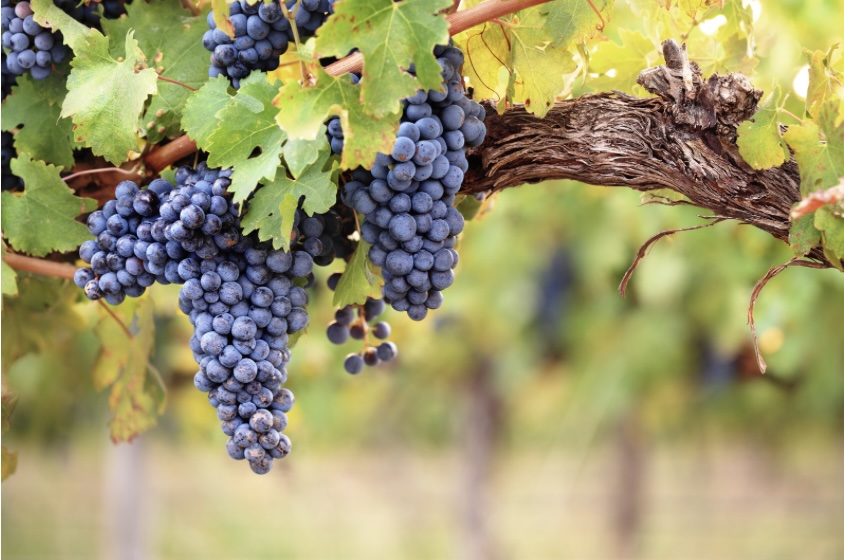
‘Vine’ was a metaphor familiar to Jesus’ audience. The people of Israel were called vines, and they were called to bear fruits (cf. Isa 5:1-7. Jer 2:21a). The purpose of the vine is to bear fruit. If the vine had to bear fruits, its branches must be united to the vine.”
What does it mean to abide in Jesus?
(a) To be nourished by him – the branches are nourished by the vine.
(b) To possess his nature – the branches acquire the nature of the vine.
(c) To own responsibilities – the branches have the responsibility to pass the nourishment.
What happens if we don’t abide in Jesus?
(a) We can’t bear fruit.
(b) We will become dry.
(c) We will be cut off from the vine.
How do we abide in Jesus?
(a) By listening to his words. In the first reading, Paul was rejected by the people. However, he continues to move forward in his mission because he listened, not to the words of people but to those of God.
(b) By observing the new commandment of love, as we hear in the second reading: “Whoever keeps his commandments abides in God, and God in him.”
What are the existential lessons for us?
(a) Bearing fruit
When a tree bears fruit, it reaches itself out. Only in the process of reaching out does it bear fruit. Often times, we close ourselves to our thoughts and worries. We hesitate to act. We postpone. But when we resolve to reach out, we begin to be fruitful. In the first reading, when Paul was rejected, he did not withdraw from the people; with the help of Barnabas, he rediscovers his vocation and moves forward.
It is not necessary that only through big projects and endeavours can we be fruitful. Being fruitful is possible in little ways as well: by feeding a cat, by cleaning our desk, by dusting our bookshelf, by smiling at a stranger who passes by, by forgiving someone.
We are called not only to bear fruits but to bear them in abundance. Our God is the God of abundance. There is a place for everyone in this world. Nobody can take the place that is reserved for us. Let us possess the abundance mindset; never succumb to a scarcity mindset.
(b) Becoming Jesus’ disciples
When Jesus chose the Twelve, he wanted them to be ‘with him’ (cf. Mk 3:14). Being with Jesus is the foundation of discipleship. In the narrative of Martha and Mary as well, Jesus insists on this (cf. Lk 10). We are called not to be devotees of Jesus but to be his disciples. Becoming a disciple is a constant process.
(c) Glorifying the Father
A father feels proud and happy when his son or daughter rises high in life. Their good works add to his reputation. Thus, giving reputation to the father becomes their responsibility. Whatever we do, God is and must be glorified. Therefore, we must aim not for the minimum but for the maximum, the optimum success and quality. We must strive to bear fruit a hundredfold. Paul says it well: “Whatever you do, work heartily, as for the Lord and not for men” (cf. Col 3:23).
By abiding in Jesus, we shall bear abundant fruits, we shall become his disciples, and we shall glorify his and our Father.
“They shall praise the Lord, those who seek him. May their hearts live on forever and ever!” (cf. Ps 22).
Fr. Yesu Karunanidhi
Archdiocese of Madurai
Missionary of Mercy
# Be M.er.cy.Fool
 Yesu Karunanidhi
Leave a comment