Daily Catholic Lectio
Mon, 8 Apr 2024
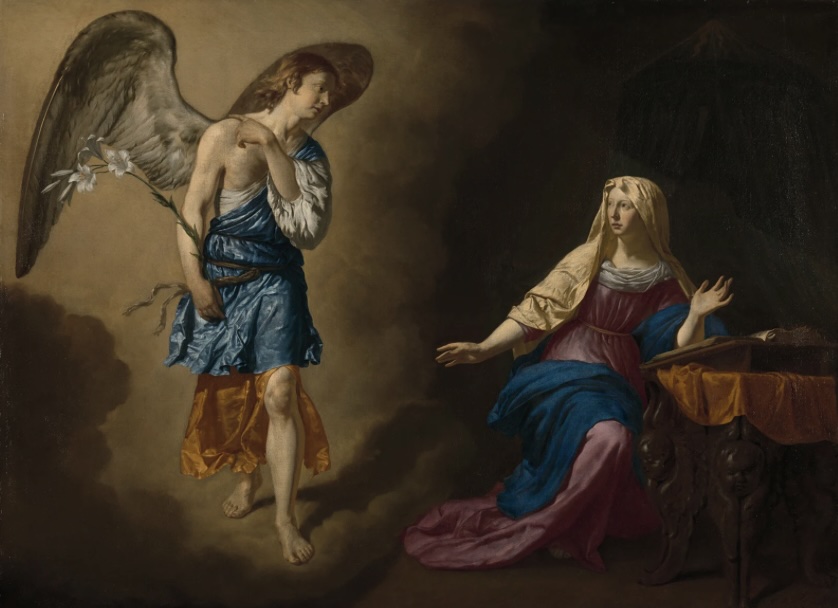
Annunciation of the Lord – Solemnity
Isaiah 7:10-14, 8:10. Hebrews 10:4-10. Luke 1:26-38
Behold, I come!
Since the solemnity of the annunciation of the Lord fell during the Holy Week, we celebrate it today, after the Easter Octave.
God says, ‘Behold, I come!’ and comes down to save humanity, and Blessed Virgin Mary, to fulfil God’s will, says, ‘Behold, I come!’ This is the central message of today’s solemnity.
The celebration of the annunciation of the Lord has three theological backgrounds:
(a) God’s initiative
God, in his own time, through his own chosen people, fulfils his salvific plan. God himself takes the initiative and brings it to fruition. This happens because of God’s mercy.
(b) Human instrumentality and support
God needs human support and their instrumentality. God, respecting the freedom of human persons, invites them to partake in his plan so that they give their ‘free’ assent. God does not coerce, threaten, or force people. Those who are invited give a positive response.
(c) God is with us
At the incarnation, ‘God for us’ changes to ‘God with us.’ God’s existence goes through a necessary change. He comes close to human persons and Nature, owning their nature and form.
The readings of the day present before us three persons who say, ‘Behold, I come!’
(a) Ahaz
In the context of the political and military turmoil, Ahaz is indecisive, afraid, and hesitant. He wanted to do everything on his own and with his power. The Lord God, who intervenes through the prophet Isaiah, gives him a sign of a virgin (young woman) conceiving and giving birth to a child. The promise is, ‘God is with us.’
(b) Jesus
The author of the Letter to the Hebrews presents Jesus as the Supreme High Priest. Jesus’ uniqueness lies in what? Earlier, there was a distance between the sacrifices and the high priests who offered them. But Jesus is the High Priest and the offering. By saying, ‘Behold, I come to do your will’, Jesus owns human flesh, which he would later offer to God on the altar of the cross.
(c) Mary
When the angel Gabriel, who announced the birth of Jesus Christ to Mary, said, “Nothing is impossible with God,” Mary immediately responded, saying, “Behold, I am the handmaid of the Lord. May it be done to me according to your word.” Let us look at the words of Mary carefully. She does not say, “I shall do it according to your word.” Often times, we want to do many things, and many things for God. Mary teaches us that it is enough to allow God to do things. Mary’s total surrender lies in her disposition to receive God’s action.
What are the lessons for us?
(a) God, through his incarnation, has sanctified humans and nature. Hence, humans and Nature are to be respected and treated with dignity and respect. We should never differentiate, humiliate, or exploit anyone based on gender, age, background, race, colour, caste, or language. We should realise that differentiation is against incarnation, and we must celebrate God’s incarnation in everyone and everything.
(b) Life’s calls come to us continuously. Every time we must say a positive ‘Behold, I come!’ When we say so, we move, and life moves. When we don’t give such a response, we are stagnant.
(c) ‘Let it be done to me according to your word!’ – Let us have this disposition in life. Often, we are frustrated, annoyed, and anxious because we want to do too many things. What the Lord wants is that we allow him to do things in us and through us. Our surrender gives us peace, serenity, and silence.
Feast day wishes to you!
Fr. Yesu Karunanidhi
Archdiocese of Madurai
Missionary of Mercy
 Yesu Karunanidhi
Leave a comment