Daily Catholic Lectio
Thursday, 28 March 2024
Maundy Thursday – Mass of the Lord’s Supper
Exodus 12:1-8, 11-14. 1 Corinthians 11:23-26. John 13:1-15
Three signs
The day is significant for us in four ways: (a) In this night, Jesus, saying ‘this is my body, and this is my blood,’ institutes the Holy Eucharist; (b) In order to ‘do this in memory’ of him, he establishes ministerial priesthood; (c) He washes the feet of his disciples and shows them a model to imitate in leadership; and (c) He gives us the new commandment of love.
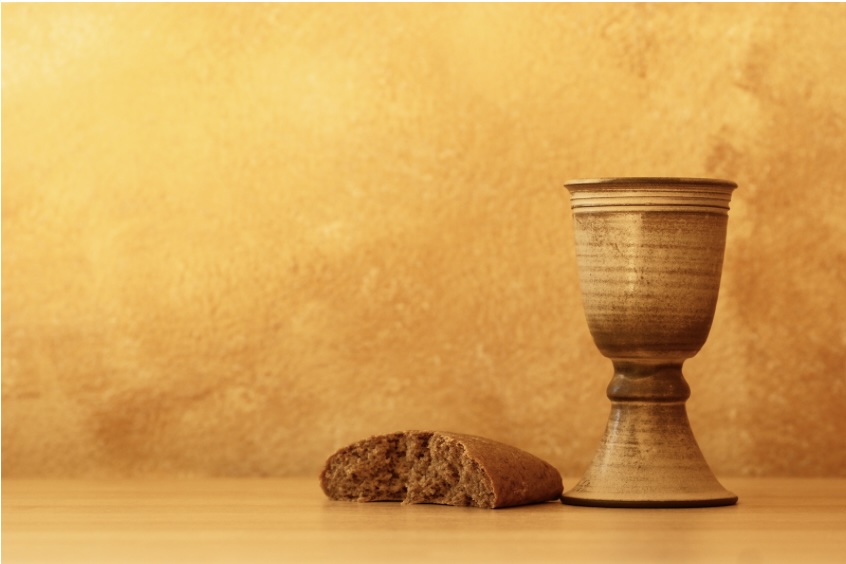
Today our celebration has three signs: ‘blood,’ ‘food,’ and ‘water.’
(a) The first Passover of the people of Israel – ‘blood’
The first reading, taken from Exodus, contains the instructions of the Lord God to celebrate the first Passover. The event foreshadows the liberation that the people of Israel will enjoy shortly and introduces the tenth plague that the Lord will bring on the Egyptians.
After pointing out the day, the mode of selecting the lamb, and the people, the Lord God gives them two commandments: (a) ‘apply some of the blood of the lamb on the doorposts,’ and (b) ‘observe this feast as a memorial generation after generation.’
Jesus, along with his disciples, goes to Jerusalem to fulfil the second commandment – to commemorate and eat the Passover meal. During the Passover meal, he institutes the Eucharist. Like the Paschal lamb, he too will be sacrificed. His blood will make the people ‘pass over’ from death to life.
‘Blood’ symbolises the Lord’s presence with the people, his protection, liberation, and victory for them.
(b) Eucharistic celebration – ‘food’
The breaking of the bread was one of the four key features of the early Christian community (cf. Acts 2:42). Though this event began as a liturgical event, soon it turned out to be a social event involving discrimination, differentiation, and aberration. Saint Paul, in the second reading, not only recalls to them the institution of the Holy Eucharist by Jesus but also underlines the purpose of the present celebration: “as often as you eat this bread and drink the cup, you proclaim the death of the Lord until he comes.”
Thus, in the breaking of the bread, the entire time – past, present, and future – is present. We commemorate a ‘past’ event in the ‘present’ until the ‘future’ coming of Christ.
Commemorating the death of Jesus means recalling his self-emptying act, humility, and vulnerability.
(c) Washing of the feet – ‘water’
The foot-washing, in the light of the Bible and the Greco-Roman literature, occurs in three situations: (a) cultic setting (cf. Exod 30:17-21. 40:30-32. 2 Chr 4:6. Lev 16:24). A high priest, priests, and people before entering the Temple, were on their feet and hands. This is to recall God’s holy presence and to be comfortable during worship. (b) Domestic setting for hygiene and comfort. For personal and family hygiene. (c) An act of hospitality, welcome, acceptance, and friendship (cf. Gen 18:4. Lk 7:36-50. Jn 12:2-8).
In the early Christian Church, foot-washing was considered one of the good works (cf. 1 Tim 5:9-10). Early Christian Fathers such as Tertullian, Athanasius, and John Chrysostom talk about foot-washing.
How do we understand Jesus washing the feet of his disciples? Though this happens in the context of the Passover meal, the foot-washing is not cultic; nor is this for personal care or hygiene, for this happens during the meal; and nor is it an act of hospitality, for Jesus himself is a guest. We can say that this act is symbolic, didactic, and exemplary.
Traditionally, the foot-washing of Jesus is understood as (a) preparation for the Eucharist; (b) symbol of baptism; (c) symbol of forgiveness; (d) a sacrament like baptism and Eucharist; (e) priestly ordination; and (f) symbol of Jesus’ incarnation.
Jesus, through this act, teaches us humility and service.
What do these symbols – blood, food, and water – teach us?
The symbols themselves have no meaning. They come to life through the people who use them or participate in them.
(a) Our Eucharistic celebration
The Holy Mother Church says that the Eucharist is the source, centre, and summit of the Church. The Holy Mass unites all the people. For the celebration of the Holy Mass and other sacraments, priests are anointed. At the Eucharist, we feel the closeness of God. We are invited to be close to those who are in need. The Eucharist that we consume must make us share our food with others.
(b) Ministerial priesthood that washes the feet
Jesus calls his disciples friends and shows them an act of service. Every action in the act of washing feet contains a message for priests. A priest must get up from his table of comfort and distance, remove the overcoat of respect and prestige, tie a towel around his waist, feeling one with the rest of humanity, and serve the people. In the context of synodality that we have been reflecting on, the washing of the hands encourages communion, promotes participation, and leads us to mission.
(c) Love in humility
Humility is the prerequisite for love. When I reach out to someone’s feet, my heart goes closer to the other person.
May these signs that we celebrate today – blood, food, and water – lead us to sacrifice, love, and victory.
Fr. Yesu Karunanidhi
Archdiocese of Madurai
Missionary of Mercy
 Yesu Karunanidhi
Leave a comment