Daily Catholic Lectio
Sun, 25 February 2024
Second Sunday of Lent
Genesis 22:1-2, 9-13, 15-18. Romans 8:31-34. Mark 9:2-10
Rising from the dead
The readings of the day are centred on three mountains: Mount Moriah, where Isaac was sacrificed (cf. first reading), Mount Tabor, where Jesus was transformed (cf. gospel reading), and Mount Calvary, where Jesus was crucified (cf. second reading).
The gospel reading ends with an apprehension about the disciples that they were not able to understand what was meant by ‘rising from the dead.’
Let us take this expression, ‘rising from the dead’, which was incomprehensible to the disciples, and try to comprehend it.
In the life of Jesus, rising from the dead is an act of redemption. Christ redeems us from our sins through the act of rising from the dead.
The first reading brings before our eyes the narrative of the sacrifice of Isaac, the only son of Abraham. Child sacrifice, or Molech sacrifice, is in the background. In the Ancient Near East, people used to sacrifice children or make them walk in the fire to appease their gods. The concept is simple. The smaller the sin, the smaller the sacrifice; the higher the sin, the higher the sacrifice.
In the narrative, Isaac rises from the dead. He is relieved because of God’s intervention. Besides, Abraham comes to life through his faith. For Abraham as well, this was a resurrection experience.
This is not only the test for Abraham but also the test for the Lord God. If Isaac were killed, God’s promise to Abraham would go in vain. Abraham did not know that God would intervene to halt the sacrifice. However, Abraham believed that God would keep his promise. Through this trial, the relationship between God and Abraham becomes closer.
Thus, Abraham rises from the dead.
In the second reading, Paul, writing about God’s love for the church in Rome, uses a rhetorical device. He asks them, “If God is for us, who can be against us?” The answer is implied: no one is against us. God takes care of and stands by the side of the people. ‘For us’ and ‘against us’ are military expressions. God fights for his people. In fact, God fought for Jesus and released him from death. Death could not stand against Jesus.
Paul also rose from the dead through his conversion.
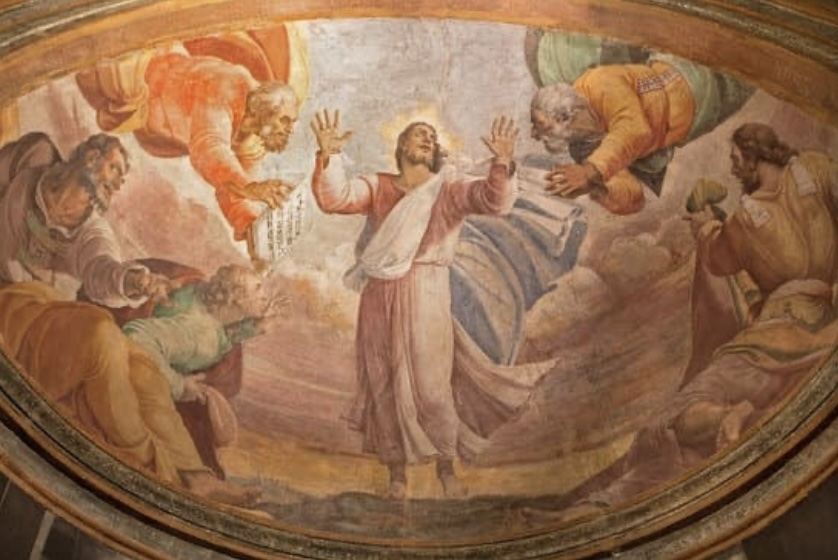
In the gospel reading, we read about the transfiguration of Jesus. The transfiguration is seen as the foreshadowing of Jesus’ resurrection. In the Hebrew Bible, three people did not embrace death: Enoch, Elijah, and Moses. Though we have the narrative of Moses’ death in Deut 34, since his tomb is not found, it is said that he too was assumed into heaven.
Often, we think that Moses never entered the Promised Land. In fact, he enters the Promised Land here in the narrative of the transfiguration.
The gospel reading contains the vocabulary of apocalyptic literature. Jesus ‘reveals’ himself to his close disciples. ‘White dress’ (cf. Dan 7:9), ‘light on the mountain’ (cf. Exod 24:15–18), and ‘tent’ (cf. Exod 33:7-11) reflect the events of the Old Testament.
The transfiguration event is the occasion for the disciples to rise from the dead. They come to a new understanding of Jesus. However, they were not aware of the new understanding.
How do we understand ‘rising from the dead’?
On the first Sunday of Lent, we were alone with Jesus in the wilderness. Today, we are with him on the Mount of Transfiguration. Mount Moriah gives Abraham God experience; Mount Tabor transforms Jesus’ disciples; and Mount Calvary becomes God’s saving experience for every one of us.
What must we do to rise from the dead?
(a) Connection with God
Abraham, through his raised sword, gets connected to God; we get connected to God through the cross of Jesus; and the disciples get connected to God through Moses and Elijah. To get connected to God, we must disconnect from others; to get connected to the higher, we must disconnect from the lower.
(b) Being broken
The disciples, in their misunderstanding, stand vulnerable. Embracing our vulnerability is the starting point for going towards power.
(c) Unfailing hope
Abraham and Paul wait in hope. Hope consists of waiting and being patient. It is necessary that we keep the flame of hope alive. The disciples’ flame was flickering, but they kept it alive.
Transfiguration is a daily life event as well. We transfigure as we age, if we get sick, and if we go through changes in life. Every day is a day for rising from the dead. Every day is a mountain walk and a walk back.
Together with the Responsorial Psalm, let us proclaim that we will live in the presence of God in the land of the living.
Fr. Yesu Karunanidhi
Archdiocese of Madurai
Missionary of Mercy
 Yesu Karunanidhi
Leave a comment