Daily Catholic Lectio
Sun, 18 February 2024
First Sunday of Lent
Genesis 9:8-15. 1 Peter 3:18-22. Mark 1:12-15
New beginnings
‘It is not the beginning, but the end that matters,’ says Ecclesiastes (cf. 7:8). But the readings of the day give us the perspective that the beginnings define the end. They invite us to the new beginnings of life.
The first reading records the words of the Lord God to Noah and his family members after the Great Deluge. God gives a promise and a sign. The promise is that he establishes a covenant with Noah, and he tells him that he will never destroy the world. He places the rainbow as a sign and a reminder. In fact, the Noahic covenant is the beginning of all other covenants in the Bible: Abrahamic, Sinaitic, Davidic, Jeremiah, and Jesus.
In the Ancient Near East tradition, the rainbow was considered an armour of God (cf. Ps 7:12-13). Breaking the bow or hanging the bow on the wall would symbolise the end of war and the establishment of peace. The Lord God indirectly tells Noah that he will never raise his hand against humanity.
God’s mercy is greater than human evil inclination. God takes the initiative; God makes the promise; and God sets the sign. God does not prescribe any rules and regulations for Noah to follow. This becomes the new beginning for Noah.
In the gospel reading, we see two movements of Jesus: (a) Jesus’ movement from the river Jordan to the wilderness; and (b) Jesus’ movement from the wilderness to Galilee. Mark is very precise in narrating the temptation narrative. Like Adam, Jesus was amidst the wild beasts. Jesus is administered by the angels.
Jesus begins his public ministry with a proclamation: ‘The time is fulfilled; the kingdom of God is at hand. Repent and believe in the Gospel.’ The Gospel is nothing but Jesus. With Jesus, the people also have a new beginning.
What are the key takeaways?
(a) New beginnings come from God
God initiates the covenant in the first reading. He places his mercy at the top. All our Lenten efforts, practices, and initiatives must make us move towards God. They are not ends; they are mere means to the end, i.e., God.
(b) A promise to God
In the second reading, Peter tells his community that through our baptism, we have made a promise to God, and we must abide by the promise. The promise is that we will remain in a state of grace.
(c) Wilderness as the beginning
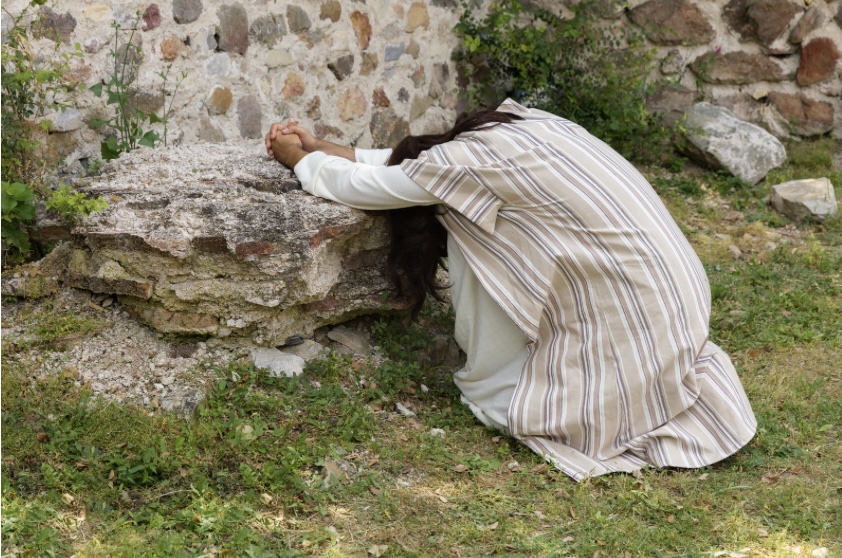
The wilderness experience is our everyday experience. We encounter there the tempter, who tests us, and the angels, who serve us.
The new beginnings of life have God as the starting point.
Fr. Yesu Karunanidhi
Archdiocese of Madurai
Missionary of Mercy
 Yesu Karunanidhi
Leave a comment