Daily Catholic Lectio
Thu, 25 January 2024
Thursday of the Third Week in Ordinary Time
Acts 9:1-22. Mk 16:15-18
Conversion of Apostle Paul, Feast
Saul becomes Paul
Today we celebrate the conversion of Saint Paul.
The vocation, call, or conversion narrative is presented in three different ways: (a) Paul, writing to the Galatians, tells them that God chose him when he was in the womb of his mother, i.e., from his birth (cf. Gal 1:15). (b) Luke records that the Lord met Paul on his way to Damascus (cf. Acts 9, 22, 26). (c) Barnabas helps Paul come to the community of apostles.
Even though the narratives concerning the conversion of Paul have their own textual contradictions, one thing is undoubtedly true: Paul is transformed totally. Paul’s journey changed. And Paul’s purpose in life changed.
How might Paul have responded to the Sanhedrin, which authorised him to persecute the followers of the New Way? His life was the response. One who came to destroy the New Way became the proclaimer of the New Way.
Key Elements of Saint Paul’s Conversion:
(1) Divine Intervention. Small changes require small interventions; great changes require great interventions. Since the transformation of Saul was great, God himself came down to intervene. Sometimes transformation requires a supernatural encounter.
(2) Humility and Obedience. Paul does not postpone his conversion. This shows Paul’s humility in recognising his need for a change.
(3) Ananias’ role. Ananias plays a key role in Paul’s conversion. Ananias, metaphorically, represents community. The community is an important factor in an individual’s conversion. Ananias, who was apprehensive at the beginning, slowly changes his mind. Likewise, the early Christian community was initially frightened about Paul. Later, it began to accommodate Paul.
What are the lessons for us today?
(1) The Universal Call to Conversion. Conversion means a change of path. We can’t expect new results by doing the old things. A change in result means a change in action. In many of our lives, conversion is not as dramatic as that of Paul. But it happens in the silence of our hearts. The universality of conversion is underlined in today’s gospel reading.
(2) Embracing God’s Unexpected Paths. Saul, who went to arrest the followers of the New Way, becomes the proclaimer of the New Way. He lets go of his path and clings on to God’s path. He who was under the authority of the Sanhedrin now surrenders himself to the authority of God. We are called to respond to God’s calls and embrace his paths.
(3) Bearing fruit of conversion. Saul’s conversion was not a namesake event, where he received a new name or title. Rather, Paul bears fruit through his apostolic zeal, missionary journey, and writings. A person who changes his or her path must continue to walk. He must enhance the lives of others.
‘Lord, who are you?’ – this question of Paul changes into, ‘Lord, what must I do?’ (cf. Acts 22).
When we ask these two questions, our life paths will change.
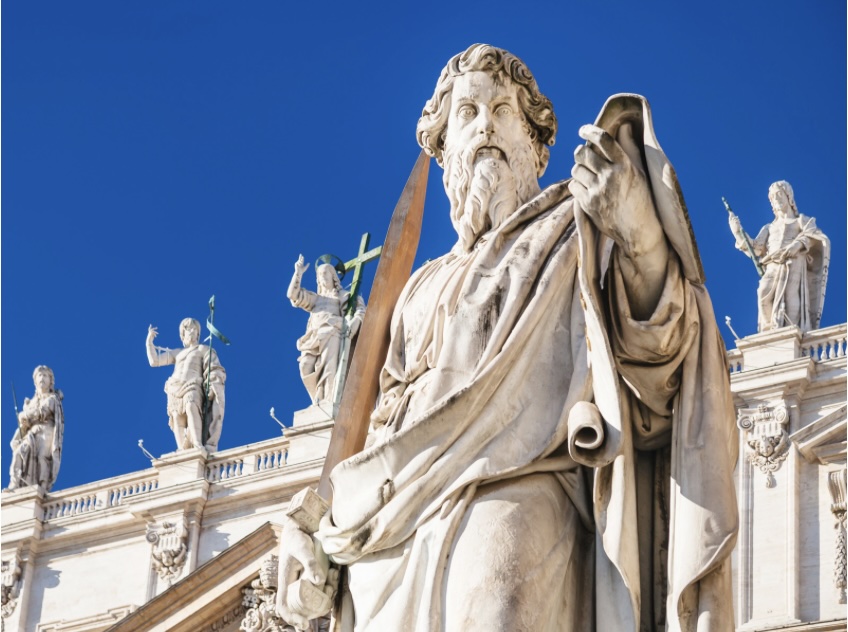
Saul, who took his sword against God, becomes the sword of God.
Fr. Yesu Karunanidhi
Archdiocese of Madurai
Missionary of Mercy
 Yesu Karunanidhi
Leave a comment