Daily Catholic Lectio
Sat, 20 January 2024
Saturday of the Second Week in Ordinary Time
2 Samuel 1:1-4, 11-12, 19, 23-27. Mark 3:20-21
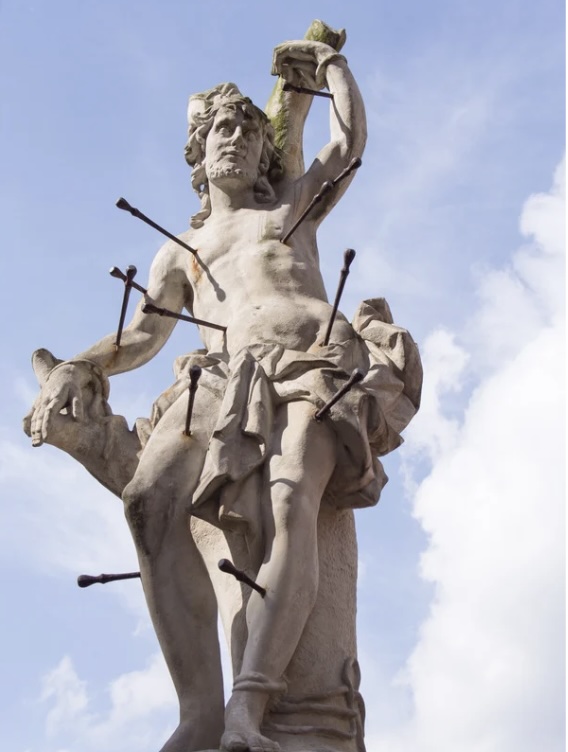
Saint Sebastian
Today we commemorate Saint Sebastian, who died a martyr around 288 A.D., suffering persecution under the emperor Diocletian. He is called ‘the brave at heart.’ The archers, athletes, and soldiers venerate him as their patron. He is celebrated as the saint who saves people from the plague.
(a) Faith and courage
Saint Sebastian embraced Christian faith when he was a soldier in the battalion. However, he did not hide his faith. He proclaimed his faith despite knowing the consequences.
(b) Resilience and hope
Resilience is the ability to encounter suffering, endure it, and overcome it. Our first parents had this quality of resilience. This helped them survive when they were expelled from the garden. We, too, have this quality. This quality was made manifest in Saint Sebastian. The arrows that pierced his body could not pierce his heart. He received life the second time. He had hope amidst the grey hours of life.
(c) Beyond martyrdom
Saint Sebastian was convinced that Christian faith must be translated into action. He was compassionate to his fellow soldiers and subordinates in the army.
The gospel reading (that of the day) serves as an example of Jesus’ resilience. Even though it has two verses, it contains a great message.
‘Jesus came with his disciples into the house’ – Jesus, though a wandering or itinerant preacher, constantly ‘came to the house’ or ‘came home.’ ‘Coming home’ or ‘homecoming’ means ‘returning to our roots,’ ‘becoming aware of oneself,’ and ‘being re-focused.’ The younger son in the parable (cf. Lk 15) comes home. Homecoming is important in our lives. Our home offers us the liberty to be who we are; it gives us confidence; it refreshes our body and rejuvenates our mind so that we are able to reach out more into the world.
‘Again, the crowd gathered, making it impossible for them even to eat’ – Jesus was the most sought-out. Jesus was continuously fulfilling the needs of the people by preaching, healing, and driving out demons. Jesus and his disciples did not have time to eat. He cancels his rest time in order to be with the people.
‘When his relatives heard of this, they set out to seize him, for they said, “He is out of his mind”’ – this sentence conveys that those who were close to Jesus failed to recognise and understand him. The Greek word used here literally means ‘to stand out of oneself.’ Jesus was standing out of himself, even though he was inside his house. Our ability to stand out for ourselves creates resilience.
In the first reading, David, upon hearing the deaths of Saul and Jonathan, mourns for them. David’s words reveal his respect and love for Saul and Jonathan, respectively. This event portrays David’s magnanimity, who, instead of rejoicing at the death of his enemy, espouses Saul as his forerunner and Jonathan as his intimate friend.
David, Jesus, and Saint Sebastian teach us today to be persons of ‘magnanimity,’ ‘resilience,’ ‘homecoming,’ and ‘standing out of ourselves.’
#
‘The church must never be self-centred but must constantly reach out to others. On meeting people in their life circumstances must lead them to God.’ (cf. Gaudium et Spes, Dogmatic Constitution on the Church in the Modern World, Jubilee A.D. 2025, bite 13).
Fr. Yesu Karunanidhi
Archdiocese of Madurai
Missionary of Mercy
 Yesu Karunanidhi
Leave a comment