Daily Catholic Lectio
Sun, 21 January 2024
Third Sunday in Ordinary Time
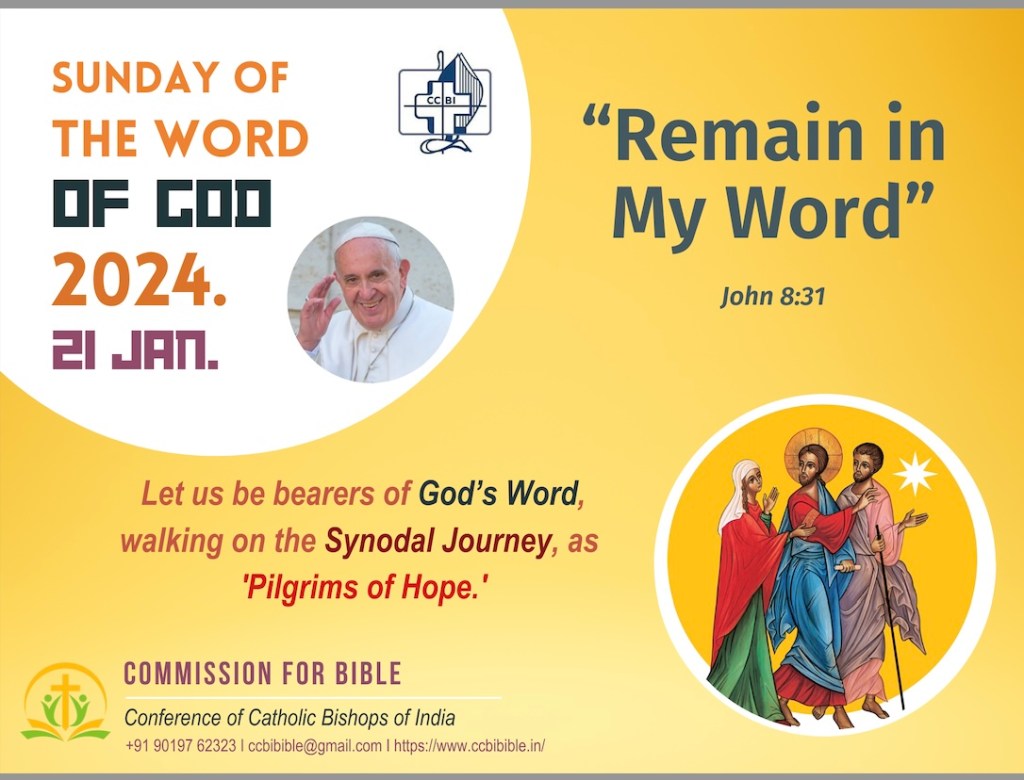
Sunday of the Word of God
Jonah 3:1-5, 10. 1 Corinthians 7:29-31. Mark 1:14-20
Good News: Proclaiming and Responding
Our Holy Father Pope Francis, in 2019, through his apostolic letter Aperuit illis (‘he opened their minds’), announced that the Third Sunday in Ordinary Time be celebrated as the Sunday of the Word of God. This Sunday falls within the Unity Octave, when we pray for Christian unity. Our Holy Father asserts that the word of God becomes the foundation for ecumenism and Christian unity. ‘The Dicastery for Evangelization: Section for Fundamental Questions Concerning Evangelization’ has proposed the theme for this year’s celebration: ‘Remain in my word’ (cf. Jn 8:31).
Let this day inspire us to read the word of God, to meditate on it, to pray with it, and to live our lives in its light.
In the first and third readings of the day, the good news is proclaimed and responded to.
Mark records, “After John had been arrested, Jesus came to Galilee proclaiming the gospel of God.” In the beginning of his gospel (cf. 1:1), Mark writes, ‘the Good News about Jesus Christ’. Here, he uses the expression ‘Good News of God.’ What is the Gospel of God? (a) Jesus is the gospel of God; (b) Jesus’ words are God’s Good News; and (c) God’s enactment in human history through Jesus Christ is the Good News.
God is at the centre of Jesus’ good news.
The gospel reading is divided into two sections: in the first section, Jesus preaches the Good News to all. But no response is recorded. In the second part, the first disciples – Simon, Andrew, James, and John – respond to the words of Jesus. They leave their nets, and they leave their father with their servants.
Their response happens in three stages: first, they receive the good news in their workplace; second, they believe in the words of Jesus totally; and third, they exit their comfort zones of family and work.
In the first reading, we hear about the proclamation of Jonah in Nineveh. Nineveh was the capital of Assyria. The Assyrians captured the Northern Kingdom in 722 and subjugated it. The people of Israel developed antipathy towards the Assyrians. They want the Assyrians to be punished. Jonah escapes from God the first time; the second time, he responds to the call. But he proclaims the gospel in haste. But the people of Nineveh believe in his words and repent immediately.
In the second reading, Paul writes to the Corinthian community, which was tossed by fornication and sexual immorality. Citing the impermanence of the world, Paul invites them to embrace celibacy.
Thus,
In the first reading, Jonah proclaims the Good News of God. The people of Nineveh repent immediately.
In the second reading, Paul invites the church in Corinth to respond to the Good News of God through a morally upright life.
In the gospel reading, Jesus proclaims the Good News, and calls the first disciples. The first disciples respond to him immediately.
How do we proclaim and respond to the Good News?
(1) Proclaiming the Gospel
Often times, in our proclamations today, the proclaimer is given more prominence than the message proclaimed. There are three obstacles to the proclamation of the gospel: (a) Hesitation; (b) Negative mindset: ‘what is the use of proclaiming the Gospel?’; and (c) Self-centeredness: what will I get if I preach the gospel?
(2) Responding to the Gospel
(a) Readiness. The people of Nineveh were ready to respond to the message of God through Nineveh; the first disciples were ready to let go of their homes and nets.
(b) Impermanence of the world: the transient and impermanent nature of the world propels us to act immediately.
(c) Change of path: In order to respond to the Good News, one must let go of the past. The people of Nineveh must quit their sins; the people of Corinth must let go of fornication; and the disciples must stop fishing.
In sum,
On this Sunday of the Word of God, let us strive to proclaim the Good News, and respond to it.
In the responsorial psalm, the Psalmist prays (cf. Ps 25), ‘teach me your ways, O Lord.’ His way is his word.
Fr. Yesu Karunanidhi
Archdiocese of Madurai
Missionary of Mercy
 Yesu Karunanidhi
Leave a comment