Daily Catholic Lectio
Sunday, 17 December 2023
Third Sunday of Advent – Year B
Isaiah 61:1-2, 10-11. 1 Thessalonians 5:16-24. John 1:6-8, 19-28.
Rejoicing in the Lord
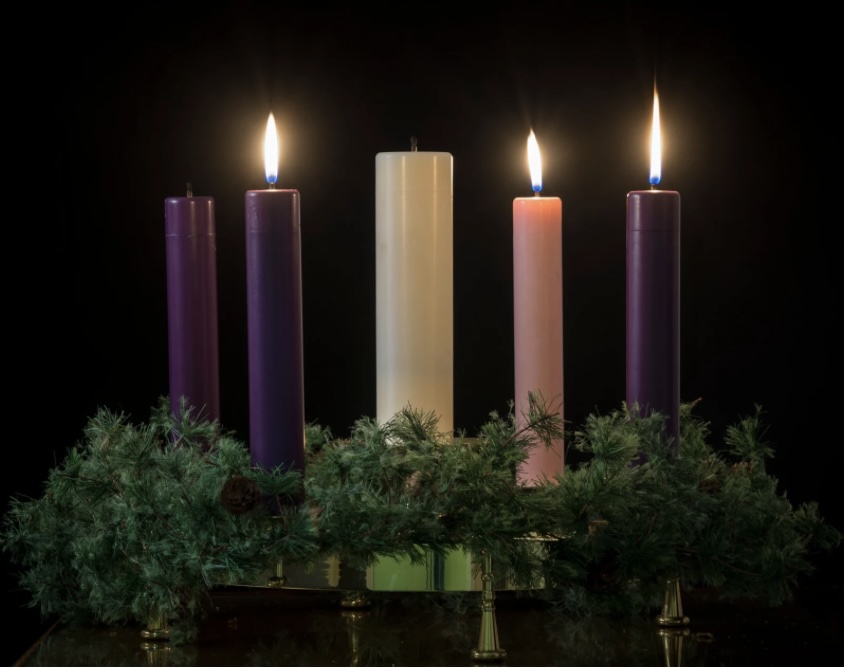
The third Sunday of Advent is called ‘Gaudete Sunday’ or ‘Rejoicing Sunday.’ This is the Sunday of Joy because the solemnity of the Nativity is closer. The violet candles turn ‘rose’ or ‘pink’ today.
The first reading of the day has two parts: in the first part, the prophet Isaiah describes his identity and mission; in the second part, he rejoices in the Lord, anticipating the good things that will come to him.
The Servant Song stands in the background of today’s reading. The Servant is filled with the Spirit of the Lord. The anointing is for the sake of a mission: ‘to bring good news to the poor, to bind the broken-hearted, to proclaim liberty to the captives, to set the captives free, and to proclaim the year of the Lord’s favour.’ Jesus uses this text as his manifesto when he inaugurates his ministry in his hometown (cf. Luke 4).
The Servant immediately goes on to say, “I will greatly rejoice in the Lord.” He rejoices because God has clothed him in the garments of salvation and the robes of righteousness. In the context of Babylonian exile, the meaning becomes more impactful. When people are taken into slavery, either they are taken naked or semi-naked. Stripping oneself of his or her clothes points to humiliation and submission. The Lord clothes the people of Israel with ‘liberty’ or ‘freedom’ and covenantal ‘righteousness.’ The word-pictures bridegroom and bride remind them about the covenant that the Lord made with them and show the abundance of joy that they experienced.
The prophet shouts, ‘I greatly rejoice in the Lord,’ for he realises that his identity, mission, freedom, and dignity came from God.
The second reading is taken from the exhortatory section of the first letter of Paul to the Thessalonians. This book is the first-written book of the New Testament. Paul instructs the new converts on the importance of prayer. He puts forward three elements of an effective prayer: ‘joy,’ ‘perseverance,’ and ‘gratitude.’ This type of prayer is ‘the will of God in Christ Jesus.’
The Church at Thessalonica was tossed between waiting for Parousia and the delayed Parousia. Paul brings the community to stability through prayer. Further, he teaches them how to make a discernment: ‘test everything; hold fast to what is good; abstain from every form of evil.’
In the gospel reading, we encounter the character of John the Baptist as presented by the Apostle John. The prime role of John the Baptist was to bear witness to the light. ‘Bearing witness’ is a legal term where the concerned party makes an assurance for which he is accountable. Further, when John was interrogated about his identity, he confessed, ‘I am not the Christ.’ He professed, ‘I am the voice.’ Later, John says, ‘The one who has the bride is the bridegroom. The friend of the bridegroom, who stands and hears him, rejoices greatly at the bridegroom’s voice. Therefore, this joy of mine is now complete’ (Jn 3:29).
The text brings before us John’s magnanimity and unassuming nature.
How do these readings convey the message of happiness? We all want to be happy. Happiness is the ultimate goal of every individual. Some seek it at the physical level as pleasure; some seek it at the intellectual level as contentment; some seek it at the emotional level as joy; and a few seek it at the spiritual level as bliss.
There are certain obstacles to happiness: negative thinking, unrealistic expectations, comparisons, grudges, resentment, pain, financial concerns, social isolation, a lack of self-care, and fear.
The readings teach us three paths to happiness:
(a) Identifying our vision and mission
The Servant who is filled with the Holy Spirit is clear about his vision and mission; he is clear about his identity and vocation. Saint Paul, writing to the Corinthians, invites the community to run to get the prize. He says that he will not punch the air, nor will he run without a goal (cf. 1 Cor 9:24-25). Setting our vision and mission reduces our energy leaks. Further, the liberty and righteousness that God clothes us with set us in motion towards our vision.
(b) Discernment
We lose our happiness because of our bad choices. Paul invites his Church to be people excelling in discernment through the Spirit. In the context of the synod for a synodal church, discernment and spiritual conversation are highly appreciated. We can stay happy when we exercise at every moment of our lives.
(c) Listening to the voice and being the voice
John the Baptist, who rejoices in listening to the voice of the bridegroom, becomes the voice in the wilderness. Only when someone listens will he or she be able to proclaim. Listening to God’s words and announcing them brings forth happiness.
In the Responsorial Psalm, from the Magnificat, we hear the joyful acclamation of Mary: ‘My soul shall exult in my God.’
Let us seek to rejoice in God. For he is the fountain of joy.
Fr. Yesu Karunanidhi
Archdiocese of Madurai
Missionary of Mercy
 Yesu Karunanidhi
Leave a comment