Daily Catholic Lectio
Saturday, 16 December 2023
Second Week of Advent – Saturday
Sirach 48:1-4, 9-11b. Matthew 17:10-13
Elijah has come!
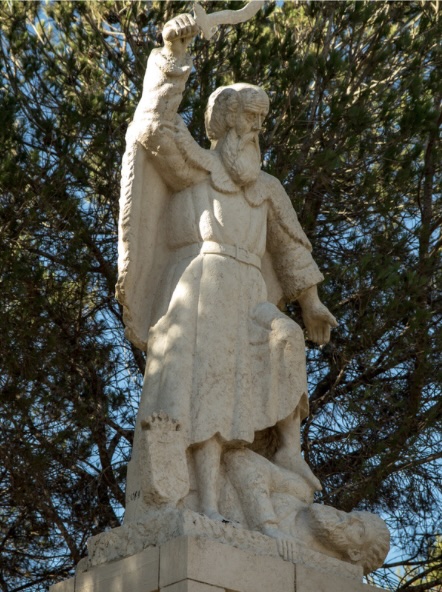
The word that unites both readings of the day is ‘Elijah.’
The first reading is taken from the second part of the Book of Sirach, called ‘Praise to the Ancestors.’ Here, Yeshua Ben Sira, the author of the book, pays homage to the great ancestors of the people of Israel. The author praises here Elijah, the so-called ‘father’ of all prophets.
The author places before us two characteristic features of Elijah: (a) ‘Elijah arose like a fire’ – In the Bible, ‘fire’ symbolises change, new creation, transformation, elimination of the old, and the glory of God. Anything that fire embraces becomes fiery. Elijah’s words were so fiery that they removed the ignorance of the people. Elijah brings down fire when he challenges the prophets of Baal. He is taken up to heave by a whirlwind of fire in a chariot with horses of fire. (b) ‘He turns the heart of the father to the son’ – Here ‘the father’ refers to ‘the Lord’ (YHWH) and ‘the son’ refers to ‘the people of Israel.’ When God turned his face away from the people of Israel because of their sin of apostasy, Elijah made God turn his face towards the people.
The gospel reading is situated in the context of Jesus’ transfiguration. Jesus, who was transfigured on the high mountain, comes down with his disciples. The disciples see Elijah and Moses on the mountain. The discourse is centred on Elijah. The disciples ask Jesus, ‘Why do the scribes say that Elijah must come first?’ It was a belief that Elijah would come before the advent of the Messiah. The disciples, who doubted whether Jesus could be the Messiah through this question, tried to clarify it. When Jesus said, ‘Elijah has already come’, they understood that Jesus was speaking about John the Baptist.
Jesus indirectly mentions how John was his forerunner: (a) People did not recognise John as the Elijah, and they did not recognise Jesus as the Messiah. (b) Like John, Jesus would also encounter a cruel death at the hands of his enemies.
In the Messianic reading, since Elijah is the forerunner of the Messiah, John the Baptist is the forerunner of Jesus. Both John and Jesus went unrecognised.
What are the lessons that we learn from Elijah and John the Baptist as presented in today’s readings?
(a) The name ‘Elijah’ means ‘The Lord is my God.’ When people were in apostasy, uttering, ‘Baal is my God,’ Elijah bore a counter-witness. He challenged them. ‘The Lord is my God’ was not only the name of Elijah but also his mission. Elijah’s faith, courage, perseverance, and uncompromising fortitude are the lessons for our spiritual life.
(b) Even when people did not recognise John the Baptist, he continued to do his mission. As a flower blooms even when no one sees it, John does his ministry and leaves the stage. John lived his life realising his full potential. It is our response-ability to live our lives to the maximum, realising our full potential. Often, we say, ‘We can only do this much.’ But at least let us do that much (cf. Albert Camus).
#
“Elijah is the ‘father’ of the prophets, ‘the generation of those who seek him, who seek the face of the God of Jacob.’ Elijah’s name, ‘the Lord is my God,’ foretells the people’s cry in response to his prayer on Mount Carmel. St. James refers to Elijah in order to encourage us to pray: ‘the prayer of the righteous is powerful and effective’ (cf. Jas 5:16).” (Catechism of the Catholic Church, n. 2582).
Fr. Yesu Karunanidhi
Archdiocese of Madurai
Missionary of Mercy
 Yesu Karunanidhi
Leave a comment